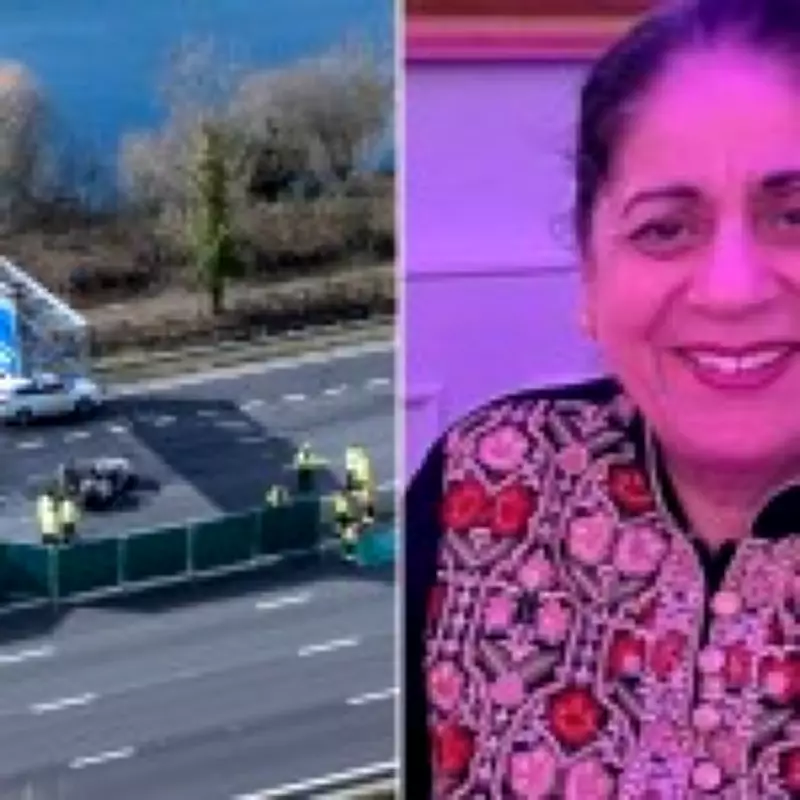
A 'dangerous defect' in a smart motorway system was the 'overwhelming' cause of a fatal collision that resulted in the death of a 68-year-old woman, a jury has been informed. The incident occurred on the M4 between junctions 11 and 12, highlighting significant concerns over the reliability and safety of such automated road management technologies.
Details of the Tragic Incident
On March 7, 2022, Barry O'Sullivan was driving his grey Ford Transit Connect work van when he collided with a Nissan Micra driven by Rajpal Dene. The crash caused 'calamitous' damage, leading to the death of Pulvinder Dhillon, a passenger in the Nissan, who was 'effectively incinerated' after the car burst into flames. The Nissan had come to a stop in the outside lane of the motorway at around 8.30am due to an unexplained engine failure, but no warnings were activated for other drivers.
System Failure and Lack of Warnings
Ian Bridge, defending O'Sullivan, told jurors that the smart motorway's stranded vehicles system had been defective for five days prior to the crash. He stated that neither O'Sullivan nor other road users were aware of this malfunction, as they were 'driving along the motorway completely oblivious.' Additionally, 999 and 101 calls were not passed by Thames Valley Police call handlers to the National Highways control room, preventing any warnings from being displayed on the 14 gantry and lollipop signs in the area.
Mr Bridge emphasised that the 'dominant and overwhelming cause' of the collision was this 'dangerous defect,' suggesting that National Highways may also have been unaware of the system's failure. He argued that the sheer volume of calls overwhelmed the system, leaving motorists without critical safety alerts.
Prosecution's Perspective on Responsibility
Ian Hope, prosecuting, acknowledged that the collision 'probably would not have happened if the Smart Motorway system had been working properly.' However, he contested that the crash was inevitable or that it had to be so lethal. Mr Hope stressed that the malfunction of the smart motorway does not excuse drivers from adhering to road rules, stating, 'You do not get to ignore the rules of the road because, for instance, the road should have been closed.'
The prosecution highlighted that the Nissan Micra was stationary with its hazard lights on for approximately six minutes before the crash. During this time, 35 other vehicles managed to avoid it by slowing down or swerving, as shown in CCTV footage. In contrast, O'Sullivan's van, which an expert believed was in cruise control, maintained a constant speed of 77mph and collided directly with the stranded car.
Defendant's Account and Legal Proceedings
O'Sullivan, who tested negative for substances at the scene, claimed that another vehicle swerved late, obstructing his view of the Nissan—a detail not supported by CCTV evidence. In a police interview, he noted that he had 'passed numerous gantries which had not signalled any problems on the road ahead,' which Mr Hope confirmed was due to the smart motorway system not functioning.
Despite this, the court heard that the Nissan was visible to O'Sullivan for about 260 metres, providing over seven seconds of reaction time. Mr Hope argued that O'Sullivan was not focusing on the road ahead, given the high speed and lack of attention to the stationary vehicle.
Barry O'Sullivan, of Wixams, Bedford, denies one count of causing death by careless or inconsiderate driving. The trial continues, with the case underscoring ongoing debates about smart motorway safety and driver accountability in the face of technological failures.