
Iran's Nation Divided: Mourning and Celebration Follow Khamenei's Death
In an extraordinary display of contrasting public emotions, Iran has witnessed both profound mourning and jubilant celebration following the death of Supreme Leader Ayatollah Ali Khamenei. The sudden demise of the cleric who ruled for nearly four decades has exposed deep societal faultlines across the nation, with clusters of both grief and celebration breaking out simultaneously.
Public Mourning in Tehran Squares
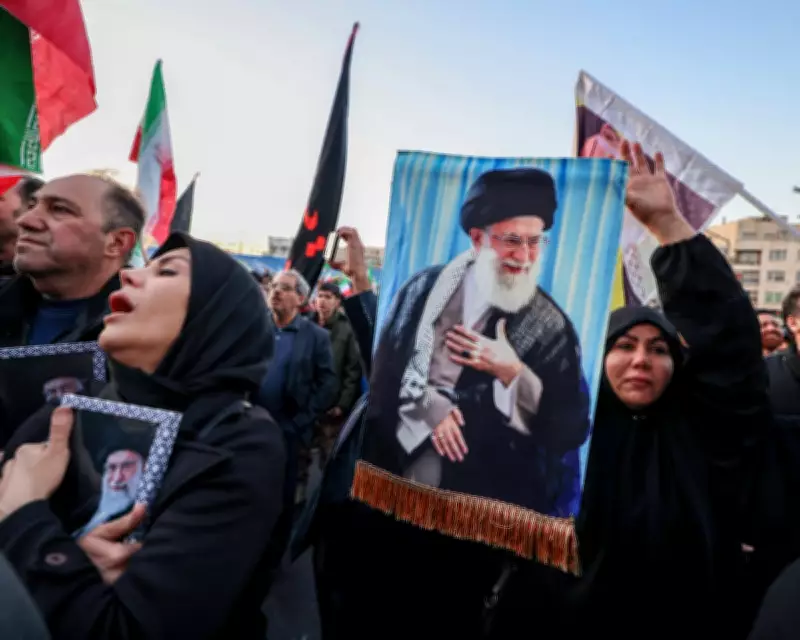
Across Tehran's public squares, crowds gathered to mourn the leader's passing, chanting solemnly while holding placards bearing his image. Footage from the capital showed mourners packed into Enghelab Square, dressed predominantly in black with many openly weeping. Some participants waved Iranian flags while chanting "death to America" and "death to Israel," expressing their continued allegiance to Khamenei's ideological legacy.
Hossein Dadbakhsh, a 21-year-old university student in Mashhad, Khamenei's hometown, expressed his devotion: "I am ready to sacrifice my life for Islam and for my imam Khamenei. The Zionist regime and Trump will pay a heavy price for the martyrdom of my leader." His voice trembled with emotion as he spoke of potential retaliation against perceived foreign adversaries.
Widespread Celebrations Across Cities
Simultaneously, videos circulated widely on social media platforms showed contrasting scenes of celebration across multiple Iranian cities. People danced openly in streets, honked car horns enthusiastically, and set off fireworks as news of the leader's death spread. In Arak, residents gathered in public squares offering tea to one another in spontaneous communal gatherings.
Nazanin, a 24-year-old media professional based in Tehran, described her emotional response: "The street was full! I had tears rolling down my eyes. No one outside can understand what Iranians who were victims of this murderer feel right now." She referenced Nika Shakarami, Sarina Esmailzadeh, and Mahsa Amini—three women killed in 2022 who became icons of the Women, Life, Freedom protests—expressing hope that the news of Khamenei's death was genuine.
Trauma from Recent Crackdowns
The contrasting responses reflect the deep trauma experienced during recent government crackdowns on nationwide protests. According to US-based human rights group HRANA, more than 7,000 people have been confirmed killed in demonstrations, with 11,000 additional deaths under investigation. Tens of thousands more faced arrest or injury during the violent suppression of dissent.
Mina, a 20-year-old Tehran university student, recalled being among protesters hit by gunshots when state forces opened fire in January: "I saw people falling in front of us. I will never forget the scene of beautiful, young boys and girls with their whole lives ahead lying in a pool of blood." For her, Khamenei's death represented a form of delayed justice for those killed during the protests.
A doctor based in Rasht described treating hundreds of protesters with gunshot wounds to critical areas including heads, chests, and genitals during January's violence. Despite his trauma, he quietly celebrated the news: "I smoked a cigarette for the first time last night. It was the best Saturday night ever." He acknowledged apprehension about Iran's future but expressed relief shared by many citizens.
Cautious Optimism and Lingering Fear
While celebrations occurred in various cities, many Iranians remain fearful following January's deadly crackdown on anti-government protests. Atousa Mirzade, a schoolteacher in Shiraz, expressed mixed emotions: "I also cannot be happy because I don't know what will happen to our country. We saw what happened in Iraq: chaos and bloodshed. I would prefer the Islamic republic to that situation."
Despite uncertainty about Iran's political future, hope emerged as a dominant feeling for some. Mahsa Piraei, whose mother Minoo Majidi was killed by regime forces during the Woman, Life, Freedom protests, viewed the cleric's death as transformative: "Today is a beautiful day. Of course, we all know that there is a long way to go... my family and I, and all the families whose loved ones were killed by this murderous regime, have been waiting for this moment for a long time."
The doctor from Rasht captured the prevailing cautious optimism: "We as a nation have been waiting for this news for decades. I feel like I am dreaming but we are cautiously celebrating. For now we celebrate—despite the security forces armed with AK47s."




