The £70bn Regulatory Burden: How Britain's Broken System Stifles Growth
Britain's regulatory landscape has become a significant drag on economic growth, with businesses facing an estimated £70bn annual burden from poorly designed rules that often fail to achieve their intended objectives while actively damaging other national priorities.
The Second Staircase Fallacy
The government's requirement for all new building applications over 18 metres to include a second staircase, introduced in response to the Grenfell Tower tragedy, exemplifies the problem with knee-jerk regulation. Despite appearing sensible at face value, the policy was implemented without evidence that it would save lives, while the cost-benefit analysis proved overwhelmingly negative.
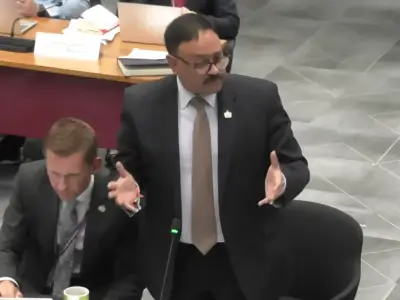
"This is the perfect example of politicians reaching for the regulation lever because 'something must be done,'" says Cory Berman, a researcher at economic consultancy Re:State. "In the process, they not only fail against their primary objective of saving lives but actively damage other key priorities like getting Britain building and reducing housing costs."

A Pattern of Poor Regulation
The second staircase requirement is far from an isolated incident. Britain's regulatory system has become increasingly dysfunctional, with successive governments launching "red tape challenges" while simultaneously creating rule after new rule based on inadequate analysis and minimal parliamentary scrutiny.
Martyn's Law, devised in response to the 2017 Manchester Arena terrorist attack, represents another regulatory failure. The government's own analysis estimated that the costs would outweigh the benefits by 70 to one, making it impossible to argue that this meets the proportionality requirement in the business department's principles of economic regulation.
Watchdog Without Teeth
The Regulatory Policy Committee (RPC), Britain's independent regulation watchdog, has rated departmental assessments "weak" or "very weak" 25 percent of the time since 2022. Even more concerning, 60 percent of the Treasury's impact assessments since 2020 were rated not fit-for-purpose.
"Regulations with poor analysis of their impact should not be able to proceed," Berman argues. "Yet right now there is no real consequence for shoddy work. Instead of strengthening the RPC and giving it teeth, there are rumors that the government wants to scrap it entirely – a stunningly short-sighted decision for a government supposedly committed to cutting regulatory costs."
The Hidden Costs of Visible Action
Regulation has become the go-to solution for policymakers because it's easy to pass, visible, and appears cost-free. But the reality is starkly different. The government's Regulatory Action Plan estimates the £70bn annual cost to business represents 3-4 percent of GDP, though many experts believe the true cost is far higher.
Compounding the problem, while the system waves through thousands of often poor-quality new regulations, it largely fails to review those already on the books. Departments are required by law to conduct Post-Implementation Reviews, yet in the last year just seven were recorded.
A Bold Solution: Regulatory Budgeting
With economic growth stagnating, Re:State's new paper calls for radical reform. The think tank proposes that Whitehall introduce a world-first system of regulatory budgeting, akin to how the Treasury manages public spending, where a total spending envelope is set and divided among different departments.
"Setting a multi-year envelope for regulatory costs by sector would force a more conscious approach to regulation," Berman explains. "This system would clearly articulate the trade-offs of enacting new rules. For further motivation, the Office for Budget Responsibility should factor these regulatory costs into their economic forecasts as they do fiscal measures."
The Political Choice Ahead
Ultimately, Britain's regulatory crisis represents a fundamental political choice. Regulation has become the easiest route to visible action – a way for governments to respond quickly without confronting harder trade-offs. But as the second staircase rule demonstrates, this approach comes with significant economic consequences.

"Politics is all about trade-offs," Berman concludes. "A government serious about growth must be willing to relinquish its favourite shortcut and accept that not every problem requires a new rule. Regulation isn't cost-free, and our current system proves that not every problem can be fixed with additional regulation."