UK Government Launches National Consultation on Online Safety Measures
The UK government is actively considering implementing overnight curfews on social media platforms and imposing stricter restrictions on children's access to artificial intelligence chatbots. This initiative forms part of a comprehensive "national conversation" on online safety that will officially commence on Monday. Parents and young people across the country are being invited to participate in this crucial consultation, which will explore a range of potential protective measures.
Proposed Measures Under Scrutiny
The consultation will examine several significant proposals aimed at safeguarding young internet users. These include the potential adoption of an Australia-style ban on social media access for individuals under the age of 16. Additionally, the government is considering imposing limits on addictive design features commonly employed by tech platforms, such as infinite scrolling mechanisms and autoplay functions. The discussion will also extend to emerging AI tools and how their interaction with minors should be regulated.
Tech Secretary Liz Kendall emphasized the government's commitment to ensuring children can flourish amidst rapid technological advancement. "The path to a good life is a great childhood, one full of love, learning and play. That applies just as much to the online world as it does to the real one," she stated. Kendall acknowledged the widespread concerns among parents regarding appropriate screen time, the optimal age for smartphone ownership, and the overall impact of digital content on young minds.

Consultation Details and Political Backing
The public consultation is scheduled to remain open until 26 May. It will specifically question whether social media companies should be legally required to disable features that promote prolonged late-night usage. The consultation will also debate the merits of introducing outright age limits for platform access. Separate, tailored surveys will be distributed to adults and to children and teenagers to gather diverse perspectives.
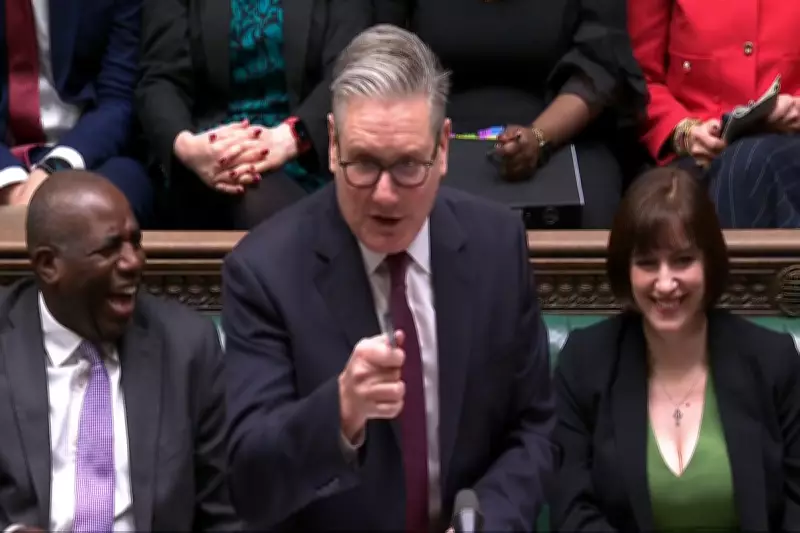
Prime Minister Keir Starmer is increasingly expected to endorse a ban in principle by the summer, even acknowledging that enforcement may present challenges. A senior official involved in the policy process noted that implementing a ban would send "the clearest signal to the industry that we want them to do more to protect young people online." This move responds to mounting pressure from Labour backbenchers and campaigners who argue that the existing Online Safety Act has proven insufficient.
International Momentum and Domestic Support
The push for stricter online age restrictions is gaining significant international traction. Australia implemented a social media ban for under-16s last year, inspiring similar policy discussions in the UK. Subsequently, Spain has announced plans to raise its minimum social media age to 16 and enforce stricter age-verification protocols. Nations including France, Denmark, and Austria are also evaluating comparable regulatory limits.
Domestically, more than 60 Labour MPs have urgently called upon the Prime Minister to take decisive action. Fred Thomas, who organized a parliamentary letter advocating for a ban, asserted, "Every day that goes by with children being harmed is one we will regret. Bold, confident action is required." Child protection organizations have generally welcomed the broad scope of the government's consultation.
Charity Responses and Additional Powers
Chris Sherwood, Chief Executive of the NSPCC, declared that the "status quo is not working." He advocated for compelling tech companies to prevent under-13s from accessing social media and to eliminate "design tricks which keep young people addicted." The Molly Rose Foundation, established following the tragic death of 14-year-old Molly Russell, has also urged platforms to address harmful content amplification by recommendation algorithms, warning that parental alerts alone are inadequate safeguards.
Concurrently, government ministers are preparing to establish new regulatory powers. These powers would enable the implementation of online safety changes more rapidly than through the traditional, lengthy parliamentary legislative process, allowing for a more agile response to evolving digital threats.