Middle East War Triggers Fresh Financial Turmoil for UK Households
The escalating conflict in the Middle East, though geographically distant, is sending shockwaves through UK financial markets, with surging energy prices threatening to ignite a new cost of living crisis. This analysis delves into how the turmoil could directly affect your finances, from mortgages to energy bills and investments.
Mortgage Rates at Risk as Interest Expectations Shift
Britons had recently enjoyed relief with cheaper home loans after the Bank of England cut interest rates four times in 2025, lowering the base rate to 3.75%. However, this trend may reverse abruptly. Prior to Friday, the probability of another rate cut this month stood at 80%, but it has now plummeted to less than 30%. Traders now anticipate only one cut by year-end, down from two expected just last week.
According to the National Institute of Economic and Social Research, if the current spike in energy costs persists for a year, interest rates could climb to 4.5%. The thinktank modeled scenarios with oil and gas prices increasing by 30% and 50% respectively over one year, which would stoke inflation into 2026 and 2027, propelling the base rate upward. This projection assumes rates remain at 3.75% rather than falling as previously forecast.

Fixed-rate mortgage deals are heavily influenced by money market swap rates, which have hit 30-day highs in response to the conflict. Two-year swaps rose 26 basis points from 3.33% on Friday to 3.59% by Wednesday morning, while five-year swaps increased 21 basis points to 3.71%, as reported by data firm Moneyfacts. Adam French, head of consumer finance at Moneyfacts, noted that the financial turmoil has led to a rapid shift in interest rate expectations, with an "almost instantaneous" impact on the mortgage market. He added, "Some lenders have already paused or reconsidered planned rate reductions."
Energy Bills Set to Soar Amid Price Cap Uncertainty
Just last week, there was optimism as Ofgem announced a 7% reduction in the energy price cap from April, setting it at £1,641 for a typical annual dual-fuel household. Analysts had expected stable energy costs for the remainder of the year, but these predictions are now in doubt. Following sharp increases in wholesale gas prices on Wednesday, analysts at Cornwall Insight revised their forecast for the July to September price cap upward to £1,801, a £160 or 10% increase from the April cap (currently £1,758).
Craig Lowrey, principal consultant at Cornwall Insight, cautioned, "While the rise is eye‑catching, any immediate concern should be tempered. We are still early in the assessment period for the July cap, and what happens in the energy markets over the next three months will be the key factor." The Resolution Foundation highlighted in its analysis of the Spring forecast that an energy price shock could cause living costs to rise more quickly again. If sustained, these increases could add over £500 to typical household energy bills in the summer and roughly one percentage point to inflation, delivering another unwelcome cost of living shock to families.
Despite the significant surge in gas prices, analysts emphasize that the market impact so far remains far smaller than the shock triggered by Russia's 2022 invasion of Ukraine.
Stock Market Investments: Stay Calm and Diversify
For those with stock market investments, the advice is clear: "don't panic." The UK's FTSE 100 share index has lost about 3% of its value this week, falling sharply on Monday and Tuesday before a slight recovery on Wednesday. However, unless you need to sell your shares or fund holdings—thereby "crystallizing" the loss—you have not actually lost money. Staying invested until prices recover is often the best strategy.

Jemma Slingo at Fidelity International advises that avoiding jumping in and out during volatile times is crucial to not miss out on unexpected opportunities from market corrections. She recommends checking for a broad range of investments. Susannah Streeter at Wealth Club notes that investors have been bracing for geopolitical tensions and must now prepare for another rollercoaster ride. For long-term investors, "big bumps in the road are part of the journey." Assets such as gold and defensive stocks like utilities, healthcare firms, and consumer staples tend to be more resilient during unpredictability.
Even without direct investments, workplace and personal pension schemes are affected, as they invest in stock markets and other assets. In defined contribution schemes, pension values depend on investment performance, with younger individuals often in riskier assets due to longer time horizons. For retirees using pension drawdown, this may not be an ideal time to sell investments for income.
Household Finances: Gains at Risk of Being Wiped Out
The outlook for household finances by year-end is highly uncertain. Chancellor Rachel Reeves stated that Britons would be "over £1,000 a year better off by the next election" based on average disposable income compared to the final year of Tory rule, a low bar given previous declines in living standards. However, if the war persists, these calculations may not hold.
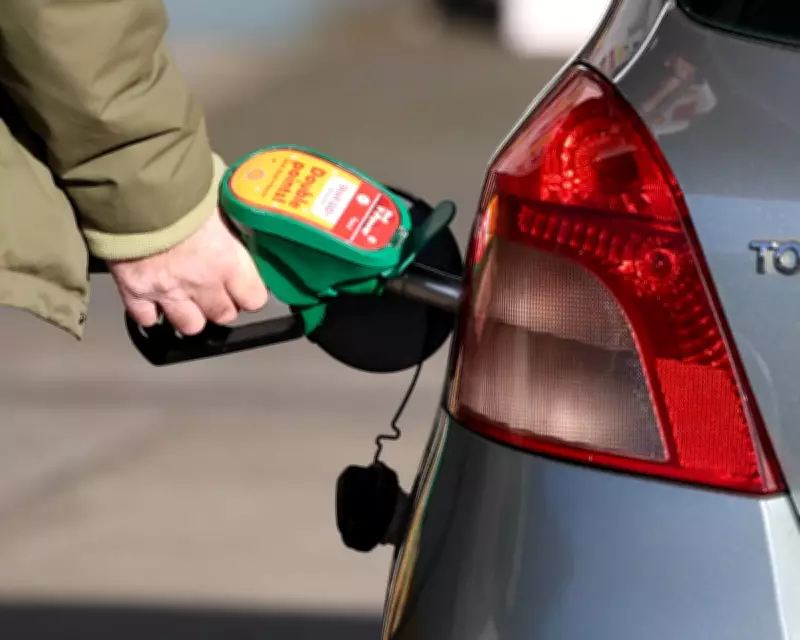
Higher energy prices immediately impact UK consumers through petrol pump prices. Each $10 per barrel rise in oil prices typically adds about 0.1 percentage points to inflation within months, with further increases as costs pass through supply chains. Simon Williams of the RAC reported that average petrol prices have increased by nearly 2.5p per litre since Saturday, and diesel by more than 3p, following oil surging above $81 a barrel. If prices reach $90, petrol could exceed 140p per litre, and $100 could push it near 150p. Williams added, "Providing oil stays around this level the average price of petrol shouldn’t really rise to more than 136p. Diesel, however, is increasing at a faster rate."
Additional pressures include rising food prices, with grocery price inflation climbing to 4.3% in the four weeks to 22 February, up from 4% in January, according to Worldpanel by Numerator. The Resolution Foundation analyzed data from the Office for Budget Responsibility, finalized before the war started, indicating that a typical working-age household could be £300 better off over the next year. Unfortunately, the economic fallout from the Middle East conflict has the potential to erase this gain entirely, underscoring the fragile state of UK finances amid global instability.