One Year After Landmark Ruling: How Single-Sex Spaces Definition Impacts Daily Lives
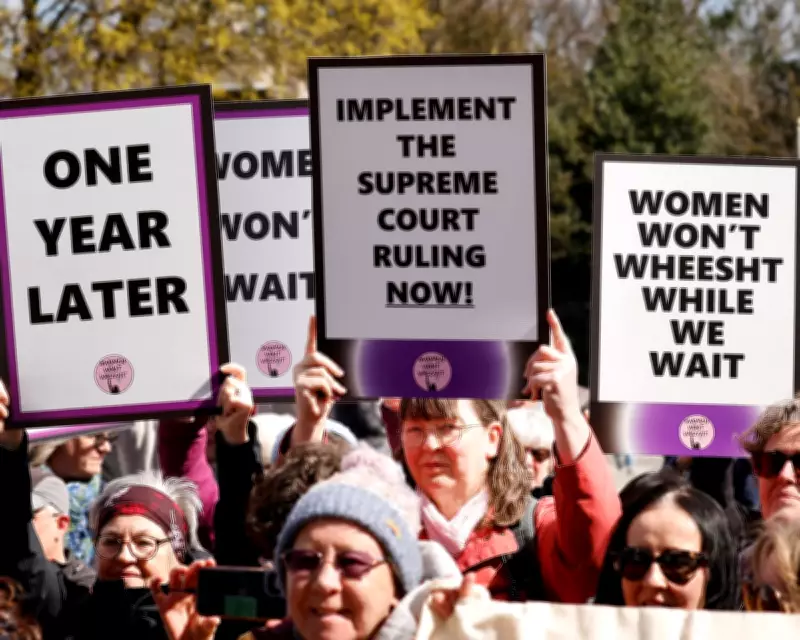
On April 11, a Women Won't Wheesht rally commemorated the one-year anniversary of a pivotal Supreme Court decision that confirmed the definition of 'woman' under the Equality Act is based on biological sex. This landmark judgment has triggered significant discussions about access to women-only services and spaces, yet practical implementation remains slow and contentious.
The Legal Landscape and Ongoing Delays
The Supreme Court ruling emerged from a long-running case against the Scottish government brought by gender-critical campaigners For Women Scotland. The court determined that for Equality Act purposes, the legal definition of woman refers to biological sex. This decision carries profound implications for refuges, toilets, and other women-only facilities.
Despite the clarity of the ruling, most service providers await practical guidance on application. The Equality and Human Rights Commission has prepared updated guidance but faces government approval delays. Originally submitted last September, the guidance was resubmitted recently following criticism of Equalities Minister Bridget Phillipson's prolonged consideration.

A leaked draft suggesting restrictions on transgender people using facilities matching their lived gender faced opposition from organizations deeming it unfair and legally problematic. This tension highlights the complex balance between legal interpretation and practical implementation.
Personal Experiences: Navigating Daily Realities
Individuals directly affected by the ruling describe varied experiences navigating public spaces and workplaces.
Janey, a 70-year-old trans woman in London, reports persistent anxiety about using women's facilities despite living as a woman for nearly fifty years. "I have a fear but it only lasts a few seconds," she says, noting one challenging incident with a service user but overall supportive responses from colleagues. She expresses greater concern for younger generations amid what she perceives as diminishing rights.
Susan Smith of For Women Scotland describes ongoing relief from the ruling, emphasizing that "women have this protection under law." She observes increased confidence among women advocating for single-sex spaces and praises organizations reclaiming their missions to address sex-specific trauma.
Melissa Green, chief executive of the National Federation of Women's Institutes, explains the difficult decision to end trans-inclusive membership after forty years. "We knew many members would be devastated," she acknowledges, while noting the emergence of alternative trans-inclusive groups through the Sisterhood Initiative.
Institutional Responses and Legal Challenges
The ruling has prompted significant institutional adjustments and legal actions.
Fiona Macdonald, a trade union activist, feels vindicated by the clarification and is taking her union to tribunal over alleged discrimination against her gender-critical beliefs. She advocates for balanced rights between trans people and women as a sex class, expressing disappointment about delayed government guidance ratification.
Jamie Hale, a trans man and wheelchair user, describes "palpable uncertainty" among hospital staff regarding ward placements. He worries that gendered hospital spaces might deter trans people from seeking medical care and notes accessibility challenges when gender-neutral toilets replace adapted facilities.
Jess O'Thomson of the Good Law Project distinguishes between the narrow legal decision and its broader social interpretation, arguing for clearer inclusive guidance. They report daily emails from people experiencing discrimination or seeking inclusion advice, noting increased self-exclusion from single-sex spaces.
Practical Solutions and Business Challenges
Small businesses face particular implementation hurdles.

Bryony Jones, manager of Cardiff's Grange pub, describes labeling their accessible toilet "for everyone" as a temporary solution in a historic building where structural changes are prohibitively expensive. "We don't have the money to do anything else," she states, criticizing expectations for small businesses to comply without support.
As organizations and individuals continue adapting to the ruling's implications, the need for clear, practical guidance remains urgent. The anniversary highlights both legal progress and the ongoing struggle to translate court decisions into everyday reality.