
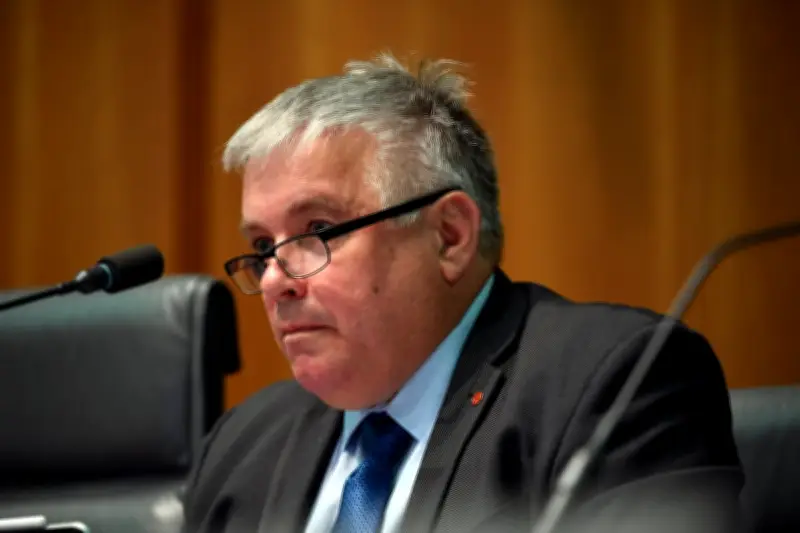
Crossbench MPs have expressed anger at the Labor government for seeking an order to force independent senator Rex Patrick to pay up to $150,000 in legal costs if he loses a freedom of information (FOI) battle over Aukus-related documents. The case has escalated, with several crossbench politicians, including Jacqui Lambie and Pauline Hanson, forming an alliance to support Patrick.
Background of the FOI dispute
Patrick, a transparency campaigner, used FOI laws to request details on where nuclear waste from the submarine fleet will be stored under the Aukus agreement. He won an administrative appeal in May, but the Department of Industry, Science and Resources has appealed to the federal court, seeking to overturn the decision and require Patrick to pay the government's legal costs if he loses.
Political backlash
Politicians including Jacqui Lambie and Pauline Hanson have criticized the decision, warning it breaches model litigant rules. They, along with unions and transparency groups, appealed to Attorney General Michelle Rowland but were rebuffed. According to documents seen by Guardian Australia, Rowland stated that the government could rightly insist on costs, acting "firmly and properly" to protect its interests.
Lambie accused Rowland of "behaving like a Labor stooge," saying, "The government is sending a very clear message to people: stop when we say you can’t have information under FoI, or we’ll take you to court and you could lose all your savings … and maybe your house." She added, "I cannot believe the attorney general has handballed what is a whole-of-government principle issue to the secretary of a single department."
Concerns over chilling effect
Organizations including the Media Entertainment & Arts Alliance, the Grata Fund, the Alliance for Journalists’ Freedom, and Australian Democracy Network have called on the government to stop the legal challenge. Tosca Lloyd, a Whistleblower Justice Fund campaigner, warned that the risk of a six-figure legal bill would limit ordinary use of FOI rules. "This chilling effect is neither hypothetical nor unintentional," she said. "Public interest journalism depends on the FoI system. Investigative reporters – especially those at smaller and independent outlets – use it constantly to uncover stories the public has a right to know."
Bill Browne, the Australia Institute’s Democracy & Accountability program director, said departments and ministers should not fight FOI applicants. "The Albanese government already tried to restrict Australians’ right to access government information, and was rebuffed by the Senate. This looks like another attempt to raise the cost of scrutinising the government."
Patrick's response
Patrick noted legal precedent dating back to a 1912 high court decision, which showed a "standard of fair play" should be observed by governments. "I have some experience in courtrooms and have asked the court to ensure fairness from government and that these laws will be decided with competent barristers arguing different sides of the secrecy/transparency questions before it," he said. "I can just hope that the courts will address the misguided sense of fairness and proper process exhibited by the attorney general."
A spokesperson for Rowland declined to comment, referring questions to the department.




