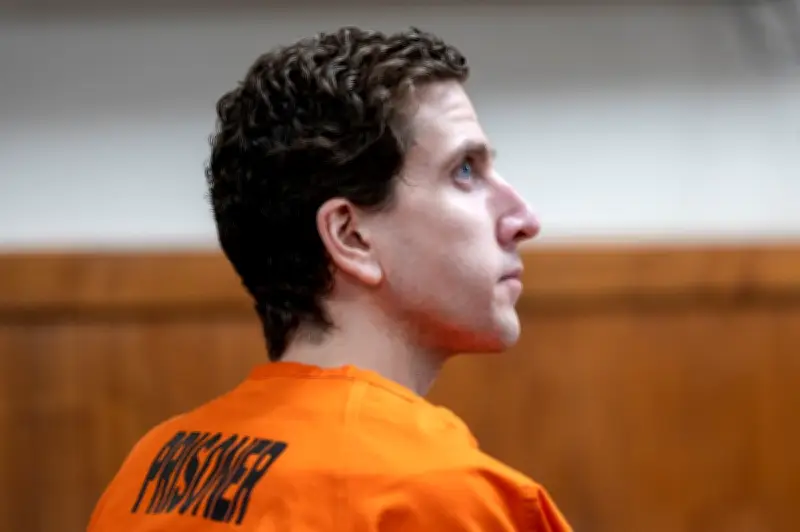
Bryan Kohberger, the 31-year-old former criminology doctoral student convicted of murdering four University of Idaho students, has filed a petition to withdraw his guilty plea, a move that could potentially put the death penalty back on the table. The petition, filed last week, alleges that his defense attorneys misled him into pleading guilty, and a judge has already granted his request for new court-appointed counsel.
Guilty Plea and Its Aftermath
In the summer of 2023, Kohberger pleaded guilty to the murders of Ethan Chapin, Kaylee Goncalves, Xana Kernodle, and Madison Mogen, who were killed in November 2022. At the plea hearing, Ada County District Judge Steven Hippler repeatedly questioned Kohberger to ensure the plea was voluntary and that he was actually guilty. Kohberger affirmed his guilt, and the plea deal removed the possibility of the death penalty, resulting in four consecutive life sentences without parole.
However, in his handwritten petition, Kohberger now claims that his attorneys fabricated a story about a "horrific experience" touring death row at Idaho's maximum security prison, and that he was "advised to lie" and told he would gain a "legal victory" by entering a "false plea." He also alleges that his attorneys failed to disclose exculpatory evidence, including chain-of-custody issues related to the knife sheath left at the crime scene, as detailed in the recent book Broken Plea.

Legal Strategy and Family Reactions
Kohberger's legal avenue is not an appeal—he waived that right in the plea deal—but a civil petition for post-conviction relief, which could lead to a new trial. His move has stunned and horrified the victims' families. Shanon Gray, attorney for the Goncalves family, called Kohberger "the mosquito you just can't seem to swat," and accused him of being a narcissist seeking attention. He noted that the families would have preferred a death penalty trial, and that Kohberger "received exactly what he asked for: a deal that spared his life. Know this – he hates that life. He wants another chance to roll the dice."
Kristi Goncalves told Newsweek she is confident the petition will go nowhere, but if a new trial is granted, "we're all for it."
Cost and Psychological Analysis
The Idaho Statesman estimates the case has cost taxpayers more than $8 million, with $5.5 million spent on public defense that Kohberger now rejects. A new trial could add another $2 million. Clinical and forensic psychologist Rachel Toles, who specializes in extreme violence, suggests Kohberger's actions are driven by a need for attention and control. "Attention is currency," she said. "He's no longer letting the prosecution define the ending... filing a motion restores his agency. He's bored and wants to reclaim the narrative." Toles also noted that Kohberger may be "dangling a carrot in front of the families" because he knows some wanted the death penalty.
Legal Hurdles and Next Steps
Idaho law requires the petitioner to prove that counsel's representation fell below an objective standard of reasonableness. This could pit Kohberger against his trial attorneys, who would be called as witnesses. Boise defense attorney Adam Ondo told the Idaho Statesman, "It's going to come down to credibility. Who are you going to believe? The attorney, or the defendant who is accused of rape or murder or forgery." Idaho Attorney General Raúl Labrador stated, "My office stands ready to do whatever is necessary to ensure justice is fully carried out."
Even if Kohberger secures a new trial, the families may never learn a motive. Toles believes Kohberger lacks true introspection and may never provide a satisfactory explanation, as mass murderers often withhold answers to maintain power and control.