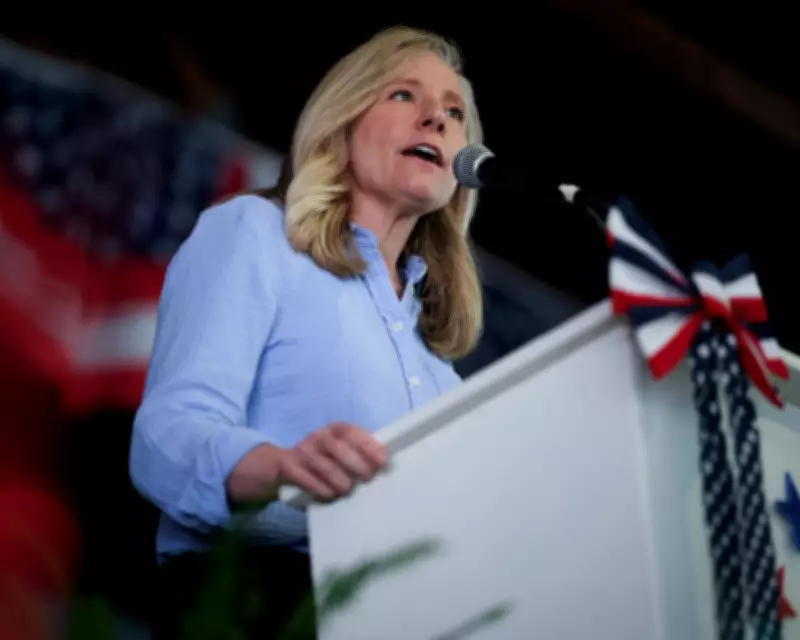
Virginia Governor Abigail Spanberger, a Democrat, vetoed a bill on Thursday that would have restored collective bargaining rights for approximately 50,000 public sector workers in the state. The move has drawn sharp criticism from union leaders, who accuse the governor of breaking campaign promises.
Union Leaders React
Union leaders described the veto as a "betrayal" and a "slap in the face," noting that Spanberger had campaigned on a platform of restoring collective bargaining rights. The bill had passed both chambers of Virginia's General Assembly with majorities, but Spanberger introduced an amended version that was ultimately rejected by the assembly.
According to an analysis by the Economic Policy Institute, Spanberger's amended bill would have weakened collective bargaining rights so significantly that it would "lock Virginia into an unstable, ineffective system in which collective bargaining would remain merely 'optional'."

Conservative Praise
The veto was praised by conservatives, who argued that the original bill would have led to large tax increases. However, union leaders remain adamant that the governor's actions contradict her campaign promises.
In February, shortly after taking office, Spanberger attended a rally in support of the bill organized by the Service Employees International Union (SEIU), according to the Virginia Mercury. SEIU leaders April Verrett, LaNoral Thomas, and Jaime Contreras issued a joint statement calling the veto a "betrayal of Virginia's workers who were promised change."
"Collective bargaining is not a privilege – it is a right. Governor Spanberger looked workers in the eye, met with our members, affirmed her support, and made a promise. Today, she broke it," they said.
Firefighters and Public Workers
Edward Kelly, president of the International Association of Fire Fighters, also condemned the veto, calling it "a slap in the face to every worker who put their faith in her." Of Virginia's 11,000 firefighters, approximately 8,000 to 9,000 still lack collective bargaining rights because their municipalities have not opted into the system.
"Firefighters keep their word every single day on the job. It’s a shame the governor can’t do the same," Kelly said.
Lee Saunders, president of the American Federation of State, County and Municipal Employees (AFSCME), the largest union of public sector workers in the U.S. with 1.4 million members, highlighted Virginia's history of "anti-worker extremists" that has given the state a "reputation as one of the most anti-worker in the country."
"Governor Spanberger campaigned on the promise to end this historic injustice. But she has broken that promise by vetoing legislation that would have finally granted most state and local workers the freedom to collectively bargain," Saunders said.
Coalition Response
The Virginia Public Sector Labor Coalition, a group of multiple major labor unions, echoed sentiments of betrayal and noted that Glenn Youngkin, Spanberger's Republican predecessor, vetoed similar legislation last year.
A spokesperson for Spanberger deferred comment to a press release and noted that the governor signed other legislation last month expanding paid family and medical leave, raising the minimum wage, and cracking down on wage theft.
"I remain committed to continuing to work with the General Assembly, unions, localities and public servants across the Commonwealth to develop a public sector collective bargaining system that works for Virginia," Spanberger said in a statement. "However, I believe additional amendments are needed to the enrolled bill currently before me."
Historical Context
Virginia banned public sector collective bargaining in 1948 during the Jim Crow era, in response to a group of Black workers organizing a union at the University of Virginia hospital. Until 2021, when Virginia passed a law allowing local governments to enact their own collective bargaining systems, the state was one of only three with blanket bans on collective bargaining for public sector workers. Even after the law passed, collective bargaining for state government workers remains illegal.