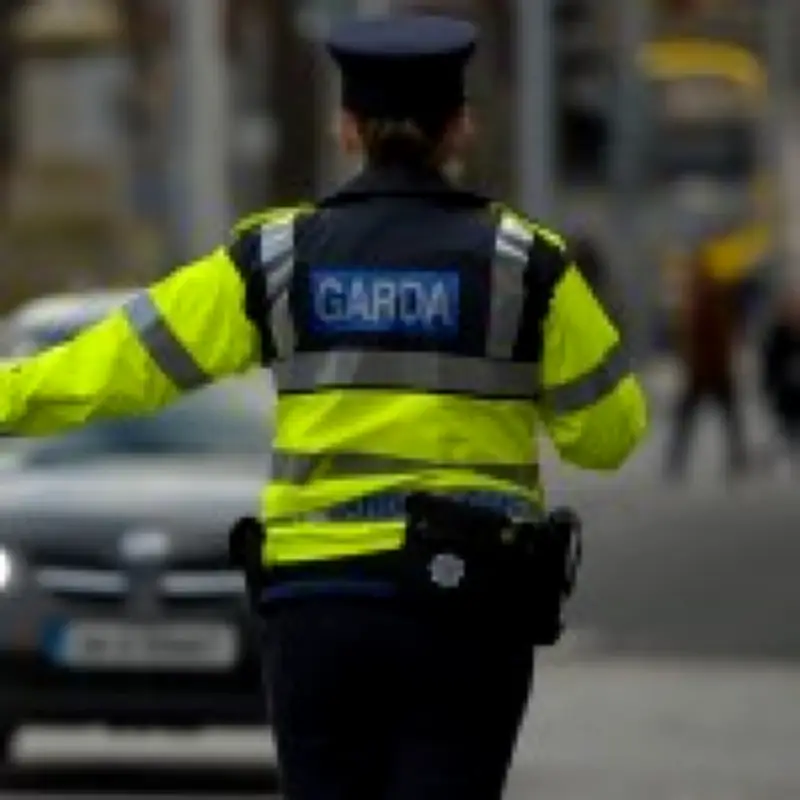
Police in the Republic of Ireland have intercepted what they describe as an 'extremely significant' car bomb that was being transported towards Northern Ireland. The device, found near the border in County Monaghan, is believed to be the most substantial bomb discovered in the Republic in the past ten years.
Operation details
The intelligence-led operation took place on Wednesday afternoon when members of the Garda Special Detective Unit stopped a vehicle on the N2 road south of Carrickmacross, Co. Monaghan. Gardaí then requested assistance from the Irish Defence Forces Explosive Ordnance Disposal (EOD) team, who examined the vehicle and found the device containing suspected military-grade explosives. Garda sources described the bomb as 'advanced' and 'highly sophisticated', with the potential to cause 'significant damage', though further analysis is ongoing.
A woman in her 20s, who was driving the vehicle, was arrested at the scene under section 30 of the Offences Against the State Act. She remains in Garda custody as of Friday. A second suspect, a man in his 40s, is being held at a Garda station in Dublin while follow-up searches are carried out.
Official statements
Garda Commissioner Justin Kelly confirmed the details at a graduation event in Co. Tipperary. 'To be clear, what we found was an extremely significant seizure,' he said. 'So this was an explosive device.' He added: 'Any seizure of this nature is really concerning. However, we certainly know that there are a small minority of dissident republicans who did not agree with the Good Friday Agreement; they did not put weapons and explosives [out of use]. They didn't, you know, go through with the proper process in relation to decommissioning. So that is something that we continue to deal with.'
Kelly described the perpetrators as 'radicalised republicans' and noted that the threat will persist. 'We work very closely with our colleagues in PSNI (Police Service of Northern Ireland) and the intelligence services in the UK to deal with this threat,' he said. 'But I want to commend the members of An Garda Síochána who are involved in this operation.'
Political reaction
Ireland's Minister for Justice Jim O'Callaghan called the seizure 'very worrying' but expressed encouragement that authorities 'were able to apprehend the suspect'. He highlighted the ongoing threat from dissident republicans and praised cross-border cooperation between the PSNI and Gardaí. 'The work of An Garda Síochána indicate the benefits of having that close cooperation,' he said.
PSNI Assistant Chief Constable Davy Beck stated that police on both sides of the border share a 'joint commitment' to tackling the dissident republican terror threat. Northern Ireland Secretary Sir Chris Bryant commended the Garda for their 'quick' and 'decisive' action, posting on social media: 'Intercepting a dangerous device like this undoubtedly saved lives and kept communities safe on both sides of the border. Strong cross-border security cooperation remains as vital as ever.'
DUP leader Gavin Robinson described the development as 'chilling' and questioned whether the Irish government is doing enough to address dissident republicanism. 'If terrorists are capable of assembling sophisticated explosive devices and moving them towards the border, then it is entirely legitimate to ask whether the threat is being fully recognised and whether sufficient resources and operational focus are being directed towards disrupting these organisations before they reach this stage,' the east Belfast MP said.
Context: The Good Friday Agreement
The Good Friday Agreement, also known as the Belfast Agreement, was reached on April 10, 1998, to end three decades of conflict known as the Troubles, which cost over 3,500 lives. The agreement established a devolved government for Northern Ireland where unionists and nationalists share power. Dissident republicans opposed to the agreement continue to pose a security threat.