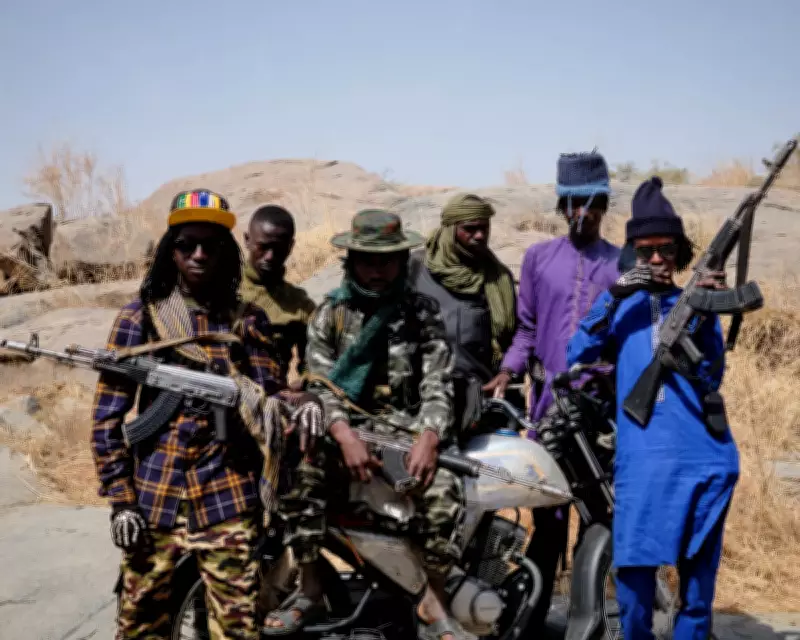
Beneath the shade of a neem tree, five young gang members in camouflage and beanies, cradling AK47 rifles, took refuge from the harsh midday sun near Batsari in Katsina state, Nigeria. They passed around cold bottles of water and a popular energy drink called Fearless. To their left, a dreadlocked teenager with his own rifle rested on one of three motorcycles. To their right, another teenager sat rolling a spliff.
This gathering of some of the most feared men in Nigeria took place within the Rugu forest reserve, which covers much of Katsina and stretches into Niger's Maradi region. Locals would call them terrorists or bandits—armed groups that kidnap for ransom, kill those who resist, and engage in cattle rustling. But Abu "Abu Radde" Bello, the 32-year-old gang leader, rejects those terms. "We are not happy that people call us criminals and terrorists," he said after midday prayers. "We are just trying to fend for our families. In the process, people are disturbing us—and that brings conflicts."
Roots of the Crisis
Bello's denials belie the brutal nature of Nigeria's banditry crisis. Hundreds of gangs like his have roamed un-policed lands in northern Nigeria since 2011, razing villages and maiming, torturing, raping, and killing with unrestrained ruthlessness. The recruits, mostly ethnic Fulani herders, are the most prominent non-state actors in this region. Between 2010 and 2023, there were 13,485 deaths linked to banditry in seven north-western states, according to the conflict monitor Acled.

The crisis has roots in conflicts between farmers and nomadic herders over land and resources, intensified by the climate crisis, deforestation, and rapid population growth. Some herders formed vigilante groups that morphed into criminal gangs. Fulanis, almost entirely Muslim, are present in over 20 African countries. Bello, born in Nigeria, remembers playing shadi—a ritual game of endurance—with Fulani from elsewhere, and some kinsmen know motorcycle routes to Mali.
Ungoverned Spaces
To the south, in north-central Nigeria, similar factors drive conflicts between Fulani militia and vigilante groups in largely Christian farming settlements. Analysts say Donald Trump's debunked claims of a "Christian genocide" in Nigeria are closest to being true there. In the north-west, however, where farmers are Hausa, the violence pits Muslim against Muslim. The crisis stems partly from a lack of state presence in large areas, including nature reserves. In Batsari local government area, several settlements are not even on the map.
In the absence of law enforcement, non-state actors have become the law. Across Nigeria, militants in the Niger delta, secessionists in the south-east, jihadists in the north-east, and bandits in the north-west use these ungoverned spaces to hide, keep abductees, and wage war. Successive administrations have struggled to contain these issues. In 2022, terrorism-related deaths dropped to 392, the lowest since 2011, but in 2025, that number soared to 750, the largest global increase.
Bandit Grievances and Tactics
Bandit leaders accuse authorities of corruption, saying it is a bigger sin than abduction. Porous borders and underfunded security also contribute. Bello recited grievances: "They promised to build hospital, school, dam and tap water." As the crisis festers, lines blur between opportunistic banditry and ideological jihadism. The rise of Lakurawa, a hybrid insurgency in north-central Nigeria, is concerning. It started as a vigilante group fighting bandits but morphed into a terrorist outfit levying religious tax for protection.
Bandits' success has given them impunity. Younger members show off loot on TikTok; older ones are influential in politics. In November, 25 schoolgirls were abducted from a Kebbi school by notorious bandit leader Ado Aleru. Two sources told the Guardian anonymously that the abduction was to pressure the government to release Aleru's nephew and men arrested on return from hajj. The girls were released within a week. Malik Samuel, a senior researcher at Good Governance Africa, said: "He pressed all the buttons within the government… So he masterminded the abduction… not only was ransom paid, but 11 people were released." There are concerns that this could embolden other groups.

Community Truces
Communities tired of ineffective government intervention have negotiated truces. One deal in late 2025 between Bello's gang and the gold mining town of Nahuta allows gang members freedom of movement and market access as long as they stop attacks and do not bring guns into populated areas. Gang members work side-by-side with locals in mining pits, using the same food vendors and sex workers. Gangs say they keep guns for protection from rivals and security agencies.
In Batsari, Bello declined to answer why his gang abducted people. "Things happen," he said. Inquiries about weapons were met with laughter. But he discussed why he picked up guns instead of going to court over cattle or land disputes: "We are not educated. We are not lawyers or judges. We don't know how to start and where to go." Another gang member, Haruna, interjected: "What has been happening is a calamity… us Muslims fighting each other is a loss. We want the government to help us so that when we go for grazing no one will oppress us and we will not oppress anyone."