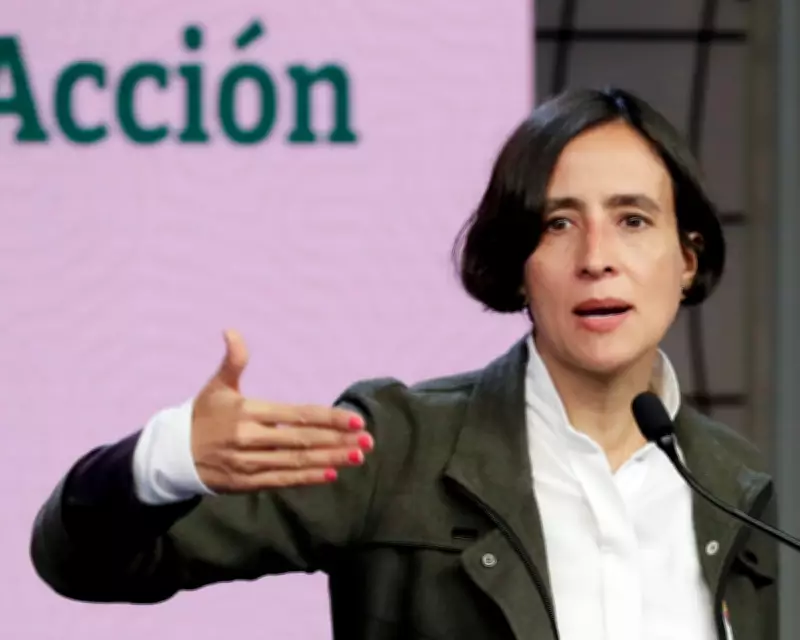
In a quiet Caribbean neighborhood, environmental activists gather under a mango tree to hear Susana Muhamad, former environment minister, warn that Colombia's upcoming presidential election will determine whether the country remains a global climate leader or pivots to fossil fuel extraction. "If we don't win, our country will be another in Latin America aligned with Donald Trump," she told the crowd.
The Stakes of the Election
President Gustavo Petro, constitutionally barred from a second consecutive term, has selected Iván Cepeda as his successor. Cepeda faces far-right candidate Abelardo de la Espriella and center-right candidate Paloma Valencia, both supportive of reopening oil fields and fracking. US interference is a major concern, with Donald Trump discussing military intervention in Colombia.
Environmental Progress Under Threat
Muhamad highlighted progress made under Petro, including declaring parts of the Amazon a fossil fuel-free zone and curtailing mining. She contrasted this with Bolivia, where the government sold river basins to lithium mining, and Ecuador, where President Daniel Noboa weakens Indigenous land defenders and allows US military bases on the Galápagos.

Colombia plays a key role in global climate justice. Vice-President Francia Márquez won the Goldman Environmental Prize for halting illegal gold mining. Environment Minister Irene Vélez Torres co-chaired the first global conference on transitioning away from fossil fuels. Petro's government has moved fossil fuel phaseout to the center of international diplomacy, says Tzeporah Berman of the Fossil Fuel Treaty Initiative.
Grassroots Activism and Dangers
Colombia is one of the deadliest countries for environmental defenders. Juan David Amaya, a 19-year-old activist who faced death threats for opposing oil palm plantations, said, "In Colombia, doing this is an act of rebellion born from hope, but it comes at a very high cost." Paula Andrea Hernández, a campaign manager, emphasized that "popular environmentalism" comes from peasants and fishermen who have suffered severe extractivism.
Domestic Challenges
Climate issues are rarely mentioned directly in debates but shape security and health discussions. Drug trafficking overlaps with illegal mining and deforestation. Political analyst Leon Valencia noted that the environment has become central: "Colombia is experiencing a progressive environmentalisation of public opinion." However, some campaigners argue that Petro's rhetoric is not always matched by action. Deforestation has slowed but continues, and illegal gold mining is widespread. The business lobby in Congress has blocked ambitious mining restrictions.
Economic and Political Outlook
Rightwing critics predicted economic disaster under Petro, but GDP growth has remained positive. Julia Miranda, a deputy from the New Liberal party, called the government's environmental policies a failure, advocating for compromise on fossil fuel phaseout. With 10 days until the election, polls suggest Cepeda will lead in the first round but fall short of 50%. A runoff could favor rightwing challengers, which biologist Renzo García called "an abysmal setback" that would return Colombia to an extractivist model serving global elites.