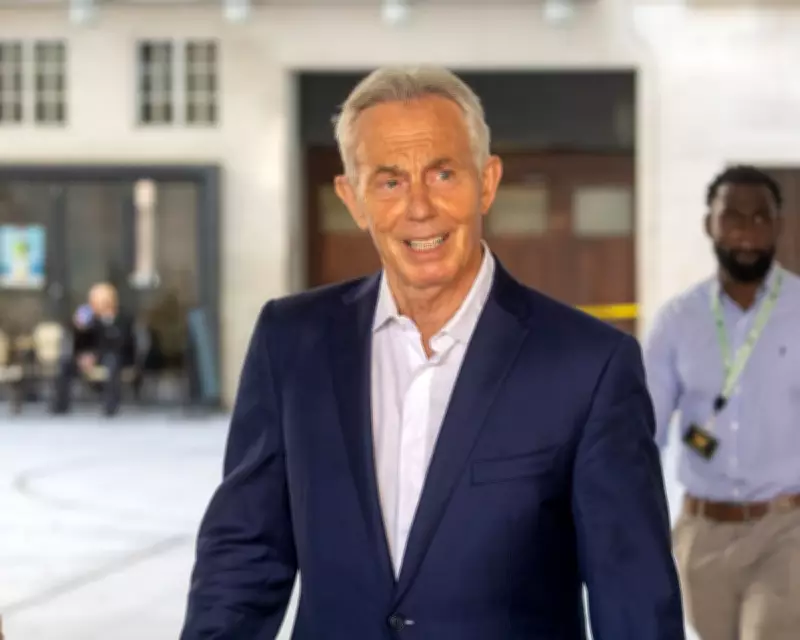
Tony Blair’s recent criticism of the Labour Party has drawn sharp responses from senior party figures, who argue that his analysis fails to address the central issues of inequality and the impact of austerity. Andy Burnham, the mayor of Greater Manchester and a potential leadership contender, said Blair’s essay merited a “considered response,” which he plans to deliver on Thursday. However, Burnham highlighted a glaring omission: “He doesn’t mention inequality once.” Burnham emphasized that inequality is driving current political discontent, as people struggle with unaffordable living costs and the erosion of previously taken-for-granted services.
Blair’s Critique and the Response
In his lengthy essay, Blair warned Labour against rushing into a leadership contest without thoroughly testing policies that could revive the party’s fortunes. He advocated for cuts to welfare spending, an end to restrictions on oil and gas, and smoother relations with Donald Trump. Blair also criticized the proposals of leadership hopefuls Wes Streeting and Burnham, accusing the party of “playing with fire.”
Torsten Bell’s Perspective
Torsten Bell, a DWP minister and key author of Labour’s last budget, acknowledged that Blair made a compelling political argument but said it lacked serious policy engagement. “The challenge for the essay is that it doesn’t have a project that remotely fits the time and place we are living in. Saying ‘AI’ is not the same as having a plan for Britain,” Bell stated. He noted that Blair correctly called out “shallow personality politics” but failed to delve into substantive issues.

Bell pointed out that the essay “paints in broad brushstrokes but has far too little actual engagement with the country that is the canvas for those brushstrokes.” While Blair made valid points on planning reform and regional investment, Bell argued the piece did not “live up to its own advice” in engaging deeply with policy. He criticized Blair’s understanding of tax increases, linking them to higher debt interest costs and “extremes of austerity for public services,” rather than solely blaming welfare spending.
Bell further challenged Blair’s suggestion that VAT should have been raised instead of employers’ national insurance, calling it “a recipe for much higher interest rates” and inflation. He also noted a “deep inconsistency” in Blair’s approach to the US, accusing him of being “pro-enabling an Iran conflict that has done huge damage to global economy.”
Broader Implications
The backlash against Blair’s essay underscores a growing divide within the Labour Party over its direction and priorities. As the party grapples with electoral challenges, figures like Burnham and Bell are pushing for a more nuanced understanding of the current political landscape, one that centers on inequality and the lasting effects of austerity rather than past strategies.