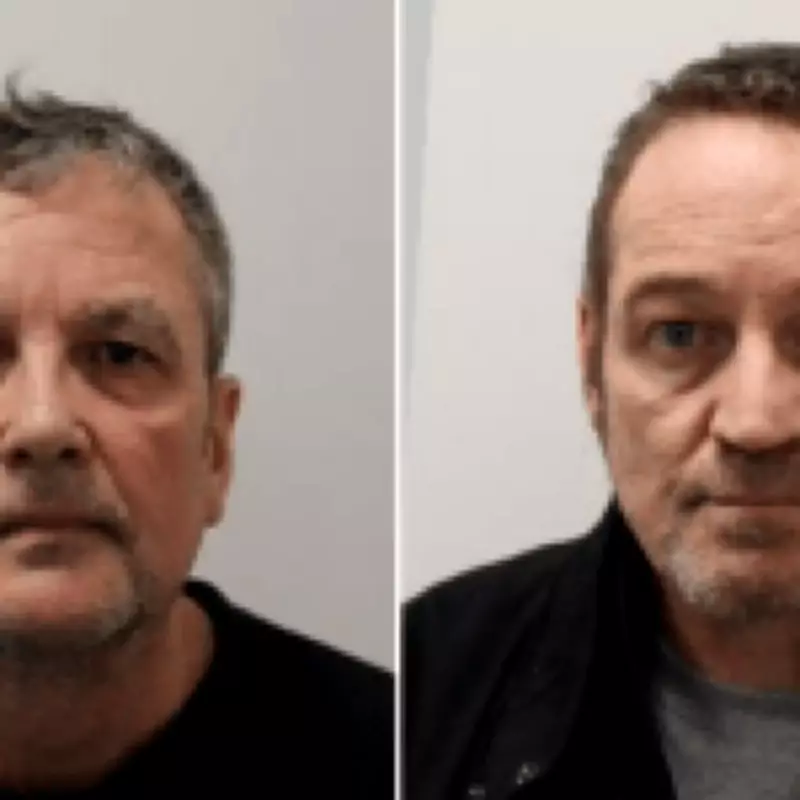
In one of the longest-running cold cases in the Metropolitan Police's history, two brothers have been convicted for the brutal murder of a civil servant more than 40 years after the crime. Michael Stewart, 57, and Anthony Stewart, 60, were found guilty at the Old Bailey for the killing of Anthony Littler in East Finchley, north London, in 1984.
The Murder
Anthony Littler, a 45-year-old bespectacled civil servant, had spent the evening at a pub with friends before his body was discovered in a dark, isolated alley known as Dead Dog's Alley, near East Finchley Tube station. The attack was so severe that he was battered to death, and at the time, police had no suspects or direct witnesses. The case, which occurred in Margaret Thatcher's constituency, shocked the nation and was featured on Crimewatch UK with a reconstruction of the victim carrying a suitcase. Possible murder weapons, including a hollow metal bar and a broken snooker cue, were retrieved from the shrubbery-lined alley, but DNA profiling did not exist at the time. Without CCTV, forensics, or phone data, detectives rebuilt the evidence using old records and witness accounts.
Reopening the Case
In 2022, detectives from the Met's homicide team reopened the files on Anthony's murder to assess if any viable lines of enquiry could be pursued. They discovered that in 2013, Daniel Stewart, who was only 10 years old at the time of the attack, had come forward to police. He stated that in 1984, his older brother Michael had told him he had 'robbed a bloke and he died'. Anthony Stewart had confessed to the same thing eight or nine years later. Daniel, out of family loyalties, never disclosed what he had been told until decades later when he made the decision to speak out. Another person had also come forward in 2015, telling police that Michael had admitted the murder, bragging that he and his brother would frequently beat people up and that on one occasion a man had died.

Upon reading these accounts in 2022, detectives immediately began further enquiries to ascertain whether there was enough evidence to prove the brothers' involvement. The team first built a timeline of Anthony's movements on the evening he was killed. Paper records from Transport for London were found in the original files, but their exact significance was unclear. Officers worked with the TfL Museum, which helped explain the documents, including handwritten records of exactly when tubes arrived and departed stations. This, along with accounts from station staff at the time, proved that Anthony had left East Finchley station at 12:20 am.
Key Evidence
A statement from a 999 operator who had taken a call from a public phone box close to the alley was also examined. The caller asked for an ambulance and said there was a man hurt outside East Finchley station before quickly ringing off. The operator noted that the caller 'sounded young' and appeared to be 'abnormally concerned over the matter'. The call had been made at 12:02 am – just two minutes after Anthony left the station. Detectives concluded that given this timeframe, only someone involved in the attack would have had time to run to the phone box and ring 999. Michael Stewart had told a witness in 2015 that he had killed someone and 'rung the old bill' afterwards – the prosecution argued this proved he was the one who called 999 minutes after the murder. The same witness later told police that on one occasion they were in the car with Michael Stewart when he pointed towards East Finchley station and said 'that's where we killed him'.
Detectives also uncovered other evidence that built a strong picture of the teenagers' violent lifestyle, proving they were more than capable of carrying out such an attack. A number of witnesses, including from the brothers' own family, gave statements that as young men, Anthony and Michael had a 'hobby' of attacking solitary men, often targeting those they thought may be homosexual because they knew where to find them alone and defenceless.

False Alibi
Detectives also reviewed documents from house-to-house enquiries carried out at the time. They found that Anthony Stewart and his parents had told police he was living at the family home and had been there on the night of the murder. However, the new investigation took statements from other family members – as well as Anthony himself – who said he had never lived at that address, was living in a bedsit in Bounds Green at that point, and only visited his mother on Sundays. Detectives believe he had given a false alibi and asked his parents to do the same to quickly rule him out of enquiries.
During police interviews, both men repeatedly denied any involvement in Anthony's death and chose not to give evidence at trial. They will be sentenced at the same court in July.
Police Statement
DCI Neil John, who led the investigation, said: 'Anthony's life was suddenly cut short when he was killed in a brutal attack by two teenagers who we now know had a clear propensity for the most sickening kind of violence. They targeted Anthony because he was alone, defenceless and walking down a dark alley in which they knew no-one would see them carrying out their horrendous assault. They lay in wait for someone to cross their path and tragically for Anthony, he became their unsuspecting victim.'
'We know Anthony's murder has continued to cause his family pain all these years later, and we are pleased that they now know who was responsible for his death. We also want to pay tribute to those who came forward to provide information on the events of that night, as well as giving vital evidence in court. Without them, this verdict would not have been possible. The Met will always review any new evidence that is brought to us, no matter the length of time that has passed. We will use all of the resources available to seek out the truth and pursue new opportunities to get justice for all victims who have been unlawfully killed.'