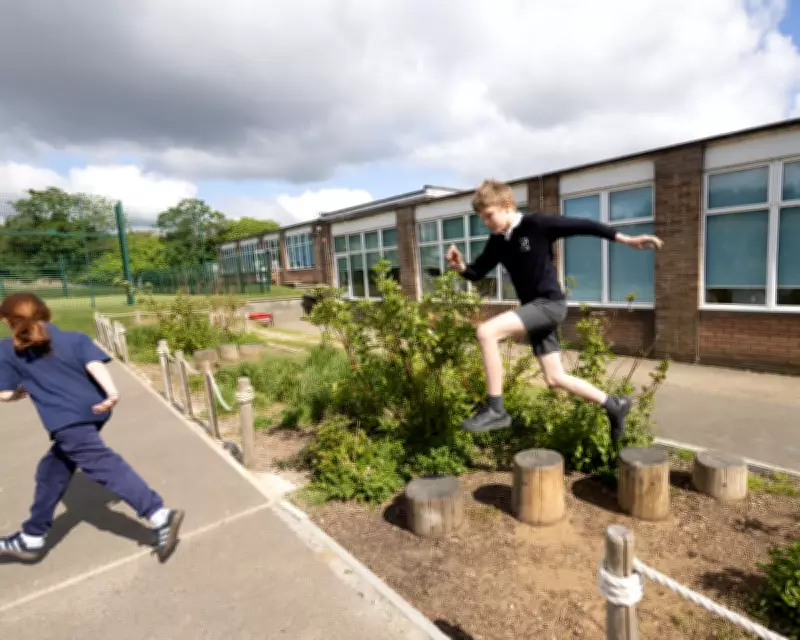
Two pupils play in the climate-adapted playground at St John's school in Barnet, north London. The play area used to flood so severely it was often unusable. Macci Dobie, the school's headteacher, recalled that the flooding became so bad that children could not be dismissed from the playground, and parents had to step into puddles to lift their children out of the classroom.
The school sits in a basin with clay foundations, causing rain to pool on the grey tarmac and deny children proper breaks for outdoor play. That began to change when parent governor Sarah Taggart spearheaded St John's climate action plan. She enlisted the help of Trees for Cities, a charity that plants green spaces in urban playgrounds to help them adapt to the climate crisis.
Designing a Functional and Sustainable Playground
Alfie Davies, a landscape architect at Trees for Cities, led the design work and consultation. He emphasised that the space had to be functional for children to use and care for. The design included stepping logs through new rain gardens, allowing children to jump over soil beds planted with ornamental grasses, shrubs, and perennial flowers that also function as a sustainable drainage system.
Dobie noted that the transformation has been remarkable. While some excess water remains during heavy rain, it clears up within ten minutes. The project addressed both the site's topography and the broader challenges of heavier rainfall and hotter summers due to the climate crisis.
Mitigating Heat and Educating Children
Davies planted a bird cherry tree in the rain garden beds, a native species that tolerates boggy ground and is drought resistant. He stressed that mitigating the urban heat island effect is integral to their work. In 2024, the UN called for action on extreme heat, including protecting children from heat stress. Paris has launched its Oasis Schoolyards scheme with canopies and pergolas, and Canada's Standards Council has urged climate-responsive playground design.
Trees for Cities runs a year-long engagement programme with schools after remodelling play areas. Grace Walker, a senior landscape architect, explained that children learn about the water cycle, plant support, soil infiltration, and the reasons behind design choices. Pupils at St John's help water the rain gardens and go on tree identification walks.
Davies said engaging children is the most valuable part of the work. They love being outside and exploring plants, even if they are initially wary of worms. Taggart, whose four children attended St John's, appreciated the legacy aspect. Year 5 students have been studying pollinators and bees, seeing them in action in their playground.
Pupils have noticed the difference. Ronnie said the playground has raised joy levels, describing it as prettier and calmer. Juliet noted that wet breaks used to mean sitting inside drawing, but now they get more playtime. She added that being stuck inside affected learning, but going outside makes you feel better.