
There exists a profound irony in the current employment landscape where Silicon Valley's technology giants are actively recruiting the very individuals who spent years in the public sector attempting to regulate and understand their immense power. This reverse career trajectory, where former regulators and policymakers become industry insiders, represents a significant shift in the traditional poacher-turned-gamekeeper narrative that has long characterized Westminster politics.
The Nick Clegg Blueprint: From Deputy PM to Meta Executive
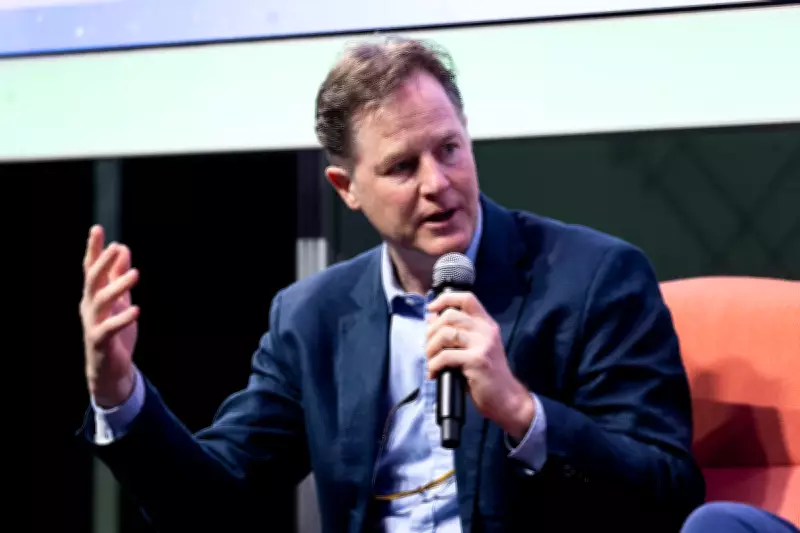
Nick Clegg stands as the definitive case study in this emerging pattern. What appeared in 2018 as an unusual career pivot has since evolved into something resembling a proof of concept for political figures transitioning to technology leadership. Clegg spent six years reporting directly to Mark Zuckerberg at Meta, accumulating shares reportedly valued at over $19 million while serving as the company's most credible governmental liaison during some of the most politically turbulent years in social media history.
His role transcended traditional lobbying, functioning more as a one-person diplomatic corps navigating complex international relations for the platform. Clegg has since moved forward from Meta, recently joining the board of Nscale, a UK-headquartered AI cloud provider that recently secured a $2 billion fundraise—the largest Series C in European tech history according to Dealroom data.
The Expanding Pipeline of Political Talent
The names following Clegg's 2018 transition continue to multiply at an accelerating pace. Former Prime Minister Rishi Sunak now advises both Microsoft and Anthropic, while George Osborne has joined OpenAI's leadership. Liam Booth-Smith, Sunak's former chief of staff at Number 10, currently serves as Anthropic's external affairs chief—the very company his former boss hosted at Downing Street in 2023.
Cassian Horowitz, once the architect of Brand Rishi and the mind behind the government's ill-fated TikTok influencer scheme, has relocated to the United States to manage executive digital communications at Google. What began as an isolated curiosity has rapidly transformed into a discernible pattern of political figures migrating to technology leadership positions.
The Market for Political Fluency and Institutional Intelligence
What exactly are these technology companies purchasing through these high-profile hires? While access to ministers, civil servants, and informal regulatory networks represents part of the appeal—explaining why advisory committees imposed two-year lobbying bans on both Sunak and Booth-Smith—access alone fails to explain why these roles are growing in both seniority and substantive responsibility.
The more compelling explanation lies in the genuinely novel regulatory environment where technology giants now operate. These companies face rules being written in real-time, where intensely national politics intersect with inherently global technology, and where misreading governmental sentiment can translate into billions in liability. In this complex landscape, individuals who have navigated cabinet meetings, prime ministerial transitions, or Downing Street communications become invaluable sources of institutional intelligence that cannot be easily replicated through traditional means.
The Value of Government Experience
Sunak's dual advisory roles at Microsoft and Anthropic prove particularly instructive. He was recruited precisely because he has operated at the intersection of geopolitics and AI governance at the highest levels during a period when these domains are rapidly converging. His experience chairing the 2023 AI Safety Summit and establishing the Frontier AI Taskforce provides directly relevant insights to questions Anthropic and Microsoft confront daily.
This logic extends further down the organizational hierarchy. Booth-Smith's value to Anthropic stems from his internal understanding of how Whitehall processes AI policy, combined with his grasp of the civil service's genuine concerns and how a company like Anthropic should position itself while establishing a UK presence and pursuing government contracts.
The Transparency and Accountability Concerns
The more uncomfortable issue, often framed in discussions about transparency and public trust, concerns what this pipeline does to the quality of political decision-making while it is still occurring. Amber Rudd, who served as home secretary during significant cybersecurity policymaking, now sits on Darktrace's advisory board alongside former MI5 director general Lord Evans of Weardale.
Baroness Joanna Shields, the UK's first minister for internet safety, has held leadership roles at Google, Facebook, and BenevolentAI. While these arrangements are not necessarily improper individually, their cumulative effect creates a situation genuinely difficult to measure and regulate effectively.
The British Context and Global Implications
This phenomenon is not unique to Britain, with the United States maintaining its own well-documented revolving door between government and technology sectors. However, the British version presents particularly acute characteristics due to several factors: a relatively small talent pool, a nimble regulatory environment, and London's peculiar position as an English-speaking, globally networked hub that remains close enough to Brussels to influence European policy while maintaining sufficient distance from Washington to function as a valuable secondary base.
Big Tech organizations clearly recognize these advantages, while Westminster appears to be gradually understanding the implications. The pipeline between government and technology is unlikely to close anytime soon, raising critical questions about whether current transparency measures—particularly the "two years and no lobbying" restriction—represent sufficiently robust safeguards. Based on current evidence, the jury remains decidedly out on whether existing accountability mechanisms adequately address the complex challenges posed by this growing trend.




