
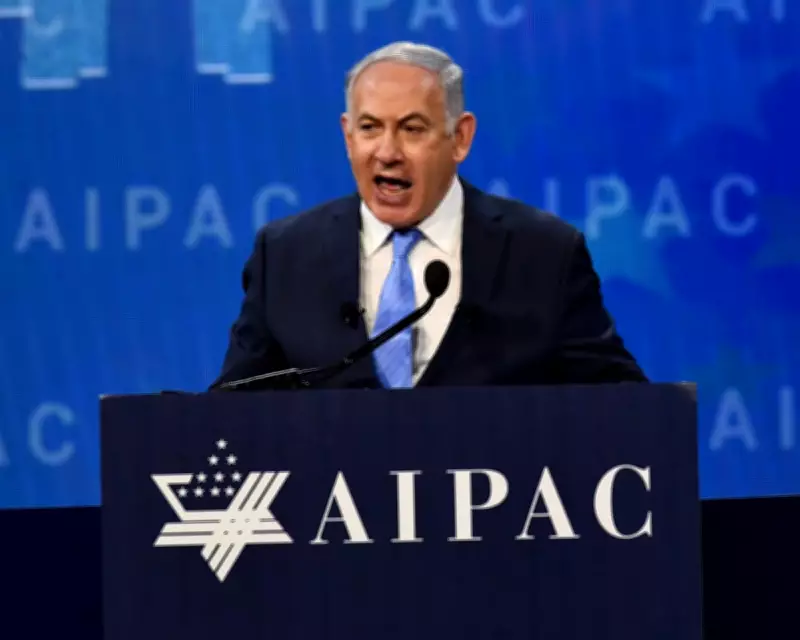
Aipac's Hidden Money Operation in Illinois Primaries
The American Israel Public Affairs Committee (Aipac), long established as one of Washington's most formidable lobbying forces supporting Israel, finds itself navigating treacherous political waters in the 2024 Democratic congressional primaries. According to an investigation by Chicago's public radio station WBEZ, Aipac and its affiliated political action committees have poured at least $13.7 million into four competitive Illinois races through carefully disguised Super Pacs.
The Concealed Funding Strategy
These substantial financial contributions flow through two Super Pacs with deliberately anodyne names: Elect Chicago Women and Affordable Chicago Now. Remarkably, neither organization mentions Israel in their advertising materials, creating a veil of secrecy around the true origins of their funding. Federal Election Commission records analyzed by the American Prospect reveal a coordinated pattern of donations, with 237 donors who previously contributed to Aipac or its United Democracy Project super PAC now funding multiple candidates simultaneously.
The analysis shows these donors contributed to Cook County commissioner Donna Miller and former congresswoman Melissa Bean, while 65 of them also supported state senator Laura Fine. Forty-four donors gave identical amounts to all three candidates on the same dates, with 198 donations arriving in Miller's account on New Year's Eve alone. The Super Pacs backing these candidates were incorporated in January 2024, with their donor information scheduled for disclosure around election day.
Historical Context and Modern Challenges
Founded in 1954 partly to combat negative press following Israeli military actions, Aipac has spent decades building influence based on bipartisan support for Israel. In 2022, the organization launched the United Democracy Project to more directly involve itself in Democratic primaries, reportedly amassing a $96 million war chest for the 2026 midterms according to the New York Times.
The organization's longstanding policy, as stated on its website, maintains that disagreements with the Israeli government are "best handled in private." This approach has been so consistently applied that only one significant public break with Israeli leadership has been recorded in Aipac's more than 70-year history, according to a Guardian review.
The Changing Political Landscape
Aipac now confronts a dramatically altered political environment where Democratic voter sympathies have shifted substantially. Recent polls indicate the party now sympathizes more with Palestinians than Israelis, and the devastating Gaza conflict has transformed Aipac's brand into a genuine electoral liability, particularly in urban, educated districts where the organization seeks to maintain influence.
The New Jersey special election in February 2024 provided a preview of these challenges. Aipac spent approximately $2 million attacking moderate candidate Tom Malinowski, who supported Israel but suggested aid shouldn't be unconditional. This heavy-handed approach backfired spectacularly, handing victory to a progressive candidate even less favorable to Aipac's positions. The same advertising firm that ran the New Jersey campaign now manages the Illinois Super Pac operations.
Illinois as Ground Zero for Aipac's Dilemma
The ninth congressional district in Illinois represents perhaps the most precarious testing ground for Aipac's strategy. This heavily Jewish, highly educated north shore constituency has returned a Jewish Democrat to Congress for 61 consecutive years. Here, Aipac-aligned groups have begun attacking Daniel Biss, the mayor of Evanston, whose mother was born in Israel and who believes in Israel's right to exist, but has suggested U.S. military aid should come with conditions.
Chicago political consultant Frank Calabrese explained the risk to Politico: "The attack ads are calling [Biss] a phony or fake progressive. And that message could shift more voters to Kat." This refers to Kat Abughazaleh, a Palestinian American progressive running to Biss's left, creating the possibility that Aipac's attacks might inadvertently boost the very candidate least aligned with their interests.
Beyond Congressional Races
The House primaries aren't the only Illinois contests attracting discreet Aipac funding. The Intercept has reported that at least 27 Aipac donors are backing lieutenant governor Juliana Stratton in her bid for the Senate seat being vacated by Dick Durbin, with former Aipac president Lee Rosenberg serving on her finance committee. Meanwhile, Aipac has formally endorsed her leading opponent, representative Raja Krishnamoorthi, who received more than $250,000 from pro-Israel lobbying groups during his congressional tenure.
The Iran Conflict Complication
When former President Donald Trump initiated military strikes against Iran, Aipac's position became increasingly complicated. While Aipac immediately praised the strikes that Israeli leadership had advocated for decades, every Illinois candidate backed by Aipac-aligned groups condemned them. Candidate Laura Fine reversed her previous support for such strikes, now calling for Trump's impeachment over the Iran attacks.
Former Bernie Sanders foreign policy adviser Matt Duss explained the political calculus to Jewish Currents: "They are aware that Democratic voters oppose this war pretty overwhelmingly. They have to be careful if they want to keep Aipac support."
Candidates Confront the Funding Mystery
Candidate Laura Fine told the New York Times she has repeatedly asked the groups backing her to identify their donors and is "kind of hitting a wall." Illinois governor JB Pritzker, once a significant Aipac donor himself, revealed he distanced himself from the organization around 2015, stating, "I still believe it is significantly Maga-influenced."
Progressive candidates have been most direct in their criticism of Aipac's influence. Junaid Ahmed, running against Melissa Bean in the eighth district, stated to the American Prospect: "This is the Aipac playbook on how to control Congress. They'll spend big money now and then expect my opponent to send billions in aid and weapons to Israel when she's in Congress."
The unfolding Illinois primaries represent a critical moment for Aipac, testing whether an organization built on decades of bipartisan support can adapt to a political landscape where its financial influence has become increasingly problematic for Democratic candidates seeking election in changing constituencies.




