
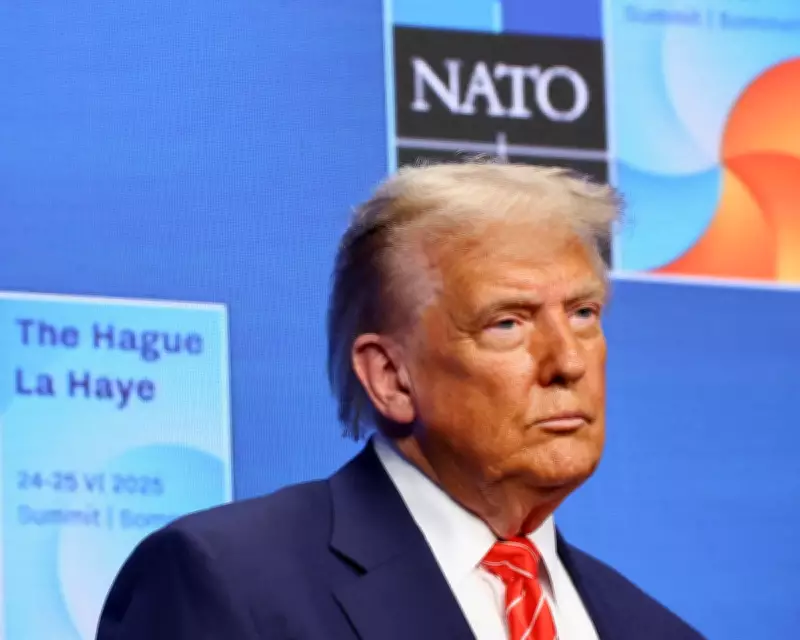
Donald Trump has never been a fan of NATO, and since the start of the Iran war, he has threatened to leave the alliance. This has prompted European leaders to reconsider their own defense mechanisms, particularly the EU's little-known mutual defense clause, Article 42.7.
What is Article 42.7?
Article 42.7 of the Treaty on European Union states that if a member state comes under armed attack, the others have an obligation to provide aid and assistance by all means in their power. Unlike NATO's Article 5, which explicitly mentions armed force, Article 42.7 covers a broader range of assistance, including economic and medical aid.
For decades, Article 42.7 remained obscure because the US, with over 40 military bases and 85,000 troops in Europe, guaranteed the continent's security. However, Trump's threats to leave NATO and his unilateral actions, such as the attack on Iran without consulting allies, have eroded trust in the US defense umbrella.
Renewed Interest in the Clause
Polish Prime Minister Donald Tusk has highlighted the bloc's most important question: whether the US will remain loyal to its NATO pledge. This has driven renewed interest in Article 42.7. European Commission President Ursula von der Leyen noted that while the treaty is clear about what is required, it is not clear about the specifics of implementation.
At a recent EU summit in Cyprus, leaders agreed to prepare a blueprint for responding if the clause is triggered. Cyprus, a non-NATO EU member, has been a key driver after being targeted by drones from Hezbollah. The incident revealed the EU's lack of preparedness for a full-scale attack.
Historical Use and Future Scenarios
France is the only country to have formally invoked Article 42.7, following the 2015 terror attacks. Several EU states provided support by boosting troop numbers on missions and sharing intelligence. French President Emmanuel Macron emphasized that the clause must be more than words, especially with doubts cast on NATO's Article 5 by the US president.
Greek Prime Minister Kyriakos Mitsotakis acknowledged that the EU has never seriously discussed its mutual defense clause because NATO was always assumed to handle security. Now, the bloc must take Article 42.7 more seriously.
The EU is war-gaming three scenarios: an attack on a non-NATO EU country, an attack on a country that is both an EU and NATO member, and a hybrid attack not covered by NATO. EU foreign policy chief Kaja Kallas stressed the need to operationalize the clause quickly by mapping possibilities and responsibilities.
Europe's Defense Spending Surge
European NATO members increased defense budgets by 14% last year, the steepest rise since 1953. Belgium, Spain, and Norway saw the largest increases. Germany aims to create the strongest military in Europe by 2039. However, analysts warn that procurement alone is insufficient. The real gap lies in political and military leadership: who will decide on escalation, priorities, and operational command?
Defense remains the most sensitive EU dossier. Figuring out how Article 42.7 might work without US support could focus minds on Europe's security future.




