
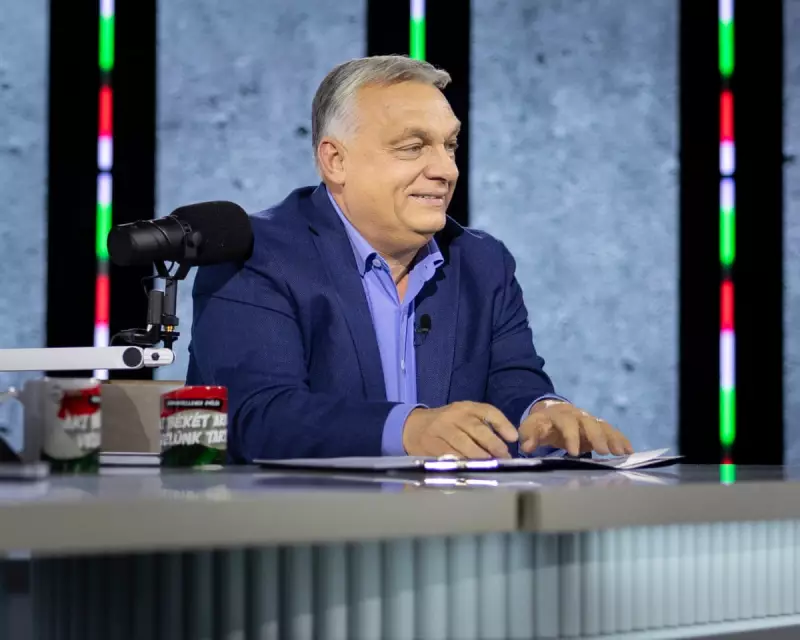
Hungarian Leader Launches Pre-Election Campaign Tour
Hungarian Prime Minister Viktor Orbán has initiated a weeks-long 'anti-war roadshow' across the country, positioning his opposition to European support for Ukraine as a central campaign message ahead of next year's elections.
The rightwing leader of the Fidesz party commenced the series of rallies on Saturday in the north-western city of Győr, with events planned in five cities before the end of the year. Orbán declared in a Facebook statement before the event: 'Those who want peace will join us.'
Strategic Timing Amid Political Challenges
The campaign launch follows closely on Orbán's recent visit to Washington DC, where he met with former President Donald Trump. During their meeting, Trump agreed to grant Hungary a one-year exemption from US sanctions on importing Russian oil and gas - a significant diplomatic achievement for Orbán during uncertain economic times.
According to political insiders, another key objective of Orbán's American trip involved attempting to persuade Trump to visit Hungary for a potential meeting with Russian President Vladimir Putin. Orbán has maintained ties with Putin despite criticism from other European governments.
The Hungarian leader has consistently warned about the risks of an escalating conflict, hoping his peace message will resonate with voters before the scheduled April 2026 elections.
Growing Opposition and Domestic Challenges
However, Orbán faces increasing political competition from Péter Magyar, a former Fidesz insider whose Tisza party now leads in some independent polls. In a striking coincidence, Magyar organised a rival event in Győr on the same day as Orbán's roadshow launch.
Magyar countered Orbán's narrative in his own Facebook post, stating: 'Fidesz is the party of war and hatred, while Tisza works for peace at home and around the world.'
Recent polling from Electoral Geography indicates Tisza holds a 7% lead over Fidesz, reflecting voter concerns about inflation, healthcare system failures, and education problems after 15 years of Fidesz governance.
Political scientist Dániel Róna, director of the independent 21 Research Centre, suggested Fidesz might attempt to 'turn the election into a referendum on war and foreign policy.' However, Mátyás Bódi of Electoral Geography questioned whether this strategy would suffice given the pressing cost of living crisis.
The Ukraine conflict has become deeply intertwined with Hungarian domestic politics. Relations between Budapest and Kyiv have deteriorated significantly due to Hungary blocking Ukraine's EU accession progress and Orbán's refusal to impose sanctions on Russia.
Pro-Fidesz media have intensified the political rhetoric, accusing Magyar of collaborating with Ukrainian secret services and labelling him 'the Hungarian Zelenskyy.' Billboards across Hungary depict Ukrainian President Volodymyr Zelenskyy and European Commission President Ursula von der Leyen with warnings about EU expansion costs.
The political messaging has affected Ukrainian refugees in Hungary. Vlada, a 23-year-old Ukrainian woman who fled to Hungary after the invasion, expressed concern that such posters 'can trigger bad feelings again' for families escaping conflict zones.
As Hungary approaches its 2026 elections, the battle between Orbán's peace narrative and opposition criticism of his governance record will likely define the political landscape in the coming months.




