
Vice President JD Vance Embarks on Critical Pakistan Mission to Broker Iran Peace Deal
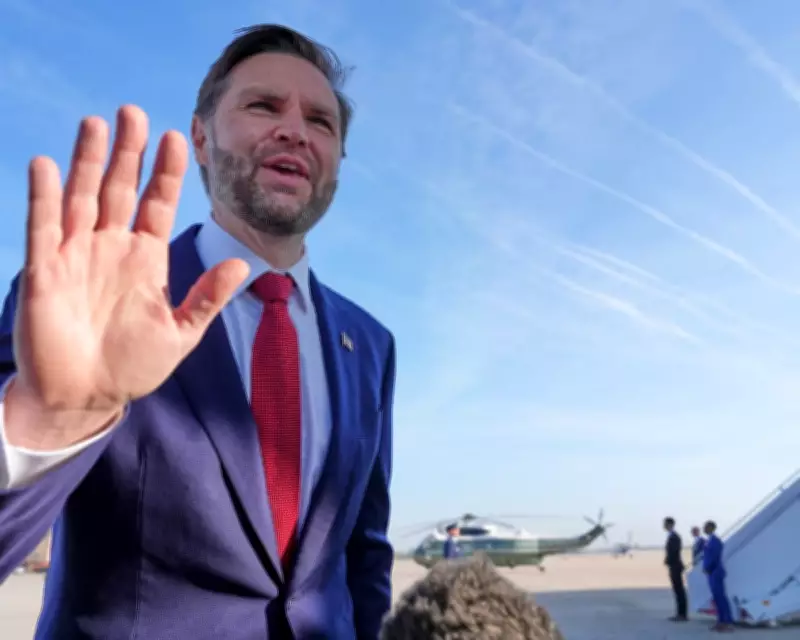
US Vice President JD Vance has boarded Air Force Two bound for Islamabad, Pakistan, where he will lead high-stakes negotiations aimed at ending the ongoing US-Israel military campaign against Iran. This represents Vance's first major diplomatic assignment since the conflict began, placing him at the center of what many analysts describe as an exceptionally challenging peace initiative.
A Poisoned Chalice Assignment
Vance, who has historically opposed US military interventions in the Middle East but remained relatively quiet during the current conflict, now faces Iranian negotiators who enter talks from a position of unprecedented strength. Iran's recent seizure of control over the strategic Strait of Hormuz, coupled with their demonstrated resilience against the largest US-Israeli offensive in regional history, has fundamentally shifted the diplomatic landscape.
This meeting marks the highest-level direct engagement between US and Iranian officials since the 1979 Iranian Revolution, with Vance's presence as vice president elevating the talks' significance while simultaneously increasing the political risks for the American administration.
The Diplomatic Tightrope
Vance's primary objective appears straightforward: to transform a fragile ceasefire into a sustainable peace agreement. However, his negotiating position presents a difficult dilemma. He must choose between accepting substantial US concessions to maintain the ceasefire and secure the reopening of the Strait of Hormuz, or walking away from negotiations and effectively endorsing a return to full-scale warfare that remains deeply unpopular with the American public.
The outcome could significantly impact Vance's anticipated presidential campaign in 2028, where his MAGA credentials have already faced scrutiny due to his tempered opposition to the current conflict. Despite entering office advocating for a more restrained foreign policy and an end to America's "forever wars" in the Middle East, these negotiations threaten to embroil him further in the largest US military intervention in the region since the Iraq War.
Pre-Talk Obstacles and Iranian Demands
Whether negotiations will even commence remains uncertain. Recent massive Israeli strikes on Lebanon, combined with apparent discrepancies regarding Lebanon's inclusion in ceasefire discussions, have provoked considerable anger within Iranian leadership circles. Furthermore, Iranian parliamentary speaker Mohammad Bagher Ghalibaf has established preconditions for talks, demanding the "release of Iran's blocked assets"—a requirement the US has not publicly acknowledged or accepted.
Ghalibaf's Friday statement, delivered less than twenty-four hours before scheduled negotiations were to begin, declared that "these two matters must be fulfilled before negotiations begin," setting a confrontational tone for what promises to be grueling diplomatic proceedings.
Iran's Negotiating Strategy and US Vulnerabilities
Tehran's diplomatic corps is renowned for employing what former Iranian Foreign Minister Abbas Araghchi once described as a "market style" approach—characterized by continuous, relentless bargaining. This will mark the first occasion in history where Iranian negotiators can apply this pressure tactic directly to a sitting US vice president operating under significant constraints to secure an agreement.
Before departing for Pakistan, Vance informed reporters that his team had received "clear" instructions from President Donald Trump regarding negotiation parameters. "As the president of the United States said, if the Iranians are willing to negotiate in good faith, we're certainly willing to extend the open hand," Vance stated. "If they're going to try to play us, then they're going to find the negotiating team is not that receptive."
However, former US negotiators with Iran have emphasized that Tehran's control over the Strait of Hormuz provides them with substantial leverage. While the US retains the option to withdraw from negotiations, it cannot guarantee the free flow of maritime traffic through this critical global chokepoint. This reality leaves the White House vulnerable to potential fuel shortages and supply chain disruptions that could destabilize the global economy during the coming summer months.
Vance's Evolving Role and Political Context
Vance's Pakistan mission follows closely on the heels of his controversial trip to Hungary, where he campaigned for autocratic leader Viktor Orbán ahead of elections that ultimately ended Orbán's sixteen-year tenure. This European excursion drew criticism, as some questioned the vice president's decision to engage in foreign electioneering while the US administration remained deeply entrenched in Middle Eastern conflict.
Throughout the Iran conflict, Vance has maintained a relatively peripheral position within the administration's public messaging strategy. While Trump's war council frequently convened at what some insiders dubbed "War-a-Lago" in Florida, Vance participated remotely from the White House Situation Room alongside Director of National Intelligence Tulsi Gabbard—another prominent anti-war voice within the administration.
By contrast, Defense Secretary Pete Hegseth has regularly delivered televised conflict briefings, while Secretary of State Marco Rubio has emerged as a more vocal supporter of military action than the vice president. President Trump himself acknowledged Vance's nuanced position, noting, "He was, I would say, philosophically a little bit different than me. I think he was maybe less enthusiastic about going, but he was quite enthusiastic. But I felt it was something we had to do. I didn't feel we had a choice."
Now, Vance finds himself tasked with ending the very conflict he reportedly opposed, returning to the diplomatic spotlight under circumstances fraught with political peril and strategic complexity. His performance in Islamabad could redefine both the trajectory of Middle Eastern peace and his own political future.




