
Vance's High-Stakes Pakistan Mission Ends Without Deal as Trump's Iran Strategy Unravels
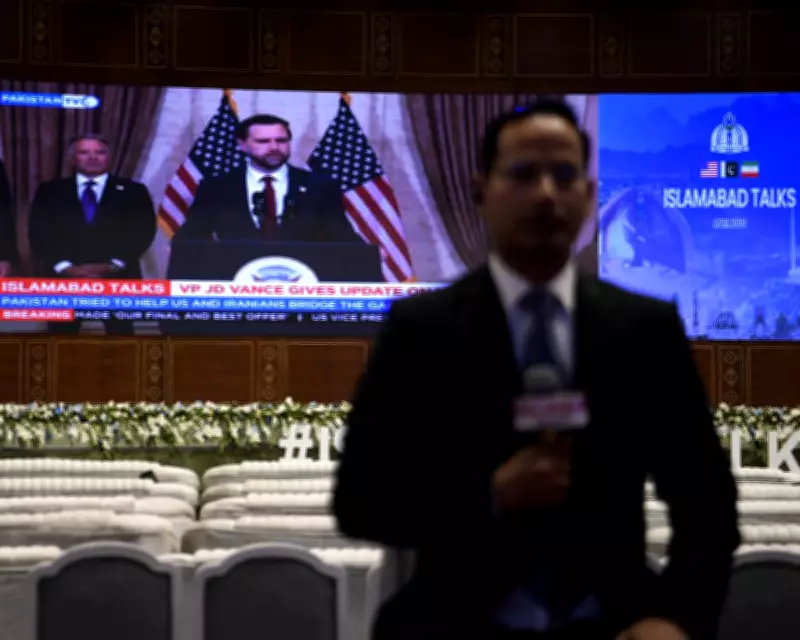
In a stark display of diplomatic discord, US Vice-President JD Vance departed Islamabad, Pakistan, on April 12, 2026, after a grueling 21-hour negotiation session that failed to produce any agreement to end the ongoing war with Iran. The televised address from Vance, delivered just before his departure, confirmed the breakdown in talks, leaving a fragile ceasefire hanging by a thread and global energy markets on edge.
A President Distracted as Crisis Deepens
While Vance was engaged in marathon diplomacy halfway across the world, President Donald Trump was attending a mixed martial arts fight in Miami. This striking contrast highlighted what many observers see as a dangerous disconnect in American foreign policy at a critical moment. With the stability of global markets and the outcome of a major conflict in the balance, Trump's choice of spectacle over substantive engagement has raised serious questions about his administration's commitment to diplomatic resolution.
The president may believe he's projecting strength, but the impression created in Tehran and among America's allies is of a leader more interested in the political theater surrounding diplomacy than in its actual substance.
Fundamental Disagreements Doom Negotiations
The Islamabad talks didn't fail by accident. The United States and Iran were essentially talking past each other from the outset, with positions so fundamentally opposed that reconciliation in a single negotiation round was virtually impossible.
Washington's core demand centered on Iran completely abandoning any capacity to develop nuclear weapons, while Tehran maintained it wasn't seeking nuclear weapons and insisted on its right to maintain a civilian nuclear program. Vance's "final and best offer" would have required Iran to surrender its nuclear capacity entirely—terms that appeared more like an attempt to impose victory conditions than to establish a genuine negotiation framework.
The Strait of Hormuz: Critical Chokepoint in Dispute
Compounding the nuclear disagreement was the contentious issue of the Strait of Hormuz, the vital global energy artery through which approximately one-fifth of the world's oil passes. The United States demanded guaranteed free passage through this strategic waterway, while Iran sought:
- Control over the strait through transit fees
- Lifting of international sanctions
- Unfreezing of Iranian assets abroad
- Payment of reparations
- A comprehensive regional ceasefire
With such a wide gulf between positions, the talks proceeded without trust and concluded without resolution, leaving both nations in a dangerous diplomatic stalemate.
Markets Brace for Impact as Blockade Threatens
The White House's decision to impose a naval blockade on Iran and the Strait of Hormuz—a move announced amid the failed negotiations—risks intensifying the very economic pressures it was meant to relieve. With fuel prices already surging globally, disrupting this critical oil route would send prices even higher, with ripple effects extending far beyond the Persian Gulf region.
American voters are confronting this reality every time they fill their gas tanks, even as the administration treats threats as diplomacy and bizarrely expects submission from Tehran. For Iran, mere survival in the face of American pressure constitutes a form of success, making compromise even less likely.
Regional Complications and Time Running Out
The fate of the current ceasefire depends not only on Washington and Tehran but also on Israel, whose expanded military campaign in southern Lebanon against Hezbollah has drawn accusations of war crimes. As Israeli forces raze villages to establish buffer zones, the regional conflict grows more complex and dangerous.
With the ceasefire set to expire in just over a week, the logic of escalation is taking hold. Iran appears unlikely to back down and may instead test American resolve at sea. While a full-scale ground offensive might be constrained temporarily by the Gulf's intense summer heat, the conflict risks shifting into more perilous forms:
- Direct naval confrontations in the Persian Gulf
- Expanded airstrikes against strategic targets
- Intensified proxy warfare throughout the region
Historical Ironies and Future Dangers
The current situation contains profound historical ironies. President Trump is now negotiating over a nuclear program that was once contained by an agreement he himself dismantled, while simultaneously trying to reopen a strategic strait that was closed by an illegal war he chose to initiate.
As Winston Churchill famously observed, "jaw-jaw is better than war-war." Yet the Trump administration appears to have forgotten this wisdom at precisely the moment when renewed conflict threatens global stability. An imperfect deal between America and Iran would leave the world better off than continued hostilities, particularly when oil, gas, and financial markets remain so intimately interconnected.
The talks may not be completely over, but with a stalemate firmly established and escalation dynamics taking hold, the path forward grows increasingly perilous. In such a scenario, there will be no true winners—only varying degrees of loss for all involved parties and the global community that depends on Middle Eastern stability.




