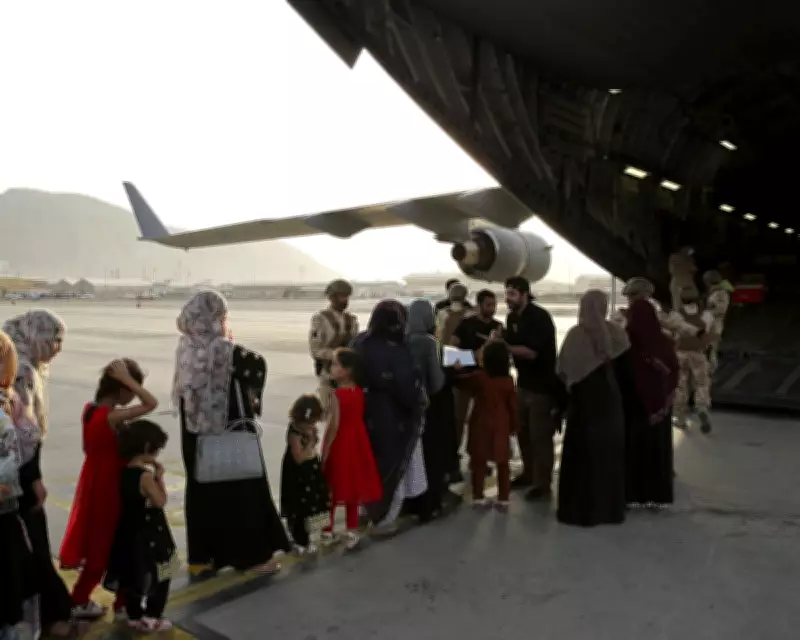
The Trump administration is actively engaged in discussions to potentially relocate up to 1,100 Afghans who provided crucial assistance to US military forces during the protracted conflict in Afghanistan. These individuals, currently stranded in Qatar, may be sent to the Democratic Republic of Congo (DRC) as part of a controversial resettlement plan, according to a non-profit organization's confirmation on Tuesday.
Background of the Afghan Evacuees
This group comprises more than 1,000 Afghans, including interpreters, relatives of US military personnel, and over 400 children. They were evacuated to Qatar for their safety due to their support for US war efforts, a decision made necessary after the US military withdrawal left Afghanistan once again under Taliban control. The New York Times first reported these resettlement talks, which follow former President Donald Trump's decision to terminate an initiative that previously allowed such Afghans to apply for resettlement in the United States.
Eligibility and Advocacy Efforts
Shawn VanDiver, president of the non-profit AfghanEvac, revealed to the Guardian that he learned of these discussions from sources within and around the US State Department. VanDiver emphasized that 900 of the 1,100 Afghans in Qatar are eligible for resettlement in the US, while the remaining 200 are not. For those ineligible, the US is considering alternative countries, including the DRC, which is itself grappling with severe violence and instability.
"The others should just come here," VanDiver asserted. "This is an easy solve: 'Hey, welcome to America.'" He noted that between 100 to 150 of these Afghans are family members of active-duty service members, with more than 700 being women and children. VanDiver criticized the current policy, stating, "It's insane – this could all be fixed just by a policy change," and argued that the Department of Homeland Security could permit entry to Afghans who have already qualified for the program, as no legal barriers prevent it.
Humanitarian Concerns and Risks
The potential resettlement to the DRC raises significant humanitarian concerns. The DRC is experiencing a massive displacement crisis, with the UN Refugee Agency reporting 8.2 million people displaced as of September 2025, a number projected to reach 9 million by year's end. Decades of conflict and instability have exacerbated the situation, making it a challenging environment for new arrivals.
VanDiver warned that returning to Afghanistan would likely result in death for these Afghans due to their cooperation with US forces, leaving them in a precarious limbo if the DRC talks do not materialize into actual resettlement.
Official Statements and Ongoing Negotiations
When contacted for comment, a State Department spokesperson stated that they are continuing to identify options for the voluntary resettlement of Afghans currently residing at Camp As-Sayliyah (CAS) in Qatar. The spokesperson claimed that moving this group to a third country represents "a positive resolution" for their safety and that of Americans, adding that "the Afghan nationals at CAS do not currently have a viable pathway to the United States."
The State Department maintains routine, direct communication with camp residents regarding resettlement initiatives but, due to the sensitivity of the negotiations, declines to disclose specific details. This lack of transparency adds to the uncertainty surrounding the fate of these Afghan allies, whose futures hang in the balance as diplomatic discussions continue.