US Vice-President JD Vance Departs Islamabad After Failed Negotiations with Iran
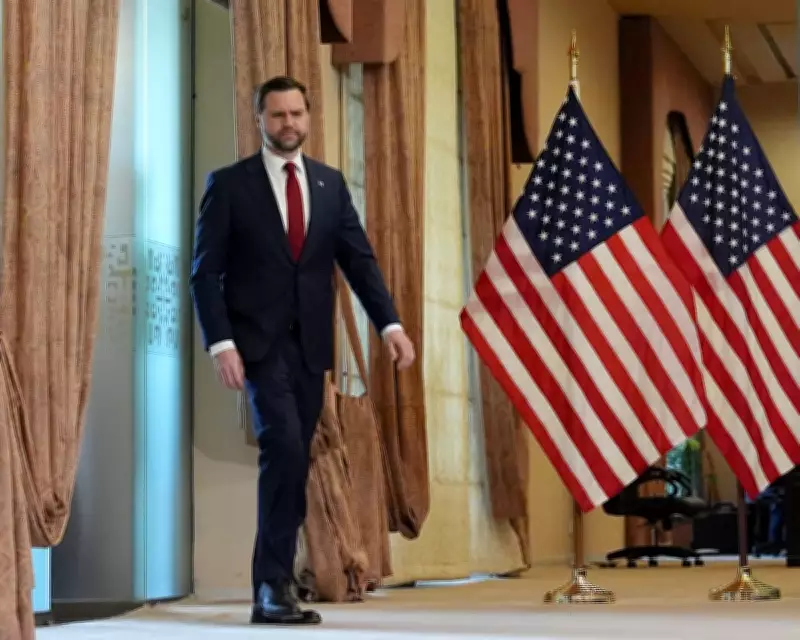
US Vice-President JD Vance left Islamabad on Sunday following an intensive 21-hour diplomatic session that failed to produce an agreement with Iranian representatives. The talks, which marked the first direct high-level meeting between the United States and Iran in over a decade, collapsed primarily over disagreements concerning Iran's nuclear program.
Vance explicitly cited shortcomings in the peace discussions, stating that Iran had chosen not to accept American terms, which included a firm commitment not to develop nuclear weapons. "The bad news is that we have not reached an agreement, and I think that's bad news for Iran much more than it's bad news for the United States of America," Vance declared during a news conference. "We've made very clear what our red lines are."
Core Dispute Centers on Nuclear Non-Proliferation
The vice-president emphasized that one of the most significant points of contention revolved around Iran's nuclear ambitions. "We need to see an affirmative commitment that [Iran] will not seek a nuclear weapon, and they will not seek the tools that would enable them to quickly achieve a nuclear weapon," Vance explained. "That is the core goal of the president of the United States, and that's what we've tried to achieve through these negotiations."

Throughout the marathon discussions, Vance maintained frequent communication with US President Donald Trump, speaking with him at least half a dozen times. The Iranian delegation, led by parliamentary speaker Mohammad Baqer Qalibaf and foreign minister Abbas Araqchi, engaged with Vance, special envoy Steve Witkoff, and Trump's son-in-law Jared Kushner.
Iranian Response and Regional Mediation Efforts
Iran's foreign ministry downplayed the apparent breakdown, with spokesperson Esmaeil Baqaei noting that no one had expected an agreement to be reached in a single session. "Naturally, from the beginning we should not have expected to reach an agreement in a single session. No one had such an expectation," Baqaei stated via state broadcaster IRIB. He expressed confidence that contacts between Iran and Pakistan, as well as other regional friends, would continue.
Meanwhile, Iran's semi-official Tasnim news agency reported that "excessive" US demands had hindered progress toward an agreement. Pakistani mediators, who played a crucial role in facilitating the talks, urged both the US and Iran to maintain the existing 14-day ceasefire initially agreed upon by the US, Iran, and Israel.
"It is imperative that the parties continue to uphold their commitment to ceasefire," Pakistan Foreign Minister Ishaq Dar asserted, adding that his country would strive to facilitate new dialogue between the two nations in the coming days.
High-Stakes Context and Strategic Implications
The Islamabad negotiations represented the highest-level discussions between the US and Iran since the 1979 Islamic Revolution. The outcome carries profound implications for the fragile two-week ceasefire and the potential reopening of the Strait of Hormuz, a critical choke point for approximately 20% of global energy supplies. Iran has blockaded the strait since the conflict began, contributing to soaring global oil prices and thousands of casualties.
As the talks commenced, the US military announced it was "setting the conditions" to begin clearing mines from the Strait of Hormuz, with two American warships reportedly passing through the waterway. Iranian state media, however, denied any US naval transit had occurred.
Tehran's demands extended beyond nuclear issues, including:
- Release of frozen assets in Qatar and other foreign banks
- Control over the Strait of Hormuz
- Payment of war reparations
- A comprehensive regional ceasefire encompassing Lebanon
- Collection of transit fees in the strategic strait
In contrast, President Trump's minimum objectives focused on ensuring free passage for global shipping through the Strait of Hormuz and crippling Iran's nuclear enrichment program to prevent atomic weapon development.

Atmosphere and Security Measures
The talks unfolded amid heightened security, with Islamabad—a city of over 2 million people—locked down by thousands of paramilitary personnel and army troops. The Iranian delegation arrived dressed in black, mourning the late supreme leader Ayatollah Ali Khamenei and others killed in the conflict. They reportedly carried shoes and bags belonging to students killed during a US bombing of a school adjacent to a military compound, an incident the Pentagon is investigating.
A Pakistani source described volatile dynamics during the negotiations, noting "mood swings from the two sides and the temperature went up and down during the meeting." Pakistan's mediating role marks a significant diplomatic transformation for a nation that was largely isolated internationally just a year ago.
With no clear indication from Washington or Tehran regarding next steps following the ceasefire expiration, the failure of these landmark talks leaves regional stability and global energy security in precarious balance.