In a landmark diplomatic event, peace talks between the United States and Iran have officially begun in Islamabad, Pakistan. This represents the first instance of senior negotiators from both nations meeting face-to-face at the highest level since 1979, with Pakistan serving as the key mediator in the process.
Historic Face-to-Face Negotiations
Pakistani state television confirmed that American and Iranian officials were "sitting directly at the same table," a fact later verified by White House statements. The discussions commenced in what was described as a positive atmosphere, despite continuing military conflicts in Lebanon that threaten regional stability.
Key Delegation Members
The American delegation is being led by Vice President JD Vance, while Iran's negotiating team features Mohammad Bagher Ghalibaf, the parliamentary speaker, and Abbas Araghchi, the foreign minister. Pakistani sources revealed that Pakistan's army chief, Field Marshal Asim Munir, was also present in the room. Munir, who played a crucial role in brokering a ceasefire earlier in the week, is reported to maintain a good relationship with former President Donald Trump.

Structure of the Negotiations
The initial round of discussions lasted approximately two hours, according to political sources familiar with the proceedings. This was followed by a second round of more technical talks that were divided into key topic areas, with particular focus on security concerns, financial matters, and the strategic Strait of Hormuz.
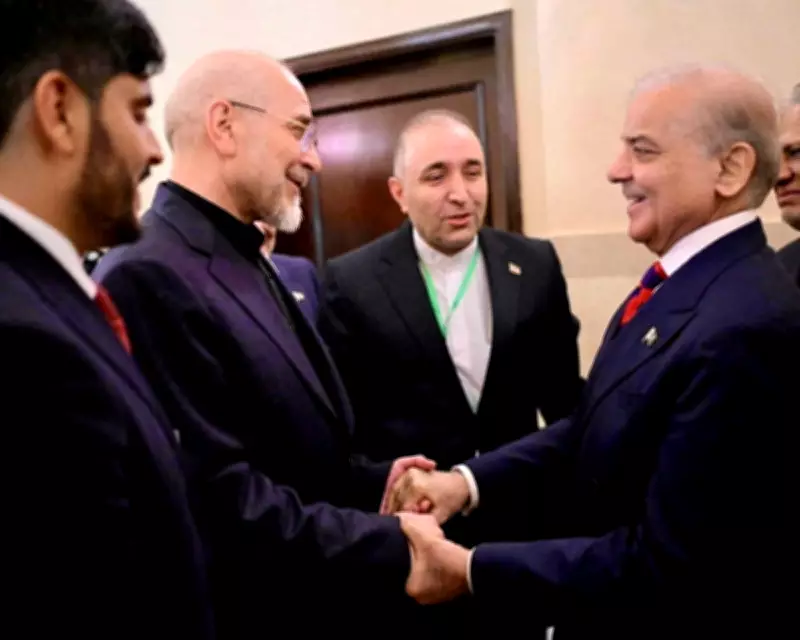
Following these sessions, plans were made for a dinner break to be hosted by Pakistan's Prime Minister Shehbaz Sharif at his official residence. Earlier in the day, Iranian negotiators had presented specific demands during preliminary meetings with Pakistani mediators led by Sharif, including calls for a ceasefire in Lebanon, reparations, and commitments to unblock frozen Iranian assets as part of any comprehensive peace agreement.
American Stance and Regional Context
Upon his arrival in Islamabad, Vice President Vance issued a warning that the United States would not allow itself to be manipulated by what he characterized as a weakened Tehran. "If they're going to try to play us, then they're going to find the negotiating team is not that receptive," Vance stated clearly.
This diplomatic engagement marks a significant departure from previous negotiation formats where American and Iranian teams were typically based separately. During nuclear negotiations held in Geneva in late February, Omani diplomats had served as intermediaries shuttling between the two sides, though those talks ultimately collapsed following US and Israeli airstrikes on Iran on February 28 that resulted in the death of Supreme Leader Ali Khamenei.
Absence of Israel and Regional Conflicts
Notably absent from the talks is Israel, whose military reported conducting strikes on 200 Hezbollah targets in southern Lebanon within the past 24 hours. These attacks on towns including Kfar Sir, Zefta, and Toul resulted in 10 fatalities overnight, while Hezbollah retaliated with rocket fire targeting cities in northern Israel. Direct clashes between Israeli troops and Hezbollah fighters were reported in the city of Bint Jbeil.
Former President Trump announced that the United States had "now started the process of clearing out the Strait of Hormuz," claiming that all of Iran's mine-laying vessels had been destroyed during a 40-day joint US-Israeli bombing campaign. US Central Command confirmed that its forces had "began setting conditions for clearing mines in the Strait of Hormuz" on Saturday with the objective of establishing a new passage and safe pathway for maritime commerce.
Maritime Navigation and Regional Statements
Qatar's Ministry of Transport announced that a full resumption of maritime navigation for "all categories of marine vessels" would become effective on Sunday from 6 AM, subject to safety protocols. However, it remained unclear whether Iranian authorities would permit Qatari vessels to transit the strategically vital strait.

Israeli Prime Minister Benjamin Netanyahu declared in a televised statement that the joint US-Israeli campaign against Iran had successfully achieved its objectives of "crushing the nuclear program, and crushing the missile program" of Iran. Regarding Lebanon, which continues to experience Israeli strikes, Netanyahu revealed that the country had "reached out several times to begin direct peace talks" over the past month.
Additional Delegation Members and International Perspectives
The American negotiating team in Islamabad includes several notable figures beyond Vice President Vance. Steve Witkoff, the real estate developer who serves as Trump's personal envoy, and Jared Kushner, the president's son-in-law who holds no formal White House position, are both participating in the discussions.
A senior Pakistani official expressed cautious optimism as the talks commenced: "Like us, the entire world is looking for a breakthrough and an end of the war. The talks are in a strong position because both delegations have come to Islamabad with complete authority from their capitals and have stepped back from extreme positions."
Chinese Involvement and Financial Considerations
Al-Araby Al-Jadeed, a Qatari newspaper based in the United Kingdom, reported that China "may offer guarantees" to help secure a deal, citing Pakistani sources. The publication also claimed that a Chinese delegation had traveled specifically for the talks, though other Pakistani sources later contradicted this report, stating that "they did not need to come, as the Chinese ambassador is in constant contact and they are on board with the talks."
Iranian media outlets reported that the United States had agreed to unblock $6 billion of Iranian assets frozen in Qatar, but American officials promptly denied this claim.
Parallel Lebanese-Israeli Negotiations
Direct talks between Lebanese and Israeli ambassadors are scheduled to occur in Washington at the US State Department. The two sides will specifically discuss "declaring a ceasefire and the start date for negotiations between Lebanon and Israel under US auspices," according to Lebanon's presidency.
In a statement released on Saturday, Israeli Ambassador to the United States Yechiel Leiter confirmed that the US, Israel, and Lebanon had conducted a preparatory phone meeting in advance of talks scheduled for Tuesday. "Under the auspices of the US State Department, Israel agreed to begin formal peace negotiations this coming Tuesday," Leiter stated. "Israel refused to discuss a ceasefire with the Hezbollah terrorist organization, which continues to attack Israel and is the main obstacle to peace between the two countries."
Domestic Lebanese Tensions
While Israel has indicated it is unwilling to negotiate a ceasefire directly with Hezbollah, it has expressed readiness to engage in talks with the Lebanese government, of which Hezbollah forms a significant part. The two sides have been engaged in conflict since early March when Hezbollah entered the war in support of Iran.
Hezbollah supporters organized a protest rally against the negotiations in front of the prime minister's office in Beirut on Saturday afternoon. Demonstrators waved Hezbollah flags and displayed pictures of the organization's late chief, Hassan Nasrallah, while the Lebanese army deployed troops around the area with warnings that it would "not tolerate any attempts to destabilise the country at this sensitive moment."
Internal tensions within Lebanon have escalated significantly following Israeli bombing campaigns over the past month that have displaced more than 1.2 million people across the country. Disagreements regarding Lebanon's engagement with Israel threaten to further fracture the already divided nation as they pit Hezbollah against the official government.
Lebanese Prime Minister Nawaf Salam announced the cancellation of a planned trip to Washington on Thursday, where he was scheduled to meet with US Secretary of State Marco Rubio to advance negotiations with Israel. Mahmoud Qamati, the vice-head of Hezbollah's deputy political council, warned in a Saturday interview that the armed group increasingly views the government in a confrontational light.