
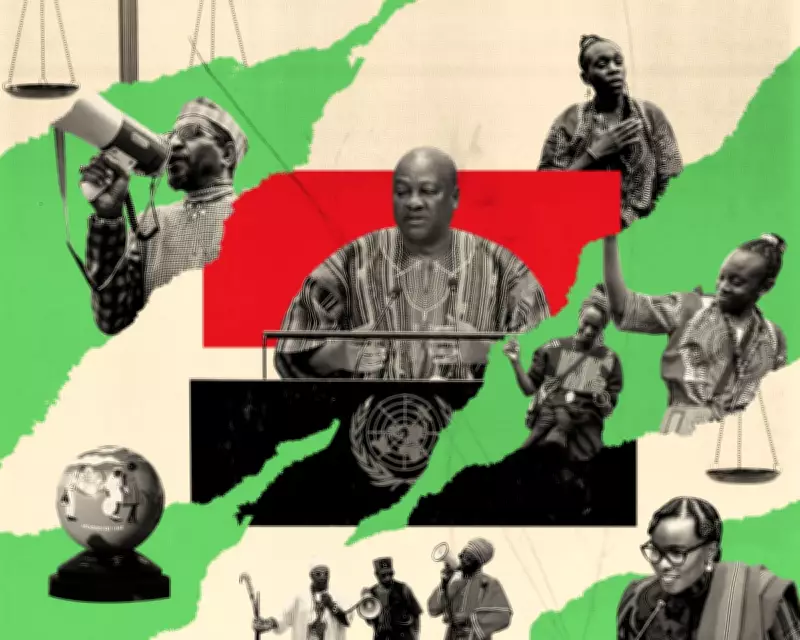
UN Landmark Vote on Slavery Reparations Sparks Global Justice Movement
A landmark United Nations vote has officially described the transatlantic chattel slave trade as the "gravest crime against humanity" and called for reparations as a concrete step toward remedying historical wrongs. This resolution, passed just under a month ago, marks a pivotal moment in the long journey toward recognizing the legacies of enslavement, though it is far from the end of the struggle.
A Win Obscured by Technicalities
Ebony Riddell Bamber, director of the Scott Trust's Legacies of Enslavement programme, recently returned from the UN Permanent Forum on People of African Descent in Geneva, where discussions focused on the practical implications of reparations. The community response to the vote has been broadly positive, celebrating the shift from what was once a "fringe issue" to a recognized crime with calls for compensation. The consequences of the slave trade continue to reverberate through economic dispossession, displacement, and cultural erasure.
However, the vote saw 123 countries in favor, with 52 abstentions, including key European nations, the US, and the UK—countries historically responsible for trafficking millions of Africans. Ebony views this as a glass-half-full outcome, noting that in the past, these nations would likely have voted against the resolution. The UK's chargé d'affaires argued that no single set of atrocities should be deemed more significant than another, while invoking international law to justify abstentions, claiming the slave trade was not illegal at the time and thus not a crime warranting compensation.
Time Is Running Out for Excuses
These justifications are seen by many as cop-outs or anxieties about the vote's symbolic power. The West is nervous, as Caribbean analyst Kenneth Mohammed noted, that recognizing the atrocity's foundational role could lead to uncomfortable questions about debt, underdevelopment, museum collections, trade structures, and historical compensation. This nervousness aligns with a broader backlash against racial justice movements, exploited by right-wing populist parties like the UK's Reform party, which threatened to deny visas to individuals from countries seeking reparations.
Despite this, a growing "global diasporic movement" is gaining momentum, spurred by initiatives like the Caribbean Community's Ten-Point Plan for Reparatory Justice in 2014 and now including African nations. The UN vote was proposed by Ghana's president John Dramani Mahama, with a framework drafted by Zimbabwean writer Panashe Chigumadzi, highlighting the collaborative force driving change.
The Guardian's Role in Restorative Justice
For three years, the Guardian's Legacies of Enslavement programme, backed by the Scott Trust, has worked on restorative justice in response to the newspaper's historical connections to transatlantic enslavement. The programme focuses on community-led repair, truth-telling, raising awareness of Britain's slavery involvement, and expanding journalism coverage in underreported regions.
Ebony reflects that a key insight from this work is the lack of public reflection on what reparations could entail. Many people are being asked this question for the first time, revealing "very precious information" on liberatory visions. These include desires for a level playing field in life opportunities, education and training for youth in Jamaica, land and property retention in the US Sea Islands, climate resilience in the Caribbean, and preserving culture, heritage, and decolonizing curricula. These visions aim to rebalance Western hegemony built on enslaved labor, addressing economic, cultural, and dignity imbalances.
The Guardian's role leverages its convening power, bringing together international organizations, academics, and local communities to address historical exploitation. As Ebony notes, reparations "take many different forms," emphasizing the multifaceted approach needed.
An Unstoppable Momentum
While the task is enormous, Ebony believes efforts to recognize enslavement legacies and reparative justice are "moving in the right direction" and building momentum, thanks to years of labor in hostile climates. Challenges and pushback remain, but the discussion can no longer be blocked or shut down. A key learning from the past three years is the desire for global and local community connection, reconnecting across the diaspora, as seen in the growing collaboration between African and Caribbean countries that led to the UN vote.
This collaborative force demonstrates power in working in lockstep, marking a different global place with unstoppable momentum. For ongoing updates, the Guardian is relaunching its Cotton Capital newsletter to cover legacies of enslavement and reparative justice worldwide, with a free discussion event scheduled for July 2.




