Ukrainian Town Divided Over Hungarian PM Orbán Ahead of Election
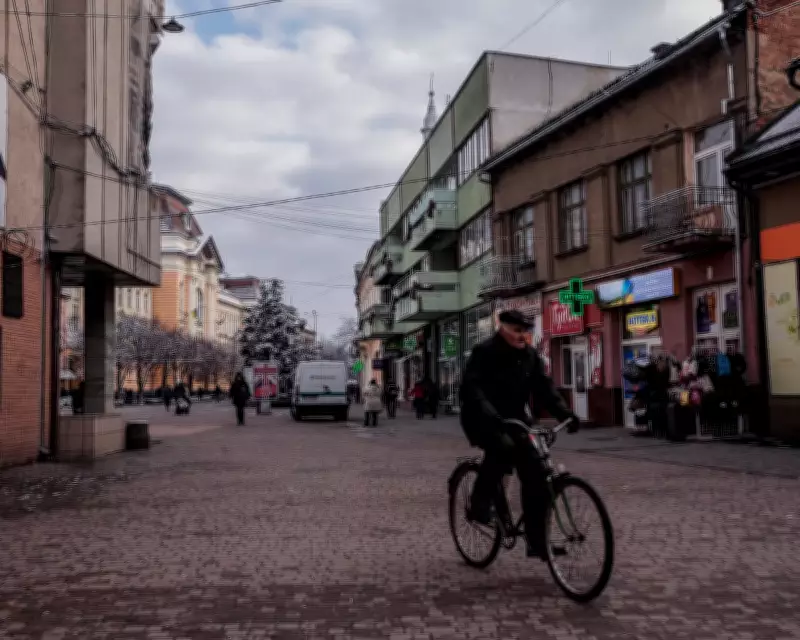
In Berehove, a small town of approximately 30,000 residents in Ukraine's Zakarpattia region, Hungarian is spoken as frequently as Ukrainian. This linguistic duality reflects a deeper cultural and political divide as Hungary's parliamentary election approaches.
While much of Ukraine hopes for the ouster of Kremlin-friendly leader Viktor Orbán after 16 years in power, Berehove's majority-Hungarian population presents a more nuanced perspective. Some residents quietly express support for Orbán's Fidesz party, citing his advocacy for ethnic Hungarians abroad.
Complex Loyalties in a Border Town
"Orbán is not perfect, but he cares about Hungarians everywhere," said László, who requested anonymity while collecting voting documents at the Hungarian consulate. He praised Orbán for providing passports, financial assistance, and defending language rights for ethnic Hungarians in Ukraine.
Approximately 60,000 ethnic Hungarians reside in Zakarpattia, and many in Berehove hold dual Hungarian citizenship despite Ukrainian legal restrictions. Budapest has established multiple voting stations at consulates in the region to accommodate these voters.
Political Tensions and Local Realities
Orbán has long positioned himself as protector of ethnic Hungarians beyond Hungary's borders, claiming they face discrimination and forced assimilation in Ukraine. Critics argue he exaggerates these grievances to justify hostility toward Kyiv and its Western allies.
"Orbán's rhetoric made the situation seem much worse, and with that, he turned domestic Hungarians against Ukraine," said András Rácz, a senior research fellow at the German Council on Foreign Relations.
Tensions have escalated as Hungary blocks a €90 billion EU financial package for Ukraine and hinders Kyiv's EU accession bid. In a leaked phone call, Hungary's foreign minister told his Russian counterpart that Hungarian rights violations in Ukraine influenced Budapest's opposition.
Daily Life Versus Political Narratives
In Berehove, residents describe a more harmonious coexistence than political rhetoric suggests. "We live alongside Ukrainians like brothers and sisters," said Erika, who works at the town's Hungarian theatre. "There is no discrimination here at all."
She noted she follows the election but hasn't voted, stating, "I only have one president, and that is Volodymyr Zelenskyy."
At a Catholic church flying a Hungarian flag, Natália emphasized community unity: "Hungarians and Ukrainians live together and pray together. We celebrate both Orthodox and Catholic Easter, and we like it this way."
Historical Context and Economic Factors
Berehove, historically known as Beregszász, has existed at shifting imperial borders for centuries. Incorporated into Soviet Ukraine in 1945 and independent Ukraine in 1991, it has remained relatively underdeveloped.
"Orbán's government has invested in schools, community centers and helped farmers," said Boris Vashkeba, head of a Hungarian community organization. "People see tangible results from him, and that's why they tell me he has their vote."
However, Vashkeba expressed disappointment with Orbán's turn toward Moscow, highlighting the complex political calculations of local residents.
War Perceptions and National Service
Located near the Hungarian border, Berehove feels distant from the war compared to other Ukrainian regions. Orbán has accused Ukraine of sending ethnic Hungarians "to the slaughterhouse," but community leaders reject this characterization.
Timbur Tomba, who heads the Hungarian community in Kyiv, noted that several thousand ethnic Hungarians have served in Ukraine's armed forces since the full-scale invasion, with approximately one hundred killed in action. Berehove maintains a memorial to fallen Ukrainian soldiers in its central square.
Diplomatic Efforts and Future Hopes
Ukrainian President Volodymyr Zelenskyy recently visited Zakarpattia, meeting Hungarian community leaders in a symbolic gesture ahead of the election. For many in Berehove, the hope is for improved relations between Kyiv and Budapest regardless of the election outcome.
"We need a restart in relations; it can't go on like this," Vashkeba emphasized. "When Ukraine and Hungary, two nations that have both suffered at the hands of Russia, are set against each other, it is Moscow that ultimately benefits."
The election results will likely reverberate through this border town, where daily life continues amidst complex political crosscurrents and historical ties that transcend contemporary geopolitical tensions.