Former Diplomat Warns Trump's Venezuela Success Led to Iran Miscalculation
A respected former US diplomat has issued a stark warning that Donald Trump's successful capture of Venezuelan President Nicolás Maduro created dangerous overconfidence, directly leading to a catastrophic miscalculation in Iran that continues to reverberate across global geopolitics.
The Venezuela Blueprint That Went Wrong
John Feeley, a former Marine helicopter pilot who served as US ambassador to Panama, believes Trump was "flush with the victory from Venezuela" when he authorized the ill-fated February attack on Iran. The operation, which Feeley describes as Trump "reaping the bitter fruit" of flawed strategic thinking, has left a trail of destruction across the Middle East while delivering a hammer blow to the global economy.
"We are now literally reaping the bitter fruit of a decision made in large part to go into Iran based on the unbelievable good luck that he had in Venezuela," Feeley emphasized, clarifying that his criticism targets political decision-making rather than the elite military units involved.
Operation Absolute Resolve: A Misleading Success Story
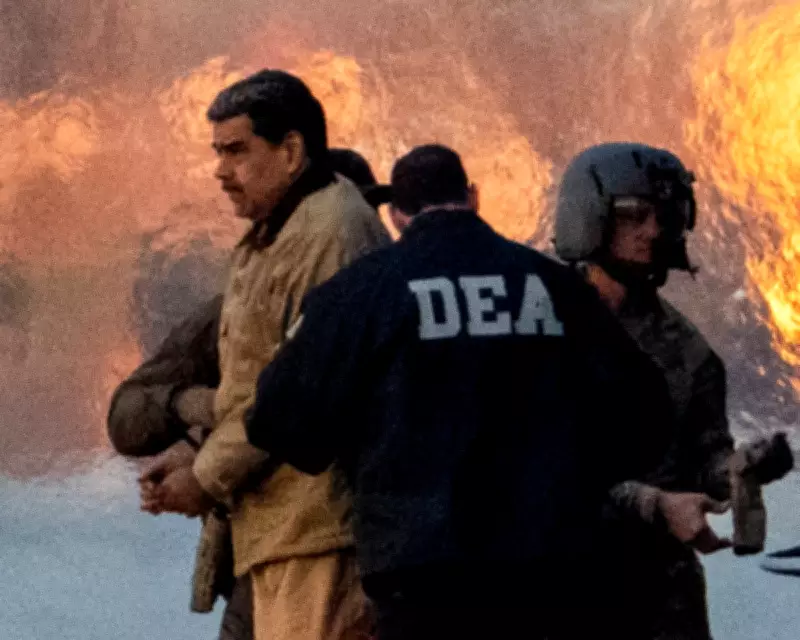
The capture of Nicolás Maduro on January 3rd represented one of the most dramatic displays of American military power in recent history. During Operation Absolute Resolve, special forces successfully seized the Venezuelan leader without suffering a single US military casualty, though more than 100 Cuban and Venezuelan troops lost their lives.
Trump himself boasted about the operation last month, calling it "one of the most stunning, effective, and powerful displays of American military might and competence in American history" and proof that the United States maintained "the strongest and most fearsome military on the planet."
However, Feeley and other former senior diplomats argue this success created a perilous illusion. The relatively straightforward overthrow of Maduro's regime, which Feeley describes as "a criminal mafia that had only really consolidated its position in the last decade," led Trump to believe that removing Iran's deeply entrenched leadership would be similarly achievable.
From Caracas to Tehran: A Dangerous Strategic Leap
Thomas Shannon, a former US ambassador to Brazil who oversaw Latin America policy during the George W. Bush administration, shares Feeley's assessment. Shannon believes Trump genuinely thought Iran would respond similarly to Venezuela, despite the fundamental differences between the two nations.
"He actually thought Iran was going to be the same thing," Shannon explained. "In many ways, Venezuela becomes the wrong example. But it's the one that the president has in mind when he decides to join the Israelis in the 28 February attack."
The critical distinction, according to both diplomats, lies in the resilience and structure of the Iranian regime. While Venezuela's authoritarian government had only recently consolidated power, Iran represents what Feeley calls "an ancient Persian empire, a millennial civilization" with seventy years of institutional development, decentralized command structures, and deeply indoctrinated leadership.
Cuba: The Next Potential Misstep
Feeley now fears the same flawed thinking could lead to another disastrous intervention, this time in Cuba. Trump recently vowed to "take" the Caribbean nation, suggesting he might view it through the same oversimplified lens that distorted his understanding of Iran.
"I think these guys will make the very jejune and naive mistake of thinking that Cuba is going to be just like Venezuela," Feeley warned, noting that Cuba's communist government has maintained power for over six decades with sophisticated internal structures and trained personnel.
The irony, according to Feeley, is that Venezuela's quick capitulation to US demands under new leadership actually facilitated Trump's subsequent miscalculation. "Their ultimate revenge is that they kind of laid down and made it look easy," he observed, suggesting that by yielding to overwhelming force, Maduro's regime inadvertently lured Trump into believing similar tactics would work against far more complex adversaries.
The Geopolitical Fallout Continues
As the consequences of the Iran intervention continue to unfold across the Middle East and global markets, Feeley's analysis provides crucial insight into how tactical success in one theater can create strategic blindness in another. The former diplomat's warning serves as a cautionary tale about the dangers of applying simplified solutions to complex geopolitical challenges, particularly when dealing with civilizations and regimes with centuries of historical resilience.
Both Feeley and Shannon emphasize that while hard power has its place in international relations, understanding the fundamental differences between authoritarian regimes is essential to avoiding catastrophic foreign policy errors that can destabilize entire regions and economies for generations to come.