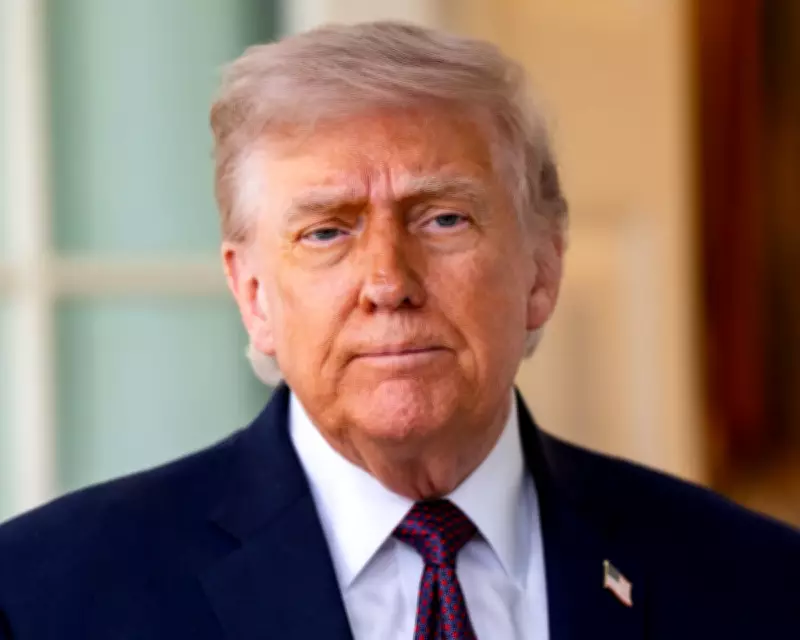
Trump Hints at Imminent Resumption of US-Iran Peace Negotiations in Islamabad
Former United States President Donald Trump has indicated that peace talks between the United States and Iran could potentially resume in Islamabad over the next two days. In comments made on Tuesday, Trump praised Pakistan's army chief, Field Marshal Asim Munir, describing him as "fantastic" and crediting him with facilitating the negotiation process.
Mediation Efforts and Diplomatic Movements
The US president made these remarks during a conversation with a New York Post reporter who was in Islamabad covering the initial round of ceasefire discussions over the weekend. Trump suggested the reporter remain in the Pakistani capital, stating, "You should stay there, really, because something could be happening over the next two days, and we're more inclined to go there." He emphasized Munir's role, adding, "He's fantastic, and therefore it's more likely that we go back there."
Field Marshal Asim Munir, a powerful figure in Pakistan with established relationships with both Trump and Iran's Revolutionary Guards, has been instrumental in arranging the talks. A Pakistani official confirmed on Tuesday that negotiations are expected to restart soon, though possibly taking slightly longer than Trump's two-day timeline, declaring, "The game is on."
Context of Regional Tensions and Previous Negotiations
These developments follow 21 hours of intensive talks over the weekend that concluded with US Vice-President JD Vance walking out on Sunday morning. Vance cited Iran's failure to provide an "affirmative commitment that they will not seek a nuclear weapon" as the reason for his departure. Subsequently, Trump announced a US naval blockade targeting ships using Iranian ports in the Gulf, aiming to increase economic pressure on Iran.
This blockade represents a countermeasure to Iran's near-total closure of the Strait of Hormuz to ships using other Gulf ports, which began after the US-Israeli attack commenced on February 28. The strategic waterway, through which approximately one-fifth of global oil and liquefied natural gas flows, has seen significant disruption, contributing to oil prices spiking above $100 per barrel before dipping to around $95 amid reports of potential renewed talks.
Key Sticking Points and International Involvement
According to US reports from the Islamabad discussions, a major point of contention was the American delegation's demand for a 20-year suspension of Iran's uranium enrichment activities. Iran reportedly offered a shorter moratorium of less than ten years. An Iranian official criticized the US approach, stating, "Iran did not surrender at the battlefield, neither will it surrender behind the table."
Another significant issue involves Iran's stockpile of highly enriched uranium, which is close to weapons-grade purity and believed to be stored in deep mountain shafts in central Iran. While Iran has previously offered to dilute this material at Geneva negotiations, the US insists on its complete removal.
Vice-President Vance, when questioned about the potential resumption of talks, expressed openness but noted Iran's need for greater flexibility. "The big question from here on out is whether Iranians will have enough flexibility," he told Fox News, adding that Iran had shown some willingness in Islamabad but "didn't move far enough."
Regional Diplomacy and Parallel Negotiations
Meanwhile, Israel and Lebanon conducted unprecedented negotiations in Washington addressing cross-border conflicts that erupted following the US-Israeli attack on Iran. Hezbollah, aligning with Iran, launched rockets at Israel, prompting Israeli bombardment of Beirut and other Lebanese cities, along with an invasion of southern Lebanon. The US State Department described the discussions as "productive" steps toward direct Israel-Lebanon negotiations, though Hezbollah has stated it will not honor any agreements made by government negotiators.
Senior officials from Saudi Arabia, Egypt, and Turkey were also present in Islamabad on Tuesday, consulting with Pakistani counterparts on mediation strategies. Pakistan's Prime Minister Shehbaz Sharif is scheduled to visit Saudi Arabia, Turkey, and Qatar to garner support for the peace process, discuss proposals to reopen the Strait of Hormuz, and address Iran's demands for war reparations. However, Sharif's regional tour might be shortened if negotiations resume promptly.
The US Treasury Department has announced it will not renew temporary sanctions relief on Iranian oil, initially implemented to mitigate war-related supply shocks. This decision aligns with the Trump administration's broader efforts to control escalating energy prices.