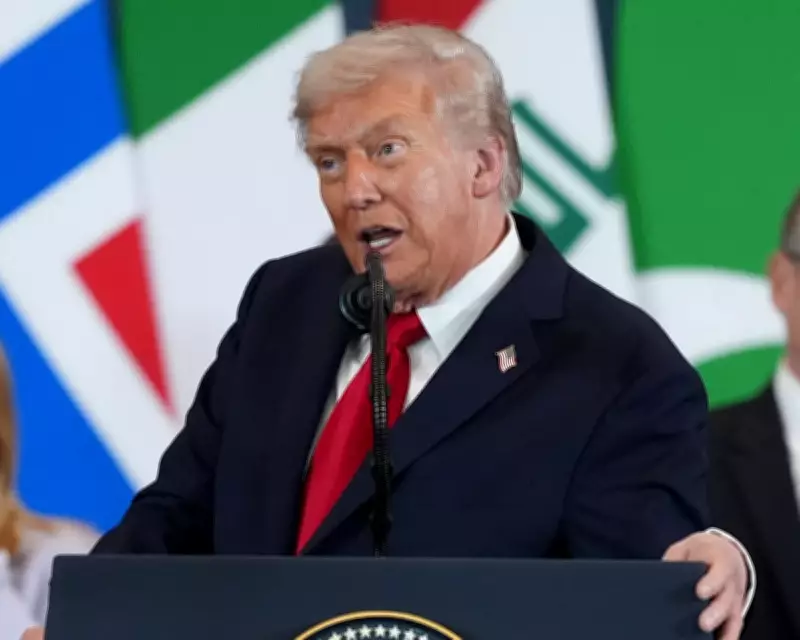
Former US President Donald Trump has once again publicly rebuked UK Prime Minister Keir Starmer, this time over the British leader's refusal to permit the United States to utilize military bases located within the United Kingdom for launching offensive strikes against Iran. This latest verbal assault marks a significant escalation in the ongoing diplomatic friction between the two allied nations, highlighting deep strategic disagreements on Middle Eastern policy and military cooperation protocols.
Recurring Diplomatic Tensions Surface
The controversy centers on a longstanding request from the Trump administration, which has been repeatedly denied by the UK government under Starmer's leadership. According to sources familiar with the discussions, the US sought operational access to key Royal Air Force installations and other strategic facilities to conduct aerial bombardments or missile launches targeting Iranian military assets and nuclear facilities. Prime Minister Starmer, adhering to a policy of cautious non-escalation in the region, has consistently blocked these proposals, citing concerns over violating international law, triggering a broader regional conflict, and compromising UK sovereignty.
Trump's Persistent Criticism Intensifies
In a series of public statements and social media posts, Trump has lambasted Starmer's decision as "weak," "dangerous," and detrimental to global security interests. He argues that denying US forces the ability to operate from UK soil undermines the special relationship between the two countries and hampers efforts to counter what he describes as Iranian aggression and nuclear ambitions. Trump's rhetoric has grown increasingly pointed, accusing the Starmer government of failing to stand with a key ally during a critical geopolitical moment.
Analysts note that this dispute is not isolated but part of a pattern of strained relations since Starmer took office, with previous clashes over trade agreements, climate policy, and intelligence sharing. The Iran base issue, however, cuts directly to core defense and foreign policy principles, exposing fundamental differences in approach to international conflict resolution and the use of military force.
Broader Implications for UK-US Relations
The ongoing spat raises serious questions about the future of the Anglo-American alliance, often hailed as one of the most enduring partnerships in modern diplomacy. UK officials, while maintaining a publicly diplomatic tone, have privately expressed frustration at Trump's confrontational style and his attempts to pressure London into compromising its independent foreign policy stance. The Starmer administration emphasizes its commitment to multilateral diplomacy through channels like the United Nations and the European Union, contrasting sharply with Trump's preference for unilateral or bilateral military actions.
Strategic and Legal Considerations at Play
Legal experts point out that allowing foreign strikes from UK territory could implicate Britain in potential violations of international law, especially if such attacks are not explicitly authorized by the UN Security Council or conducted in self-defense. Moreover, military strategists warn that involving UK bases could make them retaliatory targets for Iranian forces, escalating hostilities and endangering British personnel and civilians. The Starmer government's refusal is framed as a prudent measure to protect national interests and uphold legal and ethical standards in warfare.
Despite the tensions, both nations continue to cooperate in other security areas, such as counter-terrorism and naval patrols in the Persian Gulf. However, this high-profile disagreement over Iran policy threatens to overshadow those collaborative efforts, potentially influencing future bilateral negotiations on defense spending, intelligence protocols, and joint military exercises.
Looking Ahead: A Diplomatic Challenge
As Trump continues to vocalize his criticisms, the Starmer government faces mounting pressure to defend its position both domestically and internationally. Opposition parties in the UK have largely supported the prime minister's stance, citing the need for strategic autonomy and adherence to international norms. Meanwhile, the US political landscape remains divided, with some lawmakers backing Trump's aggressive posture toward Iran and others urging restraint and diplomatic engagement.
The situation underscores the complex dynamics of modern alliances, where shared history and values must constantly be balanced against divergent national priorities and leadership styles. Observers will closely watch how this dispute evolves, particularly in light of upcoming elections in both countries that could reshape foreign policy directions and either mend or further fracture the UK-US relationship.