Spain Takes a Stand: PM Sanchez Rejects US War Efforts, Faces Trump's Trade Threats
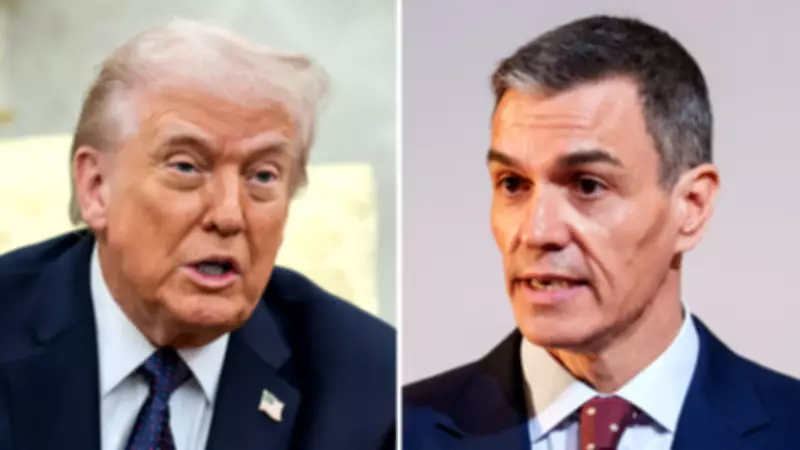
In a bold move that has sent shockwaves through international diplomacy, Spanish Prime Minister Pedro Sanchez has openly defied US President Donald Trump by declaring "no to the war" in the Middle East. This stance comes as Trump threatens Spain with a severe trade war following Madrid's refusal to allow American forces to use Spanish military bases for operations against Iran.
A Lone Voice in the EU
For several days after the initiation of US-Israeli strikes on Iran, Spain emerged as a solitary voice within the European Union, questioning the legality of the military campaign. The country's position hardened when it formally denied the United States access to its bases, a decision that has now triggered retaliatory threats from the White House.
Donald Trump responded aggressively, stating, "We're going to cut off all trade with Spain. We don't want anything to do with Spain," during a meeting where German Chancellor Friedrich Merz remained notably silent. Despite these pressures, Spain has shown no signs of backing down.
Sanchez's Firm Address to the Nation
Prime Minister Sanchez addressed the Spanish public, emphasizing that his opposition to the war is not an endorsement of Iran's leadership but a call for de-escalation. He urged Iran, Israel, and the US to cease hostilities before the situation spirals out of control.
"Twenty-three years ago, another US administration dragged us into a war with the Middle East. It triggered the largest wave of insecurity our continent has experienced since the fall of the Berlin Wall," Sanchez remarked, warning that the current conflict risks "playing Russian roulette" with millions of lives.
He further criticized leaders who use war to mask their failures, asserting, "It is unacceptable that leaders who are incapable of fulfilling their duties try to cover up their failure with the smoke of war."
European Reactions and Divisions
The Spanish stance has garnered mixed responses from other European nations. Teresa Ribera, the Spanish vice president of the European Commission, strongly supported her country, condemning Trump's threats as harmful to global stability. She highlighted the disruptive impact of such tensions on peace, cooperation, and economies.
French President Emmanuel Macron has aligned with Sanchez, questioning the legality of the strikes and labeling them as conducted "outside of international law." Sources indicate Macron plans to call Sanchez to express solidarity, showcasing a united front against the US pressure.
However, Germany's response has been more cautious. Chancellor Friedrich Merz avoided publicly defending Spain, instead focusing on private discussions with Trump about NATO contributions. This approach has drawn criticism from Spanish officials, with the foreign minister expressing surprise and noting that former German leaders would not have acted similarly.
Ongoing Tensions and Future Implications
As the situation unfolds, Trump's reaction to Sanchez's speech remains anticipated, with expectations of further confrontation. The incident underscores deepening rifts within the EU and between the US and its allies over Middle East policy.
Spain's firm position not only challenges US authority but also tests European unity, as leaders navigate the delicate balance between supporting allies and upholding international law. The potential trade war looms large, threatening economic stability and diplomatic relations in an already volatile global landscape.