
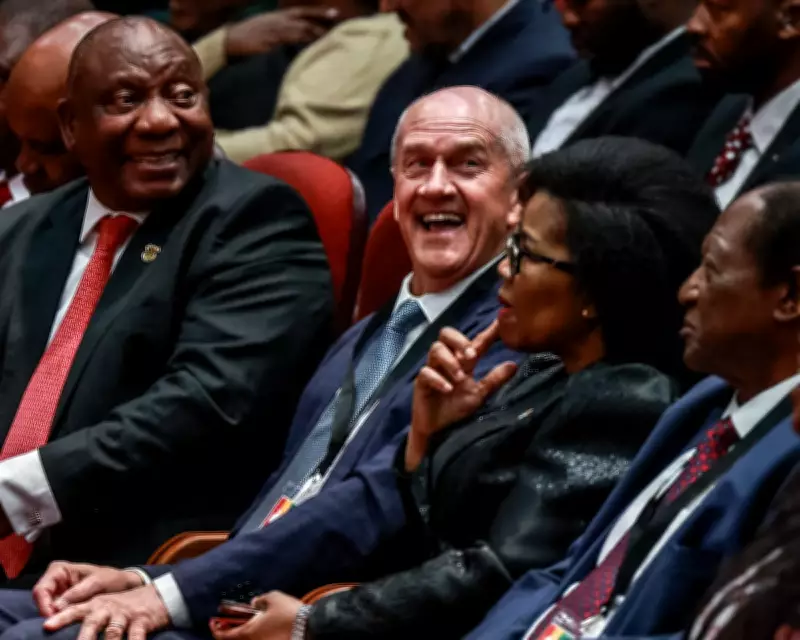
South Africa Appoints Apartheid-Era Negotiator Roelf Meyer as US Ambassador
South Africa has appointed Roelf Meyer, a former chief negotiator for the apartheid government during the transition to democracy in the 1990s, as its new ambassador to the United States. This strategic move is widely viewed as an attempt to repair the deeply strained diplomatic relationship between the two nations, which has deteriorated significantly in recent years.
Background of the Appointment
Roelf Meyer replaces Ebrahim Rasool, who was expelled from the United States in March 2025 after criticizing the Trump administration. Since Donald Trump began his second term as president, the U.S. government has accused South Africa of racial discrimination against white Afrikaners, who historically led the country during the apartheid era. The Trump administration has also prioritized white South African refugees while restricting entry for nearly all other refugee groups.
Meyer, an Afrikaner himself, served as a reformist minister in the final apartheid government. During the negotiations that culminated in democracy in 1994, his counterpart was Cyril Ramaphosa, who is now the president of South Africa. The two developed a close working relationship during those critical talks. Meyer later joined the African National Congress (ANC) in 2006, demonstrating his commitment to the post-apartheid political landscape.
Diplomatic Challenges and Meyer's Role
South Africa has been without an ambassador in Washington since Rasool's expulsion. U.S. Secretary of State Marco Rubio accused Rasool of being a "race-baiting politician who hates America" after Rasool criticized Trump's Make America Great Again movement as a "supremacist" response to demographic changes in the United States.
In an interview from July 2025, Meyer emphasized the importance of restoring the bilateral relationship, stating that the United States is an "important partner" that cannot be ignored. He acknowledged that South Africa may share some blame for not maintaining the relationship adequately over time, even before the current U.S. administration.
Despite his initial reservations about taking on the ambassadorial role due to his age—Meyer is 78—he has accepted the position. He has also criticized certain Afrikaner groups, such as AfriForum, for lobbying in Washington and promoting the false narrative that the killing of white farmers in South Africa is racially targeted, despite the country's high murder rate affecting all racial groups.
Expert Analysis and Broader Context
Professor John Stremlau, a U.S.-Africa relations expert at the University of the Witwatersrand in Johannesburg, has praised Meyer's appointment, calling him "the right person, at the right time." Stremlau highlighted Meyer's extensive experience as a negotiator, not only in South Africa but also in brokering agreements in other challenging international contexts. He stressed that Meyer's primary task will be to "stabilize the relationship" between South Africa and the United States.
The diplomatic tensions have been exacerbated by Trump's repeated false claims of a "white genocide" in South Africa, as well as U.S. criticism of South Africa's affirmative action policies and its case at the International Court of Justice accusing Israel of genocide in Gaza.
Vincent Magwenya, spokesperson for President Ramaphosa, has indicated that Meyer will not be giving interviews until his credentials are formally accepted by the U.S. State Department. The timeline for this process remains uncertain, as it depends on administrative protocols in Washington.
This appointment underscores South Africa's proactive approach to navigating complex international relations, leveraging historical figures like Meyer to bridge divides and foster dialogue in a politically charged global environment.




