
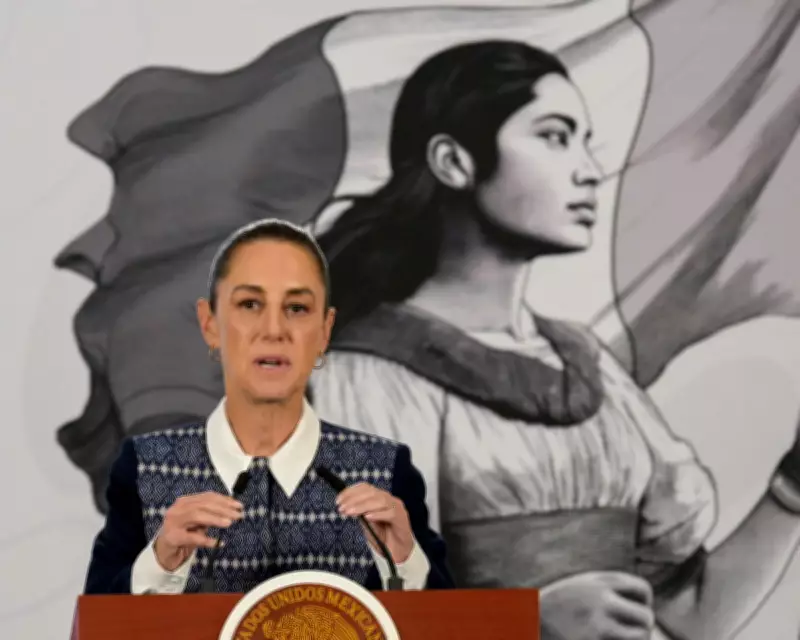
Mexican Leader Takes Firm Stand Against US Policies Amid Growing Tensions
Mexican President Claudia Sheinbaum has significantly escalated her diplomatic confrontation with the Trump administration, adopting a markedly harder line in response to mounting deaths of Mexican citizens in US immigration custody and ongoing disputes over American sanctions against Cuba. This strategic shift represents a notable departure from her previously measured approach toward Washington.
Mounting Deaths in ICE Custody Prompt Strong Response
The catalyst for Sheinbaum's more assertive stance came following the death of 49-year-old Mexican citizen Alejandro Cabrera Clemente in an Immigration and Customs Enforcement detention facility in Louisiana. This tragic incident marked the fifteenth death of a Mexican national in US custody within approximately one year, prompting immediate condemnation from Mexican authorities.
"We are going to defend Mexicans at every level," Sheinbaum declared on Tuesday, emphasizing that "there are many Mexicans whose only crime is not having papers." Her government has characterized the ICE detention centers as "incompatible with human rights standards and the protection of life" and labeled the recurring fatalities as "unacceptable."
The Mexican administration has implemented several concrete measures in response:
- Requesting thorough investigations into all fifteen migrant deaths
- Instructing Mexican consulates to conduct daily visits to detention facilities
- Elevating the issue to the Inter-American Commission on Human Rights
- Considering appeals to United Nations human rights bodies
Cuba Policy Emerges as Major Point of Contention
Beyond immigration concerns, Sheinbaum has increasingly challenged the Trump administration's aggressive policies toward Cuba, a longstanding Mexican ally. The relationship reached a critical juncture in late January when Trump announced tariffs against any country exporting oil to Cuba—a move directly affecting Mexico's longstanding fuel shipments to the island nation.
While Sheinbaum reluctantly suspended oil deliveries to Cuba, she has maintained strong rhetorical opposition to American sanctions. "Mexico has every right to send fuel, whether for humanitarian or commercial reasons," she asserted earlier this week, describing Trump's energy blockade as "unjust" and accusing Washington of "suffocating" Cubans through economic pressure.
Balancing Act Between Cooperation and Sovereignty
For over a year, Sheinbaum has carefully navigated relations with the Trump administration, maintaining what she describes as a "cool head" despite numerous provocations. Her government has intensified operations against drug cartels beyond her predecessors' efforts and strengthened trade relations ahead of USMCA renegotiations—both moves designed to mitigate threats of American tariffs and potential military intervention.
"She has had to balance maintaining a strong relationship with Trump while repeatedly stressing Mexico's sovereignty to appease her own base," noted political analysts. Despite Trump's occasional public criticisms—including suggestions that cartels exercise greater control over Mexico than her government—the American president has also acknowledged their generally amicable relationship, stating last month that "she is really a nice person, I like her a lot."
Strategic Calculations Behind the Hardened Stance
According to Carin Zissis, vice-president of content strategy for the Council of the Americas, Sheinbaum's increasingly bold rhetoric reflects a calculated assessment that her administration can afford to push back on politically significant issues while continuing cooperation on trade, security, and migration matters. "Sheinbaum's recently bolder tone suggests a calculation that her administration can push back on some politically important fronts as long as they also are making progress on strengthening trade and meeting Trump administration requests on security and migration," Zissis explained.
Simultaneously, geopolitical developments have altered the diplomatic landscape. Surging energy prices resulting from conflicts in the Middle East have increased American dependence on Mexican cooperation, prompting Washington to moderate its most aggressive stances toward Mexican cartels and Cuba policies—at least temporarily.
The White House offered no immediate comment regarding Sheinbaum's strengthened position or the rising death toll of Mexican nationals in ICE custody, leaving unresolved one of the most significant diplomatic challenges currently facing North American relations.




