The Futile Weapon: How Sanctions Backfire on Both Targets and Western Nations
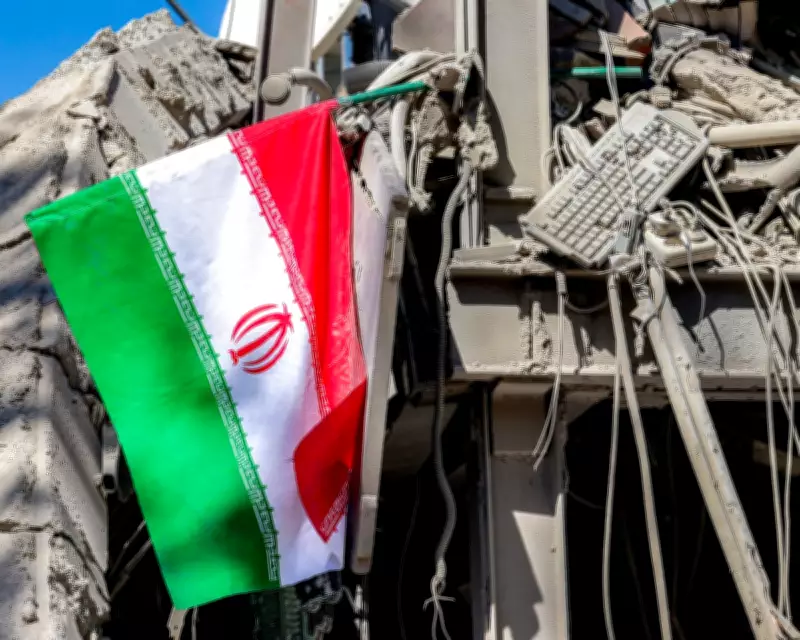
In the rubble of Sharif University of Technology in Tehran, where strikes occurred on April 7, 2026, an Iranian national flag lies amidst collapsed buildings. This stark image symbolizes the destructive impact of international conflicts, yet evidence suggests the primary economic weapon deployed by Western nations—sanctions—consistently fails to achieve its stated objectives while causing significant collateral damage.
Economic Self-Harm: Britain's Growing Vulnerability
The chancellor of the exchequer and the International Monetary Fund both acknowledge that Britain's economy faces its most severe downturn in decades. This economic calamity represents collateral damage from the United States' war on Iran and the subsequent closure of the Strait of Hormuz. The situation worsens with sanctions targeting Gulf oil exports, creating a perfect storm of economic disruption.
Britain has already endured four years of sanctions against Russia over the Ukraine conflict, weakening its economic foundation. Now, with growth projections collapsing, government popularity plummeting, and the prime minister facing potential removal, the nation experiences precisely the economic devastation sanctions were designed to inflict on adversaries—not on Western allies themselves.
The Historical Failure of Economic Coercion
Sanctions against Russia were implemented with unprecedented severity to demonstrate the error of Vladimir Putin's ways and prompt his allies to pressure him toward cessation. Yet, in subsequent years, Russia's economic growth rate consistently outpaced Britain's. Similarly, sanctions against Iran during the 2010s aimed to halt nuclear development but appeared to accelerate it instead. Current sanctions targeting Tehran's regime show minimal likelihood of achieving their stated goal of toppling the ayatollahs.
The United States currently imposes economic sanctions on approximately thirty countries worldwide, often with Western government support. Beyond Iran, this list includes North Korea, Myanmar, Belarus, and Afghanistan. The common thread among these nations is their continued governance by the same regimes present when sanctions were initially imposed. In essence, sanctions have proven ineffective at destabilizing targeted governments.
Unintended Consequences and Global Realignments
Sanctions have strengthened the anti-Western Sino-Russian trade alliance while encouraging numerous countries to embrace BRICS partnership nations—Brazil, Russia, India, China, and South Africa—as alternatives to the Western G7 alliance. These developments represent staggeringly counterproductive outcomes from policies intended to isolate adversaries.
Academic research, including Nicholas Mulder's comprehensive study The Economic Weapon, documents the historical futility of using trade restrictions to threaten enemies. Except in cases involving tiny states, trade consistently finds alternative pathways. Sanctions prove particularly ineffective against nations resistant to internal democratic pressures, as demonstrated by their failure against fascist powers before the Second World War, where they merely encouraged moves toward self-sufficiency.
The Devastating Impact on Educated Middle Classes
Beyond economic metrics, sanctions produce a more insidious consequence that directly contradicts their supposed objective of regime change. Trade impediments and frozen international contacts inevitably accelerate the exodus of mercantile and professional classes from targeted nations. This brain drain exceeds any repression exerted by regimes themselves.
Since Iran's 1979 revolution, the country has lost millions of citizens to emigration. By 2021, over four million Iranians lived abroad, with reports indicating a disproportionate representation from educated middle classes. This exodus has immeasurably weakened the very forces that might conceivably replace the existing regime. While benefiting European and American medical services and creating vibrant expatriate communities, sanctions have hollowed out Iran's educated class—the demographic most likely to bolster dissent and support democratic renewal.
Cultural Exchange as Alternative Strategy
In both Russia and Iran, the soil where dissent might take root has been rendered barren by emigration and embargo. If Western nations genuinely seek regime change without military invasion, they must employ shrewder tactics emphasizing soft power over crude coercion. Political opposition requires support and international contact to prosper, necessitating promotion of academic and cultural exchange alongside trade relationships.
Sanctions ultimately prove illiberal, encouraging targeted nations to tighten borders and repress opposition—explaining why so many sanctioned regimes remain in power. Authoritarian countries typically change only when alternative elites perceive cracks in the armor of power. Both Russia and Iran represent nations with which Britain historically enjoyed natural affinity, suggesting that restored friendship rather than punitive measures might prove more effective.
The military establishment often favors sanctions as aggressive measures that sound formidable while avoiding actual force deployment. Liberals appreciate them as macho alternatives to pacifism, while conservatives embrace tough rhetoric describing sanctions as "savage, swingeing, crippling" without sounding overtly violent. Strategists champion sanctions as preferable to bombing for demonstrating power, exhibiting destruction while avoiding accountability for tangible results.
For decades, sanctions have enabled wealthy Western nations to exert post-imperial influence, appearing concerned without excessive commitment. When casualties occur, they predominantly affect silent poor populations rather than regime elites. This dynamic underscores why sanctions consistently disappoint as instruments of genuine political transformation.