Pope Leo XIV Issues Powerful Rebuke Against War During Vatican Peace Vigil
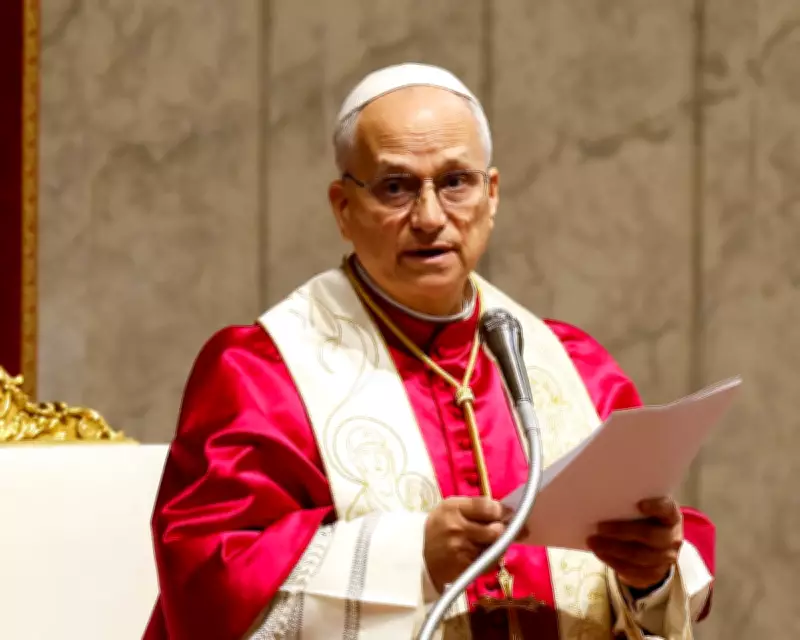
Pope Leo XIV delivered a passionate and unequivocal condemnation of global conflict during an evening prayer vigil at St. Peter's Basilica in Vatican City on Saturday, April 11th. The first US-born pontiff presided over a rosary for peace attended by thousands, using the occasion to challenge world leaders who prioritize military might over diplomatic solutions.
'Enough of War': A Direct Challenge to Global Powers
Addressing political leaders directly, Pope Leo declared: "To them we cry out: stop! It is time for peace! Sit at the table of dialogue and mediation – not at the table where rearmament is planned and deadly actions are decided." His remarks, while not explicitly naming specific nations or conflicts, represented his strongest denunciation yet of ongoing hostilities, particularly the US-Israeli war with Iran.
The pontiff continued with increasing intensity: "Enough of the idolatry of self and money! Enough of the display of power! Enough of war! True strength is shown in serving life." He warned against what he termed "that delusion of omnipotence that surrounds us and is becoming increasingly unpredictable and aggressive."
Religious Justification for War Receives Sharp Rebuttal
In a clear response to US officials who have framed military action in religious terms, Pope Leo stated: "Even the holy Name of God, the God of life, is being dragged into discourses of death." This appeared directed at US Defense Secretary Pete Hegseth, who has described the conflict with Iran as a holy war carried out "in the name of Jesus Christ."
The pope elaborated on this theme, asserting: "Those who pray are aware of their own limitations. They do not kill or threaten with death. Instead, death enslaves those who have turned their backs on the living God, turning themselves and their own power into a mute, blind and deaf idol."
Timing Coincides with Fragile Diplomatic Negotiations
The vigil occurred during critical face-to-face negotiations between US and Iranian delegations in Pakistan, aimed at solidifying a fragile truce and establishing permanent peace. The US delegation was led by Vice President JD Vance, a recent convert to Catholicism whose friend, Pentagon official Elbridge Colby, had reportedly summoned the Vatican's ambassador to the US in January to protest earlier papal comments.
Pope Leo's January declaration that "a diplomacy that promotes dialogue and seeks consensus among all parties is being replaced by a diplomacy based on force" had reportedly angered Pentagon officials, setting the stage for Saturday's more forceful address.
Evolution of Papal Stance on the Conflict
The Chicago-born pontiff initially adopted a cautious approach when hostilities began six weeks ago, limiting his comments to general appeals for peace. However, his rhetoric has intensified significantly in recent weeks. On Palm Sunday, he escalated his criticism, and later described former President Donald Trump's Easter Sunday threat to annihilate Iranian civilization as "truly unacceptable."
On Friday, Pope Leo took to his official social media account to write: "God does not bless any conflict. Anyone who is a disciple of Christ, the Prince of Peace, is never on the side of those who once wielded the sword and today drop bombs." He emphasized that "military action will not create space for freedom or times of peace, which comes only from the patient promotion of coexistence and dialogue among peoples."
Global Participation and Symbolic Attendance
The prayer vigil, announced during the pope's Easter Urbi et Orbi message, drew participation from parishes across every continent. Within St. Peter's Basilica, the gathering included notable diplomatic figures: Laura Hochla, deputy chief of mission with the US embassy to the Holy See, and Belgian Cardinal Dominique Joseph Mathieu, the archbishop of Tehran.
Pope Leo offered his homily at the tomb of St. Peter, renewing his call for all people of goodwill to pray for peace to "break the demonic cycle of evil" and build instead a world "in which there is no sword, no drone, no vengeance, no trivialization of evil, no unjust profit, but only dignity, understanding and forgiveness."
In his concluding remarks, the pontiff condemned what he described as "absurd and inhuman violence" spreading through sacred places, noting that "no cause can justify the shedding of innocent blood" and "no gain can be worth the life of the weakest, children, or families."