Pakistan's Delicate Peacemaking Role Confronts Escalating Regional Tensions
Intensifying Israeli airstrikes on civilian targets in Iran and a significant expansion of US military forces in the Gulf region are casting a profound shadow over Pakistan's ambitious efforts to broker peace negotiations between Iran and the United States. Islamabad is engaging in a precarious diplomatic balancing act, leveraging its unique position as a nation with strong ties to both Tehran and Washington to offer a neutral venue for dialogue.
A Neutral Mediator in a Volatile Landscape
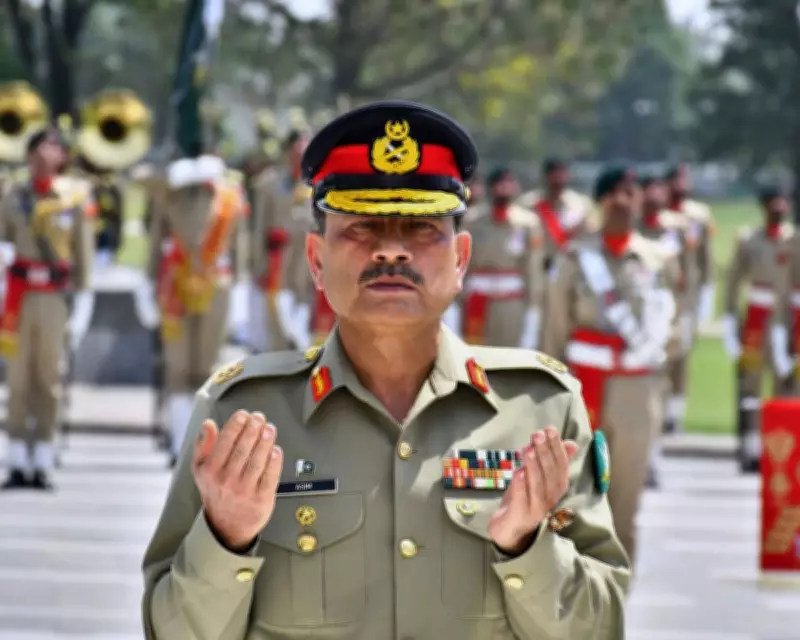
Pakistan stands apart as a potential mediator due to its absence from Middle Eastern conflicts and lack of American military bases on its soil, which minimizes the political baggage associated with other regional players. The country's de facto leader, military chief Field Marshal Asim Munir, maintains direct access to US President Donald Trump, while relations with Iran have markedly improved over recent years.
Pakistani officials report that both Iran and the US have expressed a theoretical willingness to engage in talks. However, the widening scope of the conflict, coupled with deep-seated mistrust and vastly divergent public positions, presents formidable obstacles. Analysts within Pakistan identify Israel as the most likely spoiler to any diplomatic progress.

Israeli Actions Threaten Diplomatic Foundations
Recent Israeli bombings targeting Iran's major steel plants and civilian nuclear facilities have directly contradicted President Trump's announced pause in attacks on non-military infrastructure, a move intended to foster diplomatic opportunities. Iranian Foreign Minister Abbas Araghchi condemned these strikes, which also reportedly hit university sites. Pakistani authorities fear precisely such assaults on civilian and non-regime targets could irrevocably derail negotiation prospects.
Maleeha Lodhi, a former Pakistani ambassador to the US, emphasized Iran's primary demand: a conclusive end to hostilities and guarantees against future US and Israeli attacks. "The toughest part is believing Trump's word. He is not a rational player. He's completely whimsical," Lodhi stated, highlighting the credibility crisis at the heart of negotiations.
Divergent Visions for a Post-Conflict Future
While President Trump asserts that Iran desperately desires a deal, Tehran counters that he is "negotiating with himself." Iran seeks not merely a ceasefire but a binding assurance that the war is permanently over. One contentious proposal involves Iran maintaining control over the Strait of Hormuz, a critical channel for Gulf energy exports. US Secretary of State Marco Rubio dismissed this idea as unacceptable, though Trump has previously floated the concept of joint US-Iranian administration of the waterway.
Pakistan has actively facilitated communication, shuttling proposals between the two sides despite their entrenched hardline stances. Officials in Islamabad remain cautiously optimistic that if genuine political will exists, the gap can be bridged.
Pakistan Intensifies Diplomatic Outreach
Diplomatic efforts accelerated over the weekend, with Pakistani Prime Minister Shehbaz Sharif holding a call with Iranian President Masoud Pezeshkian. Additionally, foreign ministers from Turkey, Egypt, Saudi Arabia, and Pakistan are scheduled to convene in Islamabad to strategize on ending the conflict. This emerging coalition represents a new alignment within the Muslim world, combining substantial military capabilities, nuclear assets, and Saudi financial influence.
However, Saudi officials, whose territory has suffered repeated Iranian attacks, have privately expressed a desire for the bombardment to continue, complicating unified mediation efforts.
Logistical and Strategic Complexities
Any talks are expected to be indirect, with Pakistani officials mediating between US and Iranian delegations in separate rooms, as Tehran refuses direct face-to-face meetings with American representatives. Pakistan's nuclear-armed status, large military for venue security, and air force capabilities to escort Iranian officials provide practical advantages for hosting such dialogues.

Iran remains deeply skeptical of US intentions, citing two previous instances where talks were interrupted by American bombings. The current US troop buildup in the region further fuels suspicions that Washington may not be prioritizing peace. Reports indicate the Pentagon is considering deploying an additional 10,000 soldiers to the Middle East, supplementing 7,000 ground troops already en route.
Building Trust Through Unconventional Channels
To foster confidence, Pakistan proposed US Vice-President JD Vance as a representative, a suggestion Iran welcomed. Tehran distrusts previous US interlocutors like Steve Witkoff and Jared Kushner, viewing Vance as more skeptical of the war. In a recent podcast appearance, Vance acknowledged that the US has largely achieved its military objectives but noted, "The president's going to keep at it for a little while longer to ensure that once we leave, we don't have to do this again for a very, very long time."
Pakistan's Urgent Stake in Peace
Beyond regional stability, Pakistan faces a pressing incentive to secure a diplomatic resolution. A defence pact signed with Saudi Arabia last year could compel Pakistan to enter the conflict on Riyadh's side—a scenario Islamabad is determined to avoid given its extensive border with Iran and status as home to the world's second-largest Shia Muslim population after Iran itself. The stakes for Pakistan's peacemaking initiative could not be higher, as failure risks drawing the nation directly into a devastating regional war.