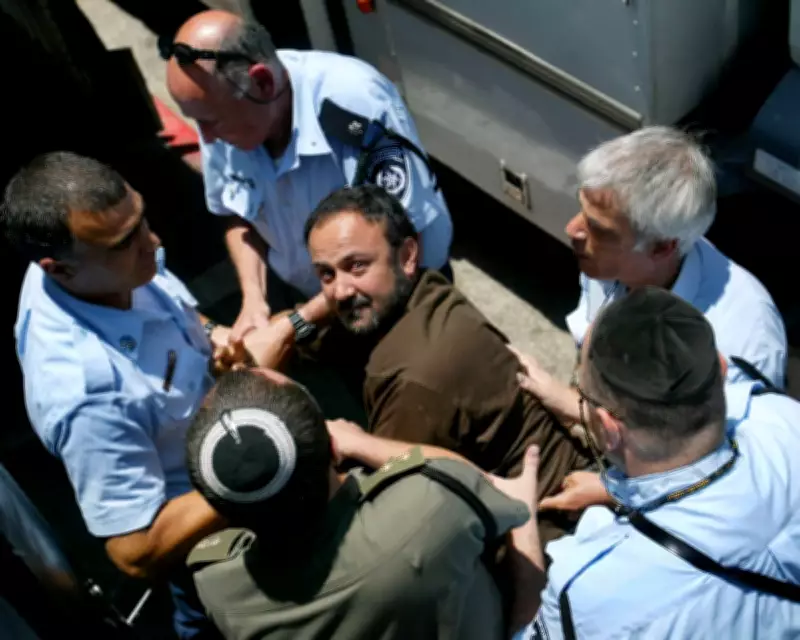
Palestinian Leader Marwan Barghouti Endures Escalating Abuse in Israeli Custody
The imprisoned Palestinian leader Marwan Barghouti, widely regarded as Palestine's Nelson Mandela, faces immediate danger in Israeli jails according to his legal representative. Over the past three weeks, Barghouti has endured three separate violent incidents, including a particularly brutal assault where prison guards deliberately set a dog upon the 66-year-old political figure.
Pattern of Violence and Neglect
Attorney Ben Marmarelli issued a detailed statement following a prison visit where Barghouti described the recent attacks. Marmarelli characterized the treatment as a clear pattern of escalating abuse involving violence, medical neglect, and conditions that place Barghouti at immediate risk. The lawyer emphasized that these incidents represent a systematic deterioration in the Palestinian leader's treatment while incarcerated.
According to Marmarelli's account, on March 25th, prison guards entered Barghouti's cell at Megiddo prison with a dog and forced him to the ground where the animal repeatedly attacked him. The following day, during a transfer to Ganot prison, Barghouti was assaulted again. Then on April 8th, guards at Ganot prison severely beat him, leaving him bleeding for more than two hours while denying requests for medical attention.
International Calls for Release
On Wednesday, which marked the 24th anniversary of Barghouti's imprisonment, international celebrities including Cate Blanchett, Bryan Adams, and Don Cheadle joined hundreds of cultural figures and former global leaders in demanding his release. This high-profile campaign highlights growing international concern about Barghouti's treatment and the broader conditions faced by Palestinian prisoners in Israeli custody.
Barghouti remains a significant figure in Palestinian politics, respected across otherwise divided factions and maintaining broad popular support throughout occupied Palestine. Before his detention, he repeatedly engaged with Israeli officials and has long advocated for a two-state solution to the conflict.
Historical Parallels and Legal Controversy
The comparison to Nelson Mandela extends beyond political symbolism. Mandela himself reportedly described Barghouti's trial as a legal attack on legitimate political struggle, drawing parallels to his own experience under apartheid. In 2002, Mandela told his lawyer Khader Shkirat that what was happening to Barghouti mirrored his own treatment, with governments attempting to delegitimize political movements through judicial proceedings.
Barghouti was convicted of ordering attacks that killed civilians during the second intifada, though his trial faced criticism from legal experts who questioned its fairness. Since his conviction, he has spent long periods in solitary confinement while Israel has rejected repeated requests for his release during prisoner exchanges.
Deteriorating Conditions and Family Concerns
Recent years have brought increasing concerns about Barghouti's health amid widespread reports of systemic torture and abuse of Palestinian prisoners in Israeli jails. Prisoners reportedly receive insufficient food despite repeated orders from Israel's supreme court to increase provisions.
Barghouti's son, Arab Barghouti, has expressed grave fears for his father's life after receiving reports that eight Israeli prison guards beat him unconscious. Family visits remain prohibited, though former detainees released under ceasefire agreements have provided evidence of the attacks.
The conditions of Marmarelli's recent visit underscore the difficulties in monitoring Barghouti's treatment. The two men were separated by glass without working phones, forcing them to shout to communicate. Marmarelli described these as absurd conditions that further complicate efforts to ensure Barghouti's safety.
Artistic Support and Public Response
In Bethlehem, Palestinian artists marked the anniversary of Barghouti's detention with a large mural on the Israeli-built separation wall, while protesters have displayed his image during demonstrations. Arab Barghouti has thanked artists speaking up for his father, noting that artists and musicians played critical roles in the movement to free Mandela and end apartheid in South Africa.
"More than ever we need these voices to focus attention and turn hope into action," he stated, calling for broader international engagement with his father's case.
The Israel Prison Service has not responded to requests for comment regarding Barghouti's treatment or the specific allegations of abuse. As concerns mount, Marmarelli argues that the only way to protect Marwan is to secure his immediate release, given the current atmosphere where Israel appears emboldened in its treatment of prisoners.