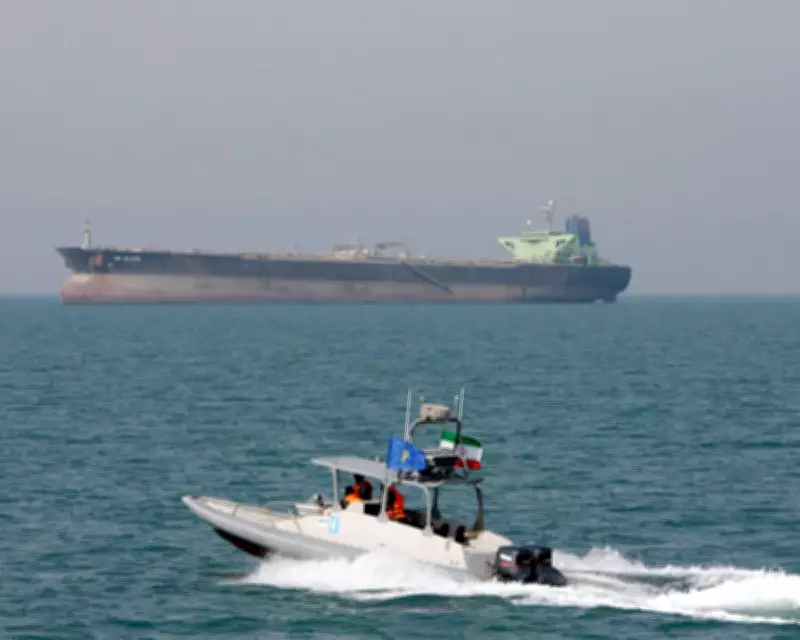
Iran's Strategic Position Strengthened by Hormuz Blockade in Nuclear Negotiations
Diplomatic sources have confirmed that Iran now perceives itself to be operating from an unprecedented position of strength during current nuclear negotiations. This shift follows Tehran's strategic closure of the vital Strait of Hormuz, which has fundamentally altered the balance of power in ongoing diplomatic discussions.
Former US Negotiators Acknowledge Iran's Newfound Leverage
Former American envoys intimately involved with Iran policy have openly stated that recent military conflicts have equipped Tehran with powerful new tools to resist international pressure regarding its nuclear ambitions. Two senior negotiators who helped craft the 2015 Joint Comprehensive Plan of Action (JCPOA) agreement have revealed that the Trump administration's military actions inadvertently provided Iran with a coveted strategic weapon.
The ability to blockade the Strait of Hormuz has given Iran what one negotiator described as "a mechanism to balance the asymmetry of power" with the United States. This economic chokehold on global oil shipments represents a formidable deterrent that has reshaped negotiation dynamics.
Alan Eyre, a former diplomat who participated in JCPOA negotiations, emphasized the irreversible nature of this development: "This administration, to phrase it diplomatically, cannot undo what has been done. There is absolutely no pathway to return to the pre-war status quo that existed before this conflict began."
Historical Context and Current Complications
The diplomatic landscape has evolved dramatically since 2018, when President Donald Trump withdrew the United States from the JCPOA agreement that had limited Iran's uranium enrichment capabilities in exchange for sanctions relief. Trump famously criticized the arrangement as "among the most disadvantageous agreements" ever entered by the United States.
Following a strategy of escalating pressure through renewed sanctions and subsequent military engagement after Trump's 2025 return to power, the current American administration now faces significantly more complex negotiations than before its campaign of economic and military measures.
Eyre elaborated on Iran's strategic calculations: "The Strait of Hormuz serves as an exceptionally effective strategic deterrent that, to some extent, diminishes the immediate necessity of the nuclear program. Developing nuclear weapons would have required substantial time and carried significant risks. Now they possess a remarkably convenient threat that can be activated or deactivated with relative ease."
Current Negotiation Dynamics and Challenges
Diplomatic insiders indicate that Iranian representatives believe they are negotiating from an exceptionally favorable position, particularly as the Trump administration appears motivated to conclude the conflict expeditiously. A high-level American delegation led by Vice President JD Vance is scheduled to meet with Iranian negotiators in Islamabad, Pakistan this weekend.
While Vance has been comparatively restrained in his support for military action compared to administration colleagues like Defense Secretary Pete Hegseth and Secretary of State Marco Rubio, significant obstacles remain. The United States has yet to present a coherent strategy for reopening the vital Strait of Hormuz, whether through military means or diplomatic settlement.
Robert Malley, former special envoy to Iran under President Joe Biden and a principal JCPOA negotiator, provided critical context: "The Strait of Hormuz was not a prominent issue before American military strikes occurred. All previous challenges persist, but additional complications have emerged because the United States has essentially handed Iran a tool it always possessed but never previously considered deploying or believed it could effectively utilize."
Prospects for Comprehensive Agreement Appear Dim
The likelihood of achieving a sweeping agreement addressing all mutual grievances between the United States and Iran appears increasingly remote. Whereas the Obama administration focused negotiations primarily on Iran's nuclear program leading to the 2015 agreement, the Trump administration has pursued a more expansive arrangement that would also restrict Iran's ballistic missile development and support for regional proxy forces including Hezbollah in Lebanon and Houthi rebels in Yemen.
This comprehensive approach shows signs of unraveling. Continued Israeli strikes in Lebanon, which Iran considered covered by agreements but the United States maintains was excluded, have jeopardized the entire diplomatic framework. Iran's Islamic Revolutionary Guard Corps continues to enforce shipping restrictions while senior officials publicly question ceasefire arrangements.
Malley highlighted the fundamental negotiation challenge: "The Obama administration deliberately pursued a more limited agreement with Iran because for every element the United States and other parties introduce, Iran will present reciprocal demands. This is fundamentally a two-way diplomatic process."
Regarding Trump administration objectives, Malley observed: "I believe Trump has been motivated by two clearly contradictory goals. First, he sought to declare unambiguous victory, and second, he desired a rapid withdrawal from the conflict. Even as he might claim success, these assertions are continually undermined by developments on the ground."