
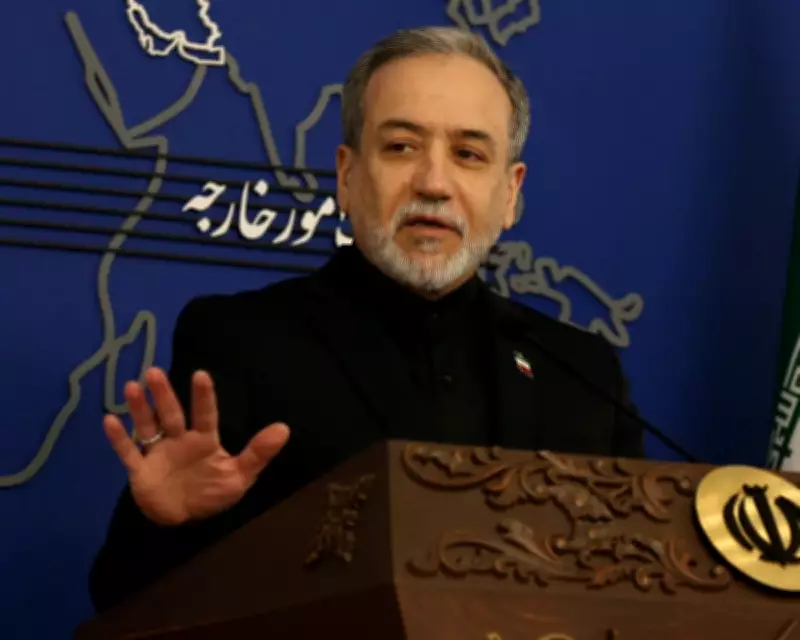
Iran Seeks European Leverage in Strategic Diplomatic Push
In a calculated diplomatic maneuver, Iran's foreign minister, Abbas Araghchi, has conducted a series of high-level phone briefings with European and Gulf counterparts, aiming to increase pressure on the United States. This outreach specifically targeted France, Germany, and neighboring Gulf states, marking a significant shift in Tehran's foreign policy approach.
Exploiting Transatlantic Divisions
The Iranian regime hopes to capitalize on deepening rifts between the United States and Europe, briefing previously sidelined European capitals about proposals concerning Iran's stockpile of highly enriched uranium and future management of the strategically vital Strait of Hormuz. These discussions followed inconclusive talks in Islamabad, where Araghchi emphasized that Iran does not consider the Pakistan-led diplomatic process exhausted despite 21 hours of intensive negotiations.
For over a year, Europe has been marginalized on Iran policy by the Trump administration, which focused instead on collaboration with Israel. Tehran had largely dismissed European governments as subordinate to American interests, but changing geopolitical dynamics have prompted a strategic reassessment.
European Naval Initiatives and Iranian Calculations
European countries, responding to Trump's demands for military support, have been developing a defensive naval alliance to ensure freedom of navigation in the Strait of Hormuz—but only after current conflicts conclude. This initiative requires delicate negotiations about rules of engagement, likely drawing from European Union experience in Red Sea operations against Houthi threats.
French President Emmanuel Macron announced further joint conferences with British counterparts to discuss the proposal with allies, the third such meeting since the initiative's launch. Any comprehensive plan will necessitate discussions with Tehran, including potential toll systems for commercial traffic through the strait.
Strategic Waterway and Economic Leverage
The Strait of Hormuz represents a critical global chokepoint, accounting for 11% of global maritime trade and one-third of all seaborne oil shipments. Iran is considering implementing tolls on commercial traffic, potentially demanding payment in cryptocurrency to circumvent US sanctions. A bill before Iran's parliament proposes extending these tolls beyond oil tankers to all commercial vessels.
According to Trita Parsi of the Quincy Institute, "Iranians are trying to establish quickly this mechanism at relatively low toll fees and to get as many countries as possible to agree to it." In the short term, Iran will pressure countries with minesweeper capabilities—Germany, the UK, and Italy—to resist Washington's pressure to clear mines from the strait, which Tehran would interpret as supporting Trump's blockade of Iranian oil ports.
Nuclear Negotiations and Regional Conflicts
On Iran's nuclear program, senior officials emphasized Tehran's willingness to demonstrate good faith by diluting—not surrendering—its stockpile of highly enriched uranium. Ali Nikzad, deputy speaker of Iran's parliament, revealed that "the Islamic republic was ready, to prove its good faith, to dilute—not hand over—450kg of enriched uranium." He added that a proposed consortium involving Iran, the United States, and Saudi Arabia for this dilution collapsed when other parties withdrew.
European diplomats express uncertainty about persuading Iran to make nuclear concessions without guarantees of permanent sanctions relief. Some suggest offering management of the Strait of Hormuz as legitimate compensation if the United States reneges on sanctions relief commitments.
Broader Geopolitical Implications
The Iranian foreign ministry has observed growing divisions between Trump and Europe extending beyond Middle East policy to include NATO commitments and ceasefire requirements for Israel. Iran feels particular obligation to protect Hezbollah from Israeli assaults in Lebanon, with EU Commission President Ursula von der Leyen emphasizing the importance of including Lebanon in ceasefire talks and noting the conflict's €22 billion impact on European energy costs.
Nitya Labh of Chatham House's international security programme argues that "Iran must be party to any agreement over the strait," suggesting that future arrangements might include structured sanctions relief, joint verification for transit, and naval escorts involving Iran and regional partners. She contends that bringing Iran into a structured maritime framework, while not a quick solution, could establish foundations for regional stability.
Across Europe, there is growing sentiment for more assertive engagement with the United States, even at the risk of undermining previous agreements on Ukraine support. As Sophia Besch of the Carnegie Endowment notes, European interests may require more critical assessment of US conduct toward Iran to maintain public support for defense investments and avoid unilateral military adventurism.




