Hungary's New Leader Turns to Poland for EU Reconciliation Strategy
In a strategic move to revitalize Hungary's strained relationship with the European Union, the newly elected Prime Minister Péter Magyar is actively seeking guidance from Poland's Prime Minister Donald Tusk. This partnership aims to draw on Poland's recent successes in mending ties with the bloc following years of democratic backsliding and illiberal governance.
A Historic Parallel and a Promising Alliance
Since the transformative year of 1989, Hungary and Poland have often mirrored each other's political trajectories. Now, both nations are led by centre-right, pro-European figures tasked with the formidable challenge of restoring the rule of law and strengthening state institutions. The election night set the tone for this collaboration, with an elated Tusk calling Magyar from Korea to express his joy, famously stating, "I'm so happy. I think I am even happier than you, you know?"
Tusk later emphasized the broader significance of Magyar's victory, remarking to reporters, "First Warsaw, then Bucharest, Chișinău, and now Budapest. This part of Europe is showing that we are not condemned to corrupt and authoritarian rule." He added with visible relief, "A weight has been lifted off my shoulders, because I was worried until the very end."
Swift Actions and Symbolic Gestures
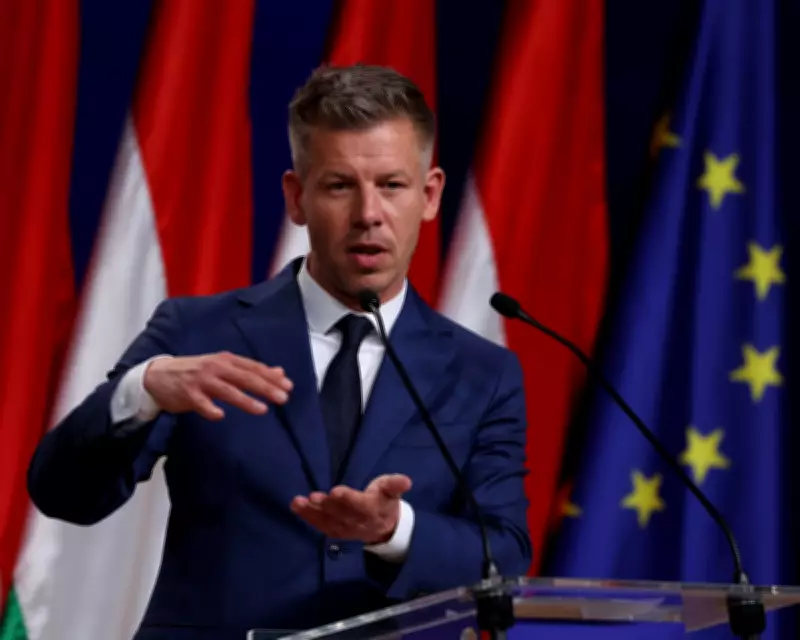
Magyar reciprocated the goodwill promptly, announcing Warsaw as the destination for his inaugural foreign visit and highlighting a "special relationship" with Poland during a press conference adorned with Hungarian and EU flags. In a bold statement, he confirmed plans to expedite action against two former Polish ministers residing in Budapest, who are facing prosecution for alleged abuses of power under the previous Law and Justice (PiS) government. Magyar asserted they should not "go and buy furniture in Ikea, because they are not staying long."
The new Hungarian parliament is scheduled to be inaugurated on May 9, coinciding with Europe Day, a symbolic date for the EU. This timing underscores Magyar's commitment to European integration.
EU Expectations and High-Stakes Negotiations
The alliance between Magyar and Tusk is poised to play a pivotal role in reintegrating Budapest into mainstream European politics. Once Magyar assumes his position at the European Council, replacing Viktor Orbán, Tusk will become the most seasoned leader present, offering invaluable support in negotiations with the bloc.
EU officials have already initiated informal talks with Magyar's incoming administration, pressing for early signals of political realignment. Key demands include:
- Dropping Hungary's block on a €90 billion loan to Ukraine.
- Agreeing to new sanctions against Russia.
- Meeting conditions related to judicial reforms, anti-corruption measures, asylum laws, and academic freedoms.
Learning from Poland's Playbook
Behind the scenes, Polish and Hungarian officials are engaged in discussions about applying Poland's recent experiences to Hungary's context. In 2023, Poland's Civic Coalition successfully ousted the rightwing populist PiS government and unlocked billions in frozen EU funds. A senior Polish official involved in pre-election talks noted that these discussions were "essentially about salvaging as much as possible of what would be otherwise lost under Orbán."
However, time is of the essence. Hungary must achieve specific "super milestones" by the end of August to access an initial tranche of €10.4 billion, with approximately €2.12 billion already permanently forfeited. Polish officials, speaking anonymously, cautioned that "promises will not be enough; they will have to actually change things - and quickly." One source added, "There is always a political element to these talks, but there is no way around the fact that their paperwork will need to be in order."
Advantages and Challenges Ahead
Magyar's landslide victory and constitutional two-thirds majority in parliament provide a significant advantage, potentially streamlining reforms compared to Poland, where opposition presidents wielded veto power. Yet, officials warn that it will still "require work 24/7 to get it done on time." While the Hungarian president lacks similar far-reaching authority, Magyar has urged Tamás Sulyok, a close Orbán ally, to resign to symbolize a clean break from the previous regime.
Key reforms include Magyar's pledge to join the European Public Prosecutor's Office (EPPO) and investigate corruption during Orbán's 16-year tenure. Poland submitted its EPPO application on the first day of its new government, setting a precedent. Adam Bodnar, Poland's former justice minister, noted that early talks are standard practice, stating, "You don't really wait for day one of the government... I bet that Magyar's people are already on the line ... wondering how this can be done."
Bodnar highlighted that Hungary's two-thirds majority enables comprehensive action plans, unlike Poland's more constrained approach. However, he warned of lingering challenges, such as the entrenched mentality of officials from the Orbán era, which could slow reforms. "You can reform institutions, put in new judges, or hold competitions for top jobs, but in the end there still will be people who have been part of the system for these 16 years and cannot be replaced overnight," he explained.
This partnership marks a critical juncture for Hungary's future in Europe, blending political symbolism with urgent practical reforms to restore democratic norms and EU alignment.