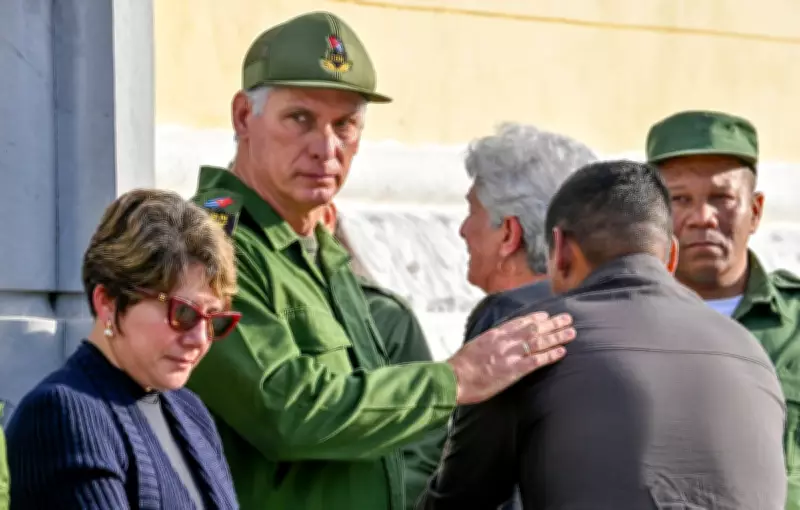
In a bold declaration of sovereignty, Cuban President Miguel Diaz-Canel has firmly stated he will not resign under pressure from the United States, during his inaugural television interview with an American broadcaster. The 65-year-old leader emphasized that revolutionaries do not surrender or step down, highlighting Cuba's independence and self-determination in the face of hostile US policies.
Defiance in the Face of Adversity
Speaking to NBC News on Thursday, Diaz-Canel articulated a strong stance against US demands, asserting that Cuba operates as a free and sovereign state. He criticized the US government for its lack of moral authority to impose conditions on Cuba, given its history of aggressive actions. This interview marks a significant moment in US-Cuba relations, as tensions continue to escalate over issues such as oil supply and national security.
Russia's Unwavering Backing
Amidst the growing friction with Washington, Russia has reaffirmed its commitment to Cuba, with Deputy Foreign Minister Sergei Ryabkov visiting the island and holding talks with Diaz-Canel. Ryabkov declared that Moscow will not abandon its ally, regardless of US objections, and promised continued support beyond recent oil shipments. This includes a large delivery of crude oil last month, which the Trump administration allowed to proceed despite earlier threats of tariffs.
The energy crisis in Cuba has deepened since January, when US actions disrupted oil supplies from Venezuela, crippling the island's economy. Cuba relies heavily on imports, producing only 40% of its fuel needs, making Russian assistance crucial. Ryabkov condemned the US blockade as illegal and unacceptable, vowing to help Cuba navigate these challenges.
Broader Implications for Regional Dynamics
The situation underscores the complex geopolitical landscape in the Western Hemisphere, with Russia positioning itself as a counterbalance to US influence. President Donald Trump has previously labeled Cuba's leadership a threat and hinted at more aggressive measures, but Diaz-Canel's defiance and Russian backing suggest a protracted standoff. As both sides dig in, the future of US-Cuba relations remains uncertain, with potential ramifications for regional stability and international diplomacy.