
China's Diplomatic Push in Iran Ceasefire: A Strategic Win or Illusion?
As the United States and Iran announced a ceasefire deal this week, global attention has turned to China, with Beijing's powerbrokers being hailed for their role in mediating the agreement. This development has bolstered China's status as a key regional mediator, particularly in the volatile Middle East, where it has been actively building diplomatic clout in recent years.
Media Spotlight and Analyst Skepticism
In China's tightly controlled domestic media, outlets like Guancha, a nationalist online platform, have circulated reports celebrating China's pivotal involvement. These articles reference international coverage from sources such as the New York Times and Associated Press, which credit China with facilitating the ceasefire. Guancha emphasized, "The conclusion of this ceasefire could not be achieved without active mediation of China, Pakistan and other countries."
U.S. President Donald Trump acknowledged China's efforts, telling AFP that he believed Beijing persuaded Iran to agree to the ceasefire. This aligns with accounts from Iranian and Pakistani officials, who noted China's crucial role in last-minute negotiations held in Islamabad.
However, analysts express doubts about the extent of China's influence. Nicholas Lyall, a senior researcher at Trends in Abu Dhabi, argues that the ceasefire terms were highly favorable to Iran, making Chinese mediation akin to "pushing an open door." He explains, "Iran has made no real concessions in agreeing to begin talks, and is very legitimately able to present it as a genuine political win to any audience." Lyall suggests that China's involvement may have been less impactful than perceived, given Iran's pre-existing demands were largely met without resistance.
China's Cautious Diplomacy and Regional Ambitions
Officially, China has neither confirmed nor denied its active role in the Islamabad talks. At a press conference, foreign ministry spokesperson Mao Ning stated only that China "had been actively working to promote de-escalation and an end to all hostilities." Despite this ambiguity, Beijing is likely pleased to be associated with brokering a fragile peace that averted further escalation in Iran.
This incident fits into a broader pattern of China positioning itself as a mediator in the Middle East. In 2023, Beijing brokered a surprise rapprochement between Saudi Arabia and Iran, and in 2024, it hosted Palestinian factions for talks resulting in a "Beijing declaration" on unity. More recently, China and Pakistan proposed a five-point plan aimed at achieving a ceasefire and reopening the Strait of Hormuz.
Yet, analysts like Lyall caution that these initiatives often serve to enhance China's global image of responsibility rather than resolve conflicts. William Yang, a senior analyst at the International Crisis Group, notes, "There have been previous attempts where China claimed victory in some very easy cases. This time around, it's quite different because I think China does sense the continuous disruption will have a more direct impact on its core interests." He adds that Beijing would be "cautious" about disclosing any pressure exerted on Iran.
Limitations and Economic Motivations
China's actual diplomatic sway in the region remains limited, though it is growing. As the largest buyer of Iranian oil, China holds economic importance for Tehran, but the two nations lack a deep diplomatic relationship. Song Bo, a fellow at Tsinghua University's Center for International Security and Strategy, points out that Iran ranks "outside of the top 10" of countries crucial to Beijing.
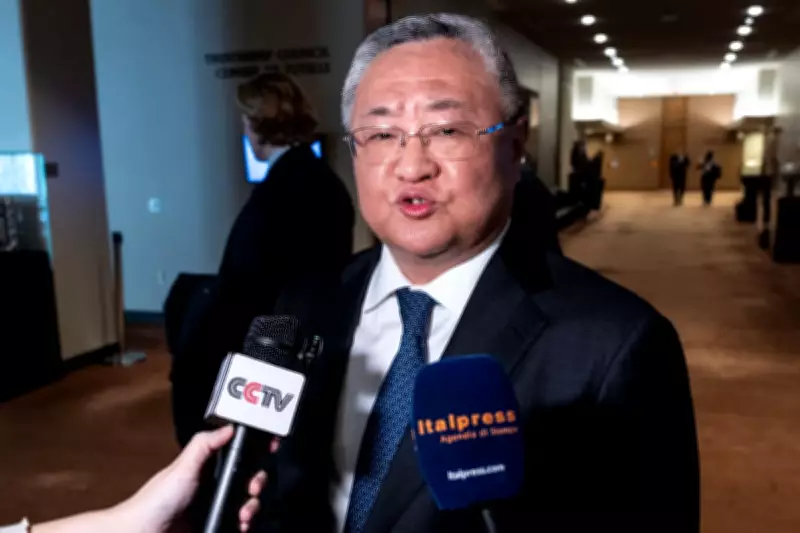
Skepticism extends to China's potential role as a guarantor for the ceasefire. Iranian envoy Abdolreza Rahmani Fazli expressed hope that "big countries like China and Russia" would help ensure peace, and both nations vetoed a UN Security Council resolution to reopen the Strait of Hormuz. However, committing resources to enforce the agreement is a significant challenge. Song states, "Acting as a guarantor for a ceasefire would be an extremely high-cost diplomatic undertaking, and I don't think China would commit to that easily." Lyall echoes this, noting China lacks the capacity to verify compliance or impose penalties for violations.
Beyond public relations, the ceasefire offers economic benefits for China. With its economy heavily reliant on exports, a global recession and soaring oil prices pose risks. Song explains, "If it is possible to manage this conflict, and through managing the conflict be able to push down some oil prices, then that is certainly still very important for China." This underscores how geopolitical stability aligns with Beijing's economic interests.
In summary, while China's involvement in the Iran ceasefire enhances its diplomatic profile, analysts question the depth of its influence, highlighting the complexities of Middle East mediation and China's strategic calculations.




