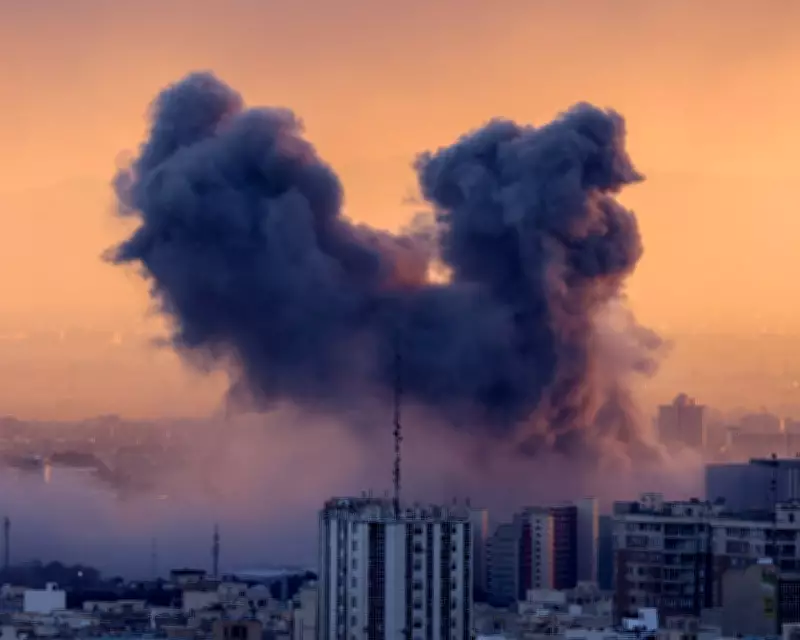
Australia's Complicity in Illegal US-Israel War on Iran Sparks Grave Warnings
Andrew Wilkie, the independent member for Clark and a former intelligence officer, has issued a stark warning about Australia's role in the illegal US-Israel military campaign against Iran. Drawing direct parallels to the fraudulent case for the 2003 invasion of Iraq, Wilkie emphasizes that international law is being blatantly disregarded, with severe consequences for global stability.
Fraudulent Justifications and Legal Violations
The US-Israel war on Iran lacks any legal foundation, as it fails to meet the criteria for self-defence or UN Security Council approval. Conflicting claims from US and Israeli officials about Iran's nuclear and missile programs have been exposed as exaggerated and misleading. Former US President Donald Trump previously asserted that Iran's nuclear capabilities were "completely and totally obliterated," undermining current justifications. Moreover, there is no credible evidence that Iran possesses or is near acquiring a nuclear weapon with delivery technology.
Wilkie, who resigned from intelligence services over the Iraq war deception, notes alarming similarities: "In both instances, the threat was exaggerated to justify the war." However, he points out a critical difference—the US at least attempted to present its case to the UN in 2003, whereas no such effort has been made for the current conflict.
Political Manipulation and Australian Hypocrisy
The timing of the war raises further concerns, as it coincides with an unpopular US administration nearing midterm elections, a classic tactic to distract the public and foster national unity. Australia's support for this illegal action, led by Prime Minister Anthony Albanese and Foreign Minister Penny Wong, is particularly troubling. Wilkie argues that this makes Australia appear gullible or duplicitous, undermining its commitment to a rules-based international order.
While acknowledging the Iranian regime's oppressive nature, Wilkie stresses that the rule of law must be applied consistently. "It's simply not acceptable to say that 'the end justifies the means' or that international law only applies to adversaries," he writes. The potential outcomes—widespread civilian suffering, geopolitical instability, and refugee crises—mirror the disastrous aftermath of the Iraq war.
The Vital Role of International Law for Australia
As a middle power, Australia has historically benefited from and contributed to international legal frameworks. From addressing the ozone crisis to limiting nuclear proliferation and promoting human rights, these systems have safeguarded global peace and prosperity. International law also underpins trade and telecommunications, key drivers of Australia's wealth and global connectivity.
Wilkie highlights Australia's leading role in establishing institutions like the UN and the Universal Declaration of Human Rights, actions driven by both idealism and national interest. The UN Charter's preamble, emphasizing the prevention of war and equality among nations, remains crucial for a country vulnerable to great power conflicts.
A Call for Principled Leadership
International law serves to curb the excesses of power politics and elevate the rights of all nations and people. Wilkie concludes that treating it with contempt jeopardizes Australia's future and global stability. He urges Australian leaders to reconsider their support for the illegal war, advocating for a return to principled adherence to legal norms that have long protected national interests.