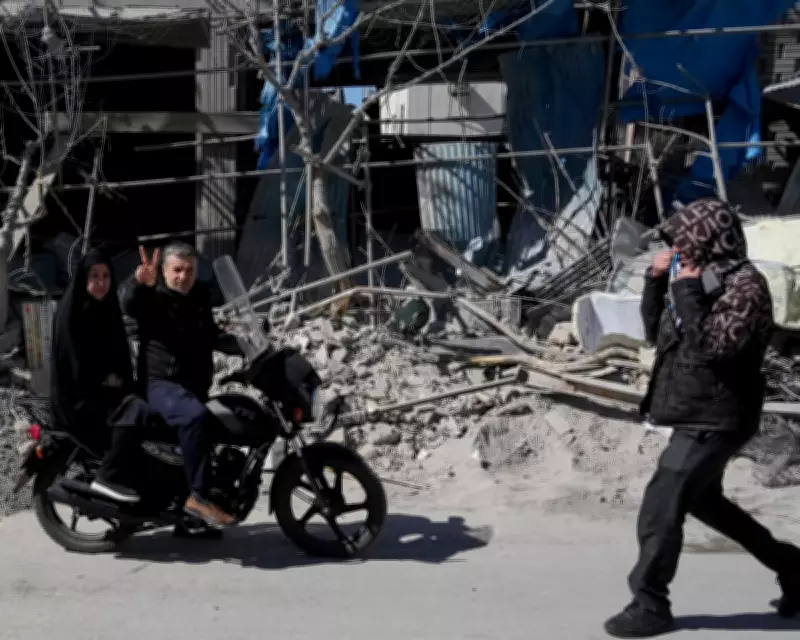
Defiance and Hope on the Streets of Tehran Amidst Airstrikes
Fear, defiance, and quiet celebration intermingled with everyday chores in Tehran, as the Iranian capital faced ongoing American and Israeli airstrikes. Residents reported a tense atmosphere, with many attempting to relocate to the countryside, believing it safer away from military targets located in residential areas. Rumors circulated that security forces were occupying schools and mosques, adding to the widespread anxiety.
Daily Life Under Siege
Reza, a carpenter who withheld his full name for safety, described the situation as very tense, with people scared and trying to stay home. He noted that vital public services like hospitals remained open, but schools were closed, and increased security forces and vehicles were visible on the streets. "People are gripped by huge fear about more airstrikes," he said over the phone, highlighting the pervasive sense of dread.
Amid an internet blackout, Tehran residents struggled to verify Iranian media reports about airstrikes and the country's military successes. Some expressed surprise at Iran's apparent strength, targeting multiple nations simultaneously and maintaining a barrage. Despite the quiet streets, grocery shops and restaurants stayed open, with people rushing to rooftops during attacks to assess the damage.
Voices from the Ground
The Guardian spoke to residents with limited internet access via encrypted services and landlines. AJ, a man in his thirties using initials for protection, described witnessing a missile from his apartment roof land near a friend's district. He noted that attacks came in frightening waves, but people were less terrified than during last year's 12-day assault, as civilian targets seemed less affected—though he condemned the bombing of a girls' school on the war's first day.
"We are worried about the future, but the situation is out of our hands," AJ said, maintaining routines like jogging and visiting a swimming pool. He added that all Iranians received a text message warning protesters would be labeled Israeli agents, stifling dissent. Many were reportedly happy about the killing of Supreme Leader Ayatollah Ali Khamenei, believing any successor would wield less influence.
Mixed Reactions and Uncertain Futures
An elderly secular woman expressed opposition to the theocratic state but resisted yielding to Israel. "I don't know if I'm going to live, but I won't leave Iran," she stated, calling Khamenei a martyr. Another woman described initial disbelief at Khamenei's death, followed by brief street celebrations where some women removed hijabs, quickly dispersed by police. Mourners were also ordered to leave, directed to mosques or homes.
This woman feared repercussions after her son in Germany posted a celebratory social media video, begging him to remove it. She questioned if Americans would restore the Shah, reflecting deep uncertainty about Iran's political future. With thousands of anti-government protesters killed earlier this year, according to human rights groups, the quiet between bombardments felt scarier, as no one knew what would happen next.