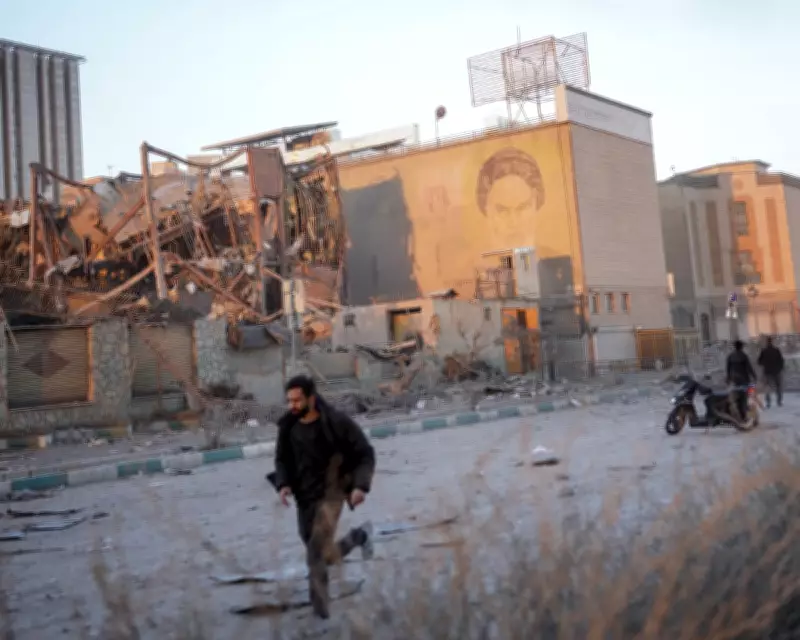
Tehran's Descent Into Chaos: A Photographer's Chronicle of War
For the sixth consecutive day, explosions rocked Tehran as residents awoke to another brutal morning of US-Israel airstrikes that have transformed Iran's capital into a war zone. The conflict, which began without clear legal mandate or congressional consultation, has claimed more than 1,200 lives including Supreme Leader Ali Khamenei, with thousands more injured across the country.
The Human Cost of Conflict
Among the most devastating casualties were 168 children killed at a school in Hormozgan province, a tragedy that underscores the civilian toll of this escalating conflict. Iranian photographer Mohammad Mohsenifar has been documenting the destruction firsthand, capturing images that reveal the human suffering behind the headlines.
"One of the worst things are the second strikes," Mohsenifar explained, describing how subsequent explosions often hit minutes after first responders arrive. "This has increased the number of casualties, but has also made rescue teams hesitant to approach a scene right after a blast."
Residential Areas Targeted
On Wednesday, a residential complex in south-eastern Tehran suffered direct hits that completely destroyed two apartment blocks and severely damaged five others. Firefighters sprayed water on the twisted skeleton of concrete and rebar that remained, while first responders carried away the dead and treated the injured.
The scene was one of utter chaos. A group of teenage girls sat blank-faced by the roadside as residents rushed past. One woman hurriedly shoved belongings into a car, carefully placing a cage with her two cockatiel birds on the passenger seat. Others risked returning to damaged apartments to retrieve documents, electronics, and valuables.
Daily Life Amid Destruction
Despite the ongoing conflict, Tehran has not come to a complete standstill. While schools and universities closed immediately when the war began, many shops and markets remain open, and some restaurants continue serving Iftar meals at sunset during Ramadan.
However, the city's character has fundamentally changed. "Stopping feels dangerous, but driving feels just as risky, because there's no safe place in Tehran any more," Mohsenifar observed, describing how the once traffic-jammed streets are now eerily quiet except for distant explosions.
Key Infrastructure Attacks
On Tuesday, a strike near Azadi Square briefly shut the highway linking Tehran to eastern provinces. Mohsenifar witnessed the aftermath: "Several citizens passing through Azadi Square in their cars were injured by the blast, and I saw the bodies of two people who were killed."
The scene featured charred cars lining the roadside, a green city bus with shattered windows bearing a "Lovely Tehran" sticker, and black smoke rising behind the destruction. Nearby, a police station was hit near Enghelab Square, an area that had recently been filled with mourning crowds after Khamenei's death was announced.
Environmental and Communication Challenges
The Alborz mountains surrounding Tehran now trap not only winter smog but also the choking smoke from airstrikes, creating hazardous breathing conditions. An internet blackout has made it essentially impossible for many residents to reach family members and friends, adding psychological distress to physical danger.
Families are abandoning their homes to seek shelter with relatives outside the city, toward the mountains of Gilan or the Caspian Sea. Blankets are thrown over furniture for protection, but most possessions are left behind in the hurried evacuations.
International Context and Retaliation
The conflict represents a dramatic escalation from just a week earlier, when Iran's foreign minister Abbas Araghchi was in Geneva for nuclear negotiations, suggesting Tehran and Washington had moved "closer to agreement." Washington has vowed to hit targets "deeper" in Iran, while Israeli officials reported dropping more than 5,000 bombs since their assault began.
Iran has retaliated with missiles and drones hitting targets across the Middle East, including Israel, the United Arab Emirates, Qatar, and Saudi Arabia. President Masoud Pezeshkian has vowed the country would defend itself against what many Iranians view as unprovoked aggression.
As Mohsenifar continues documenting the destruction, his photographs serve as both historical record and urgent testimony to a capital city under siege, where the words "Lovely Tehran" on a bomb-damaged bus now carry tragic irony.