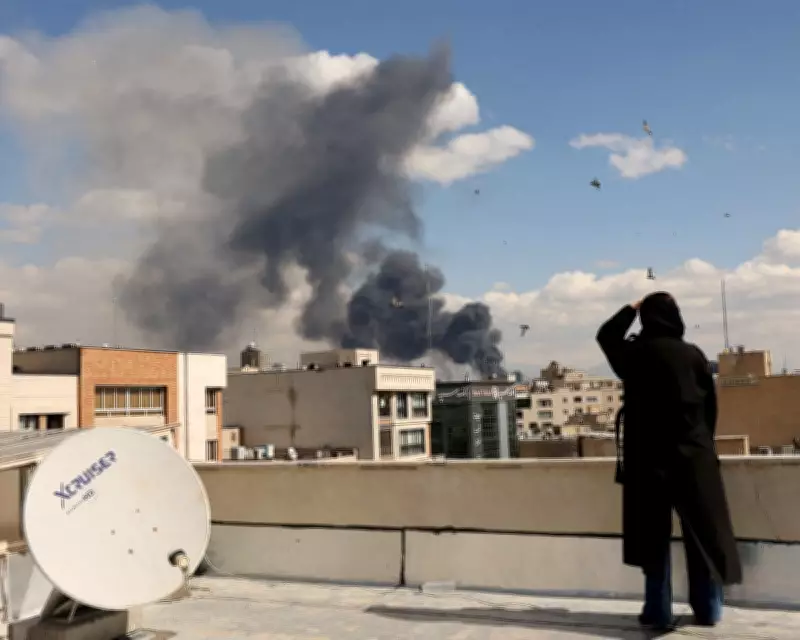
Explosion in Tehran Triggers Escalating Middle East Crisis
Smoke billowed over Tehran, Iran, on Sunday following a significant explosion, captured in photographs by Majid Asgaripour for Reuters. This event has rapidly spiraled into a full-scale regional conflict, marking what many fear is the onset of a prolonged war in the Middle East.
Rapid Escalation Following US-Israeli Assault
On Saturday, a coordinated aerial assault by the United States and Israel targeted Iran, leading to the assassination of Supreme Leader Ayatollah Ali Khamenei and numerous military and political figures. Before the international community could process this development, Iran launched retaliatory strikes, not only against Israel and US bases but also extending to Gulf neighbors such as Qatar, Kuwait, Jordan, the United Arab Emirates, and Bahrain.
Julian Borger, senior international correspondent, described the assassination as "an historic rupture," noting the uncertainty surrounding Khamenei's successor and the potential for internal fragmentation in Iran. He warned of risks similar to Libya's collapse, given Iran's multi-ethnic composition and existing separatist movements.
Impact on Gulf States and International Response
Iran's strategy involves targeting Gulf infrastructure to pressure the US indirectly, aiming to compel Gulf governments to lobby Washington for a ceasefire. However, this approach risks alienating these nations, potentially shifting blame onto Iran itself. Attacks have damaged civilian infrastructure, including hotels and energy facilities, threatening the region's reputation for stability and safety.
The UK Foreign Office is preparing contingency plans to evacuate tens of thousands of British citizens stranded in areas like Dubai. Additionally, Iranian drones have targeted RAF Akrotiri in Cyprus, prompting defensive actions from the UK, France, and Germany to protect regional interests.
Economic and Human Consequences
The conflict's economic fallout is already evident, with gas prices surging by up to 42% in Europe due to disruptions in oil and gas production in Saudi Arabia and Qatar. Insurance and shipping markets are reacting to heightened risks, potentially leading to increased costs globally.
Human casualties are mounting, with the Iranian Red Crescent reporting at least 555 deaths from US-Israeli attacks, while Israel has recorded 10 fatalities from Iranian strikes. Hezbollah has joined the fray, launching missiles at Israel, resulting in further casualties in Lebanon.
Broader Implications and Future Outlook
The US faces limited direct damage so far, but public approval for military operations remains low. Donald Trump's administration seeks a swift resolution to present as a victory, yet the conflict's expansion may outpace any single actor's control. Gulf allies are under pressure, with conflicting reports on Saudi Arabia's stance regarding military involvement.
As the situation evolves, the Middle East teeters on the brink of broader instability, with implications for global energy markets, regional diplomacy, and civilian safety. The coming days will be critical in determining whether containment is possible or if further escalation is inevitable.