Pakistan's Strategic Miscalculation Over Taliban Leads to Escalating Border Conflict
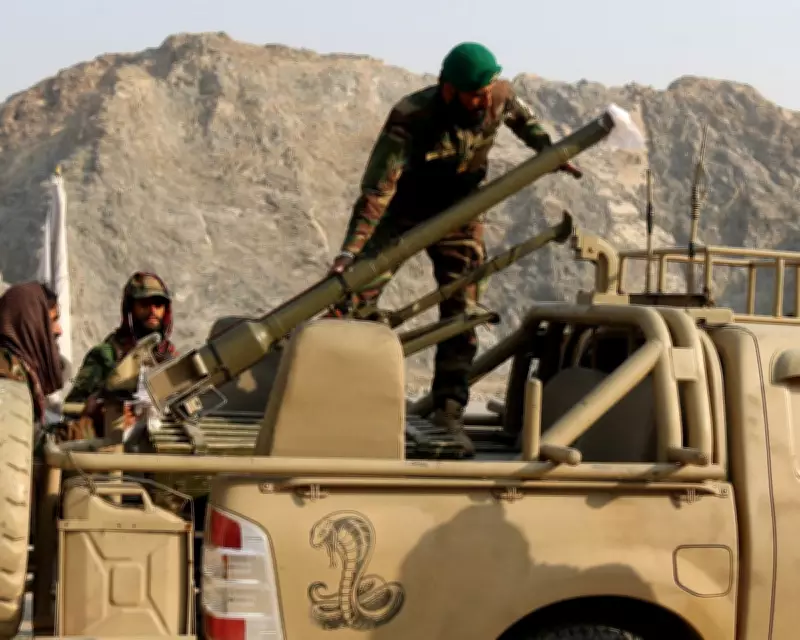
In a dramatic turn of events, Pakistan has unleashed airstrikes in Afghanistan, with troops from both nations engaging in fierce clashes along the border. This escalation marks a stark reversal from Pakistan's initial optimism following the Taliban's rise to power in 2021, when then-spymaster Lt Gen Faiz Hameed assured reporters in Kabul that "everything will be OK." Now, Pakistan's defence minister, Khawaja Muhammad Asif, declares that patience has finally run out after repeated calls for the Taliban to stop Pakistani militants from using Afghan territory as a sanctuary for attacks.
The Blurred Line Between 'Good' and 'Bad' Insurgents
Pakistan's military long operated under the assumption that Afghan insurgents were "good" jihadists, distinct from the "bad" Pakistani insurgents they combated. However, this distinction has increasingly blurred as many Taliban members have joined the Tehreek-e-Taliban Pakistan (TTP) since the jihad inside Afghanistan ended. The TTP, which emerged in 2007 and waged a decade of terror in Pakistan, has seen a resurgence since the Taliban took Kabul, leading to a surge in attacks within Pakistan.
Analysts point out that Pakistan's predicament mirrors past accusations by the US-led coalition against Pakistan, which alleged that the Taliban used Pakistan as a safe haven. Kamran Bokhari, a senior director at the New Lines Institute, describes this as "blowback, big time," noting that supporting proxies who challenge national identity can lead to them turning their guns on their benefactors. This sentiment echoes Hillary Clinton's 2011 warning to Pakistan: "You can't keep snakes in your back yard and expect them only to bite your neighbours."

Taliban's Denials and Regional Implications
The Taliban deny that their territory is being used against Pakistan and have urged Islamabad to negotiate with the TTP. However, the Taliban and TTP fought together against international forces in Afghanistan, and with the Taliban in power, the TTP has sought to impose its extreme version of Islam on Pakistan, where 95% of the population is Muslim and laws must align with Islam. Antonio Giustozzi, a senior research fellow at Rusi, suggests that Pakistan's strategy of inflicting pain through airstrikes and an economic blockade aims to compel a change in Taliban leadership, but this has instead fueled nationalism in Afghanistan, strengthening Haibatullah Akhundzada's position.
Moreover, the Taliban have turned against Pakistan to the extent of supporting a secular insurgency in Balochistan, a resource-rich province seeking separation. Asif Durrani, former Pakistan special envoy for Afghanistan, notes that the Taliban were given a choice between Pakistan and the TTP and chose the latter, behaving more like militants than a government in a war economy.
Historical Context and Domestic Fallout
Pakistan's miscalculation stems from decades of instability in Afghanistan. After 9/11 and the US invasion, Islamabad feared India's influence on the Afghan government and saw the Taliban as a viable option for a friendly Afghanistan, despite remaining a formal US ally. This alliance sparked radical reactions at home, led by the TTP, which was behind high-profile attacks such as the assassination of Benazir Bhutto, the school massacre of over 130 children, and the shooting of Malala Yousafzai. Mosharraf Zaidi, spokesperson for Prime Minister Shehbaz Sharif, argues that it is "ludicrous" to view this as comeuppance, emphasizing Pakistan's consistent stance against terrorism.
With the TTP now united under Noor Wali Mehsud and focusing attacks on the army and police, Pakistan faces a complex security challenge. Bokhari adds that Afghanistan is not Pakistan's only concern, as a weakening Iran could ignite trouble on the western border, further complicating regional dynamics. The situation underscores the high stakes of proxy warfare and the unpredictable nature of insurgent alliances in South and Central Asia.