Islamabad Lockdown Persists Amid US-Iran Talks Uncertainty
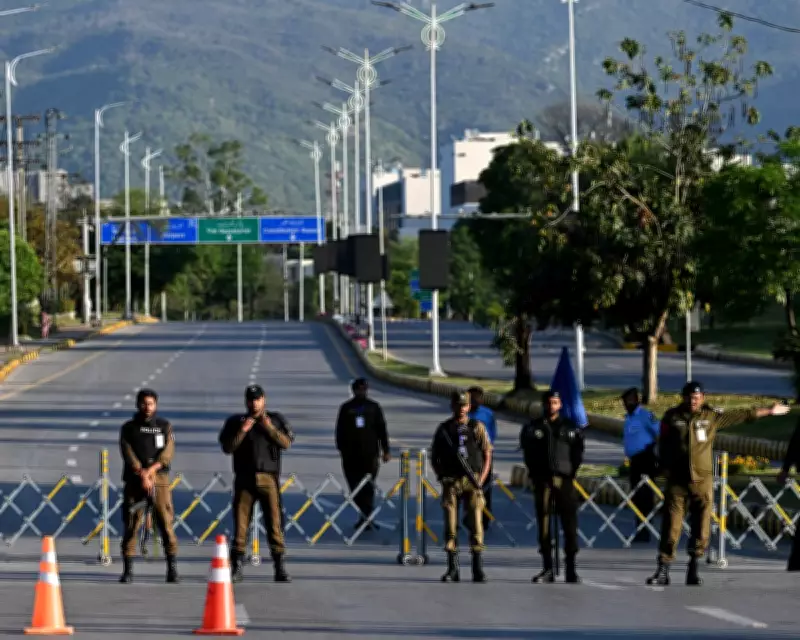
Stringent security measures continue to grip Islamabad as the Pakistani capital remains in a state of pandemic-style lockdown, with empty streets, shuttered businesses, and closed public transport systems. The city has been placed in security limbo while awaiting the arrival of delegations for potential US-Iran talks that could potentially end the ongoing Middle East conflict.
Economic Hardship and Displacement
For residents of Islamabad and neighboring Rawalpindi, the indefinite restrictions have created severe economic consequences. Thousands of workers who relied on hostel accommodations were forcibly evicted following government orders, leaving many scrambling to find temporary housing. The lockdown has effectively halted daily economic activities, depriving laborers of income and forcing businesses to close their doors.
Areej Akthar, a health officer at Pakistan Institute of Medical Sciences, described the chaotic situation: "Saturday was chaotic. I am lucky enough that my village is a three-hour drive away. But many people from distant cities and provinces had to beg their colleagues, friends and relatives to allow them to stay until the US-Iran negotiations took place."

Transportation Paralysis and Frustration
The complete shutdown of public transportation has trapped many residents outside the city, unable to return to their workplaces. Akthar expressed the growing frustration among affected citizens: "It is like we are living in a cage. We can't go back to work. Many like me can't afford to rent a flat, that's why we live in hostels."
As days pass without the promised talks materializing, and with repeated extensions of the lockdown measures, residents are increasingly questioning how long they can survive without their livelihoods.
Broader Economic Consequences
The lockdown compounds existing economic challenges stemming from the Middle East conflict. Since the United States and Israel began bombing Iran in late February, and Tehran retaliated by closing the Strait of Hormuz, Pakistan has suffered significant energy shortages. The country has experienced:
- Power cuts lasting up to seven hours due to fuel shortages
- Restaurant closures from lack of cooking gas
- Taxi drivers reporting 50% reductions in earnings
- Complete business shutdowns under current restrictions
Voices from the Streets
Muhammad Zubair, a 45-year-old daily wage laborer, highlighted the human cost of the security measures: "A lockdown means no work and no work means no food. The government does not care about the poor. We need work to feed our children." Zubair has been unable to work for six consecutive days, with his hunger growing alongside his frustration.
The government's decision to relocate civil servant exams to Lahore, more than 230 miles away, has created additional hardships. Yasir Mushtaq, an exam candidate, expressed concerns about affordability: "I have to borrow money. It is worse for female candidates. Many females can't travel alone without parents accompanying them. Some are thinking of skipping their exams."
National Paralysis
A senior official described the situation as feeling like the entire country had ground to a halt while awaiting decisions from Washington and Tehran. The official noted: "We are all under a lockdown and it feels like we are back to coronavirus days."
Despite Pakistan's elevated diplomatic profile as an intermediary between the United States and Iran, ordinary citizens remain critical of the government's approach. The visible presence of army and police personnel throughout the city underscores the security-first mentality that has taken precedence over economic and social considerations.
As uncertainty continues about whether the US-Iran talks will actually occur, Islamabad remains trapped in a security lockdown that residents compare to the worst days of the pandemic, with no clear end in sight to the economic suffering and displacement affecting thousands.