
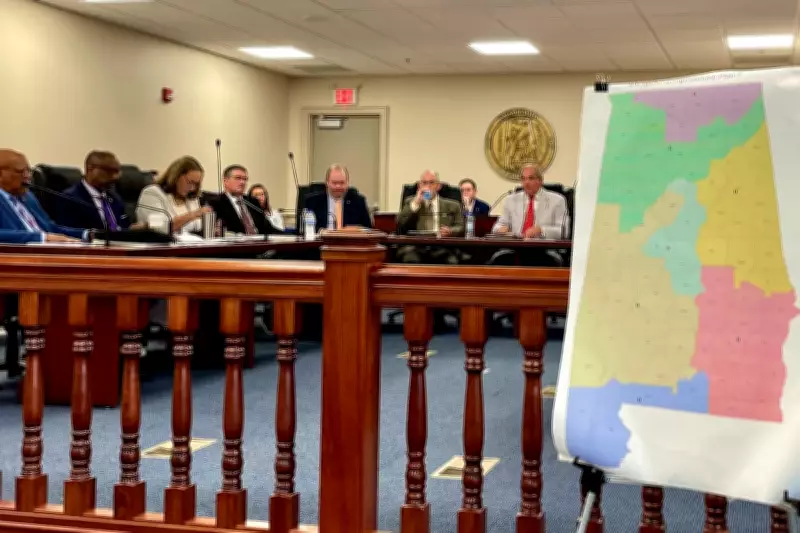
The Supreme Court on Monday handed a victory to Alabama Republicans, upholding new congressional maps that opponents argue unfairly diminish the influence of Black voters. In a 6-3 decision, the conservative majority ruled that the state's redrawn districts do not violate the Voting Rights Act.
Background of the Case
The dispute arose after Alabama's Republican-controlled legislature redrew congressional boundaries following the 2020 census. Civil rights groups and Democratic voters challenged the maps, claiming they packed Black voters into a single district while spreading the rest across majority-white districts, thereby weakening their electoral power. A lower court had blocked the maps, ordering the state to create a second district where Black voters could elect their preferred candidate.
The Supreme Court's Decision
Writing for the majority, Chief Justice John Roberts stated that the lower court had overstepped its authority by imposing its own map. The majority held that Alabama's maps were not racially discriminatory under Section 2 of the Voting Rights Act, as the plaintiffs failed to prove that Black voters had less opportunity to participate in the political process. The decision effectively allows the state to use the challenged maps in upcoming elections.
Dissenting Justices argued that the ruling undermines decades of precedent protecting minority voting rights. Justice Elena Kagan, in a sharp dissent, wrote that the decision "continues this Court's destruction of the Voting Rights Act" and ignores evidence of racial gerrymandering.
Reactions and Implications
Alabama Attorney General Steve Marshall praised the ruling, calling it a "victory for fair elections and state sovereignty." However, voting rights advocates condemned the decision, warning it could embolden other states to draw similar maps. The case is seen as a significant test of the Voting Rights Act's remaining protections after the Court's 2013 Shelby County v. Holder decision gutted key provisions.
Legal experts say this ruling may have national implications, potentially affecting redistricting battles in other states like Louisiana and Georgia, where similar challenges are pending. The decision also highlights the ongoing partisan divide over voting rights and racial fairness in the electoral process.




