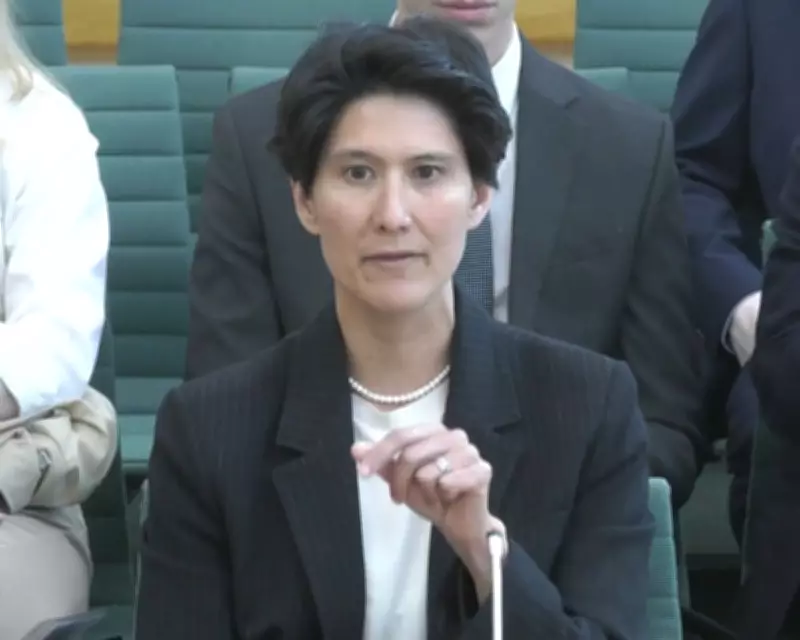
Cat Little, the Cabinet Office permanent secretary, delivered a 100-minute testimony before the foreign affairs select committee that will become required viewing for civil service students. Her performance was a masterclass in saying much while revealing little.
A Bureaucratic Virtuoso
Little has been the subject of countless briefings by colleagues and government insiders, but on Wednesday No 10 issued a statement praising her brilliance—a likely kiss of death. Despite the political maneuvering, her testimony showcased a unique talent: appearing interesting on first hearing, yet becoming quite dull upon reflection. This skill has propelled her near the top of the civil service.
She has never shared a personal opinion, instead meticulously documenting everything. If she encountered Olly Robbins outside the gents' toilet and he mentioned faulty hand dryers, she would make a note. And someone would then record that a record was made. For highly confidential matters, she would document that no document was created.

Committee Dynamics
The committee, chaired by Emily Thornberry, relished its role in cross-examining those involved in Mandelson's appointment. Thornberry, omitted from the cabinet nearly two years ago, had no qualms about making life difficult for Keir Starmer. Backed by an unusually lively committee, they asked the right questions—but received few illuminating answers.
Little repeatedly declined to comment, citing secrecy. She contradicted Robbins's earlier evidence that the Cabinet Office suggested Mandelson might not need developed vetting. Little saw document trails indicating the Cabinet Office always wanted UK Security Vetting (UKSV) involved. She had no idea why Robbins got the opposite impression or why he tried to prevent her from obtaining the UKSV report.
Key Contradictions
Little could not explain why Robbins concluded UKSV was only "leaning" towards refusing security clearance when the document flagged two red lights and an outright no. She couldn't confirm the red lights, as that was above the committee's pay grade. She couldn't even be sure Robbins read all ten pages of the report; he might have skipped the conclusion or misunderstood the red light code. Sometimes red is scarlet, she noted.
She also couldn't confirm material differences between due diligence and the UKSV report, again citing confidentiality. Thornberry questioned a three-week gap between Little obtaining the UKSV report and handing it to the prime minister. Little explained that some documents were so confidential she couldn't automatically assume Starmer had clearance. She consulted several lawyers to ensure the prime minister was allowed access, prioritizing national security over the prime minister's trustworthiness.
A Session of Evasion
The rest of the session was an unhelpful exchange: questions asked, answers withheld. Little offered dead-bat no comments, stating matters were outside the humble address's remit. Occasionally, she mentioned documents that might be available later but could neither confirm nor deny their existence. She lived only for empirical data, leaving the committee to wait and see.
As Thornberry closed the session, Little gave a rare smile. It had been her finest hour—a testament to the art of bureaucratic evasion.