OpenAI Investor Demands Tax Overhaul as AI Transforms US Job Market
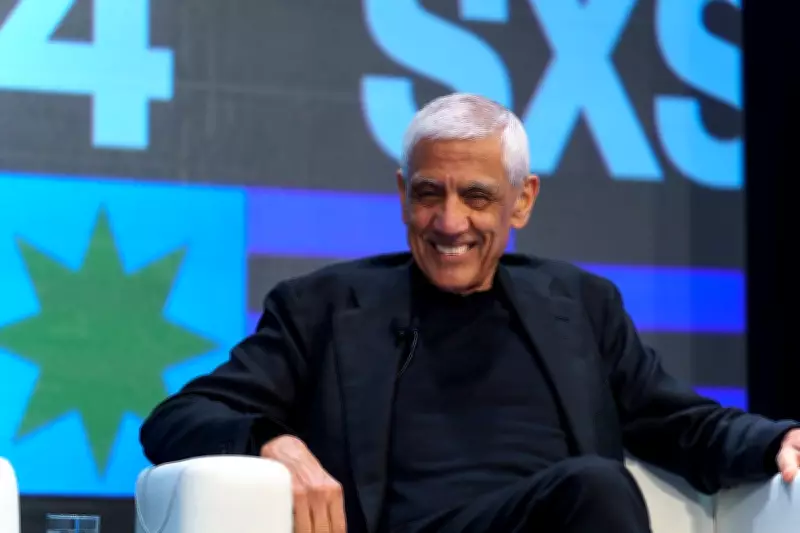
American venture capitalist and early OpenAI investor Vinod Khosla has called for a radical restructuring of the United States tax system, arguing that the accelerating rise of artificial intelligence necessitates a fundamental shift from taxing labor to taxing capital. Khosla made his case at a recent forum in Washington, D.C., stating that public anxiety over job displacement by automation is the dominant concern he encounters.
Proposal to Exempt Millions from Income Tax
Khosla's sweeping proposal involves making nearly 125 million lower- and middle-income Americans exempt from federal income tax, a move he believes would alleviate widespread fears. He argues this should be financed by significantly raising levies on capital gains, effectively eliminating what he describes as the "preferential treatment" currently given to wealth over work. Specifically, Khosla advocates for eliminating federal income tax for individuals earning less than $100,000 annually and taxing capital gains at the same rate as ordinary income.
"When I talk to people, the biggest thing is fear of AI taking their job by far," Khosla stated. He told the Financial Times that this disruption will be "the single biggest issue" during the 2028 U.S. presidential election cycle, highlighting the profound political and economic implications of the AI revolution.

AI to Perform 80% of Tasks in Most Jobs
The billionaire investor has previously issued stark warnings about the pace of automation, forecasting that within the next 25 years, artificial intelligence could perform 80 percent of the tasks in 80 percent of current occupations. Khosla believes this technological shift will eventually make some form of universal basic income an economic necessity, as the traditional link between labor and income weakens.
Doubling down on his position via social media platform X, Khosla wrote that AI will "transform economies and need a rethink of capitalism and equity." He elaborated, "Labour portion of economy (vs capital) will decline sharply. Should we eliminate preferential treatment of capital gains tax and equalize to ordinary income? 40 per cent of capital gains taxes are paid by those with income >$10m/year!"
Political Context and Broader Industry Warnings
Despite being a long-time donor to the Democratic Party, Khosla offered a nuanced view of recent administrations' handling of AI policy. He remarked that the Trump administration had "generally done a pretty good job" on AI policy matters, though he simultaneously voiced sharp criticism of the former president's character, citing a "complete lack of values of any sort" and a "negotiating style that destroys credibility."
Khosla's latest intervention follows similar warnings from other financial leaders about the reshaping labor market. BlackRock chief executive Larry Fink recently forecast that skilled trades like plumbing and electrical work will become more valuable, while certain white-collar office roles decline in prominence. In a BBC interview, Fink argued the U.S. had "overdid" its push for young people to attend university and pursue traditional professional careers.
"I think what we did wrong… we really put judgement on so many jobs," Fink said. "We need to be proud that a career can be just as strong in these fields of plumbing and electricians." Fink, who leads the world's largest asset manager with $14 trillion under management, confirmed that the ascent of AI is already altering the types of jobs in highest demand across the economy.